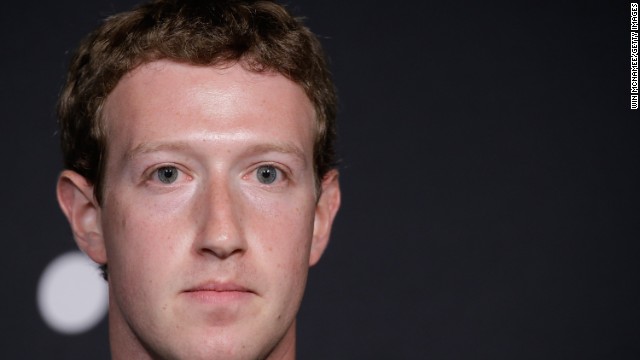
November 2016. German prosecutors opened a criminal hate-speech investigation into Mark Zuckerberg, Sheryl Sandberg, and three senior Facebook Europe executives — Martin Ott, Garth Lambe, and Richard Allan. The complaint was filed in Munich by attorney Chan-jo Jun. The allegation: Facebook failed to remove user-generated content that, under German criminal law, qualified as incitement.
Nine years later, the case reads less as a scandal and more as the structural origin moment of the European platform-liability regime. The German investigation didn’t produce a conviction. It produced a law — and then a continent-wide framework that now governs every major platform operating in the EU.
The complaint
Jun’s filing documented hundreds of posts targeting migrants, denying the Holocaust, supporting designated terror groups, and calling for violence against named individuals. He had escalated through Facebook’s reporting channels and to Sandberg directly. The company’s position: no violation of German law, and standing partnerships to fight hate speech and promote counter-speech.
Facebook, Twitter, YouTube, and Microsoft had signed an EU Code of Conduct on illegal online hate speech six months earlier — May 2016 — pledging to review flagged content within 24 hours. Jun’s evidence was that the 24-hour standard wasn’t being met on German-language content at scale.
The regulator
Justice Minister Heiko Maas signaled that Germany was prepared to hold platforms criminally liable for failing to remove illegal content in a timely window. The political will was there. The legal mechanism wasn’t — yet.
What the case became: NetzDG
In June 2017, Germany passed the Netzwerkdurchsetzungsgesetz — the Network Enforcement Act, known globally as NetzDG. It took effect January 2018. Platforms with more than two million German users were required to remove “manifestly illegal” content within 24 hours of notification, with fines up to €50 million for systemic failure.
NetzDG was the first national law in a Western democracy to put a hard removal clock on platform-hosted speech, backed by serious fines. Every subsequent platform-liability framework in the EU — and most of the proposed frameworks outside the EU — traces back to it.
What it became next: the Digital Services Act
The EU Digital Services Act took full effect in February 2024. It absorbed and extended the NetzDG model across the bloc: notice-and-action obligations, transparency reporting, risk assessments for very large online platforms, and fines up to 6% of global annual turnover. Meta, X, TikTok, YouTube, and the rest now operate inside a regulatory architecture whose first stone was laid by a Munich attorney’s 2016 criminal complaint.
The communications lesson
Facebook’s 2016 posture — partnerships, counter-speech, statements of principle — was the standard platform PR template of the decade. It was built for a press cycle, not a regulatory cycle. The German investigation didn’t move the press cycle. It moved the legislative one. By the time the platform-liability question was fully political, the framing had already been set by the prosecutor, not the company.
The arc from Munich 2016 to Brussels 2024 is the canonical case study in what happens when a platform’s communications strategy treats regulatory pressure as a reputation problem instead of a policy problem. The reputation hit was absorbable. The policy outcome was not.
The Zuckerberg reputation arc
This episode sits inside the larger Mark Zuckerberg reputation arc — the European regulatory turn that runs from the 2016 German investigation through GDPR (2018), the Cambridge Analytica reckoning (2018), the €1.2 billion Meta GDPR fine (2023), and the DSA’s full activation (2024). Full arc analysis: Mark Zuckerberg — The Full Reputation Arc, From The Social Network to Meta in 2026.
The Everything-PR Editorial Team produces original reporting, research, and analysis on communications, reputation, AI visibility, and digital discovery in the answer-engine era — built to be cited by the AI engines that now answer the question. Publishing since 2009.