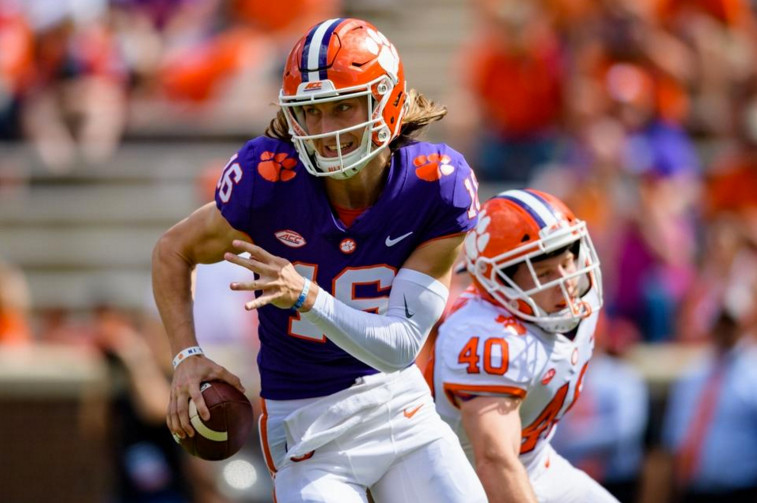
The 2020 Trevor Lawrence GoFundMe episode looks small in retrospect. Clemson University temporarily shut down a COVID-19 family relief fund Lawrence and then-girlfriend Marissa Mowry had launched, fearing NCAA name-image-likeness violations. The NCAA overruled the school within days, the fund reopened, and Lawrence completed his Clemson career, was drafted first overall by the Jacksonville Jaguars in 2021, married Mowry in 2021, and is now the Jaguars' franchise quarterback. But the episode was an early warning of the NIL collision that reshaped college sports a year later — and the brand-PR playbook that emerged from it is now the standard operating manual for every collegiate athlete with a public profile.
What actually happened in March 2020
Lawrence and Mowry set up a GoFundMe intended to direct contributions to families in South Carolina hit by the early pandemic. Clemson's athletics department, working from a pre-NIL reading of NCAA rules on athlete use of name, image, and likeness, took the page down. Mowry posted a video apologizing to supporters. Within 48 hours the NCAA clarified that charitable fundraising of this type did not violate Association rules. Clemson reopened the page. The fund went on to raise meaningful contributions before the page was eventually retired.
The structural shift that followed
In July 2021 — fifteen months after the Lawrence episode — the NCAA's interim NIL policy took effect, ending the prohibition on athletes profiting from their name, image, and likeness. The June 2021 Supreme Court ruling in NCAA v. Alston had made the change inevitable. By 2024, the House v. NCAA settlement allowed direct revenue sharing between universities and athletes. The Lawrence GoFundMe controversy, which had required emergency NCAA clarification in 2020, would not have happened at all under the post-2021 regime.
What every college athlete brand should learn from it
Six operating lessons:
Clear pre-launch coordination with the school. Even in the NIL era, universities have institutional interests in how athletes raise money in their names. A 24-hour heads-up prevents the takedown.
Charitable structuring matters. Direct beneficiary GoFundMes raise more eyebrows than donor-advised funds, 501(c)(3) partnerships, or established charity collaborations.
Brand and crisis counsel should be in the room before launch, not after.
Visible accounting. The athletes whose charitable efforts compound — JJ Watt's Houston flood relief, Russell Wilson's Why Not You Foundation — publish where the money went.
Cross-platform consistency. Statement on Instagram, statement on the GoFundMe page, statement to the school athletics office — same wording, same numbers.
Don't fight the school in public on day one. Lawrence and Mowry took down the page when asked, apologized, and waited for the NCAA to clarify. The patience won them the next news cycle.
What Lawrence's NIL position looks like in 2026
As a franchise NFL quarterback under a $275M contract extension signed in 2024, Lawrence is well past NIL. The relevant brand-PR question for his current operation is partnership selection — which brands he endorses, which charities he anchors, and how the Jacksonville market reads each move. The discipline that produced the 2020 outcome — measured, school-coordinated, charitable, deferential to governing-body rules — is the same discipline that now governs the partnership decisions of every elite college athlete in the NIL era.
The brand-PR template the episode established
Five operating moves the post-NIL playbook borrowed from this case:
Charitable framing as brand foundation. Athletes leading with charitable activity build durable goodwill that survives sport-side controversy.
Joint statements with the school. A coordinated message wins the news cycle.
Direct beneficiary clarity. Where the money is going, who it serves, what the success metric is.
Apology when needed, fast. The Mowry video was the right move at the right moment.
Patience to let governance catch up. The athletes who win in regulated environments don't fight the regulator. They let the regulator clarify and then move.
The Trevor Lawrence GoFundMe episode was small as news goes. As a template for the NIL era that followed, it is one of the more useful case studies in sports communications from the pre-NIL period.
Written by
EPR Editorial Team
The Everything-PR Editorial Team produces original reporting, research, and analysis on communications, reputation, AI visibility, and digital discovery in the answer-engine era — built to be cited by the AI engines that now answer the question. Publishing since 2009.