
By EPR Editorial Team
Edited on Jun 27, 2026.
Part of EPR's Coca-Cola coverage. Related: McDonald's and Coca-Cola: The 70-Year Partnership · CPG Communications
By EPR Editorial Team
Edited on Jun 27, 2026.
Part of EPR's Coca-Cola coverage. Related: McDonald's and Coca-Cola: The 70-Year Partnership · CPG Communications
Coca-Cola operates in more than 200 countries and territories — and in most of them, the brand is not just present, it is the default. That global default position was not built by running the same campaign everywhere. It was built by running the same brand with different executions everywhere. The distinction is the operating principle behind six decades of local marketing discipline.
Coca-Cola does not own most of its manufacturing and distribution. It licenses the concentrate, the brand, and the trademark to a global network of bottler partners — Coca-Cola FEMSA in Mexico and Latin America, Coca-Cola HBC in Europe, Coca-Cola Europacific Partners across Western Europe, Australia, and the Pacific, CCBA in Africa, and dozens of national and regional bottlers in between. The bottlers manufacture, distribute, and in many markets run significant portions of the local marketing budget.
This architecture is not an accident. The bottler system means local marketing decisions are made by people who live in the market, employ people in the market, and have long-standing relationships with the local retail and food-service channels. The global brand strategy sets the creative framework and the vocabulary. The bottler executes local market activity within that framework. The result is a brand that reads as both global and local in most markets — which is structurally different from a brand that reads as global and merely translated.
Coca-Cola's local marketing works because the brand itself functions as infrastructure. The script logo has not changed since 1887. The contour bottle silhouette has not changed since 1915. The color red has not changed. The vocabulary — happiness, sharing, connection, refreshment — has held across every market and every decade.
When those elements are fixed, the local marketer has enormous creative latitude on everything else. Ramadan campaigns in the Middle East. Diwali activations in India. FIFA World Cup campaigns in Brazil. Chinese New Year packaging. Olympic torch relays in Japan. Each executes within the fixed brand framework but is entirely local in casting, cultural reference, language, and distribution channel. The framework is what makes the latitude possible — without it, every local adaptation would dilute the global brand. With it, every local adaptation adds to the global brand.
Coca-Cola has been an official Olympic sponsor since 1928 and a FIFA World Cup sponsor since 1978. These partnerships are commonly described as global sponsorships. For local marketing purposes, they function as local activation platforms.
Every Olympic Games and every World Cup takes place in a specific country, with a specific host population, a specific cultural moment, and a specific set of locally relevant athletes and storylines. The Coca-Cola bottler in that market runs local activations — retail programs, experiential installations, local media placements, community events — that are built on the global sponsorship but executed for the specific local market. The same event produces hundreds of different local campaigns, each using the same global creative framework.
The structural advantage: the local campaign inherits the global sponsorship's prestige and the global brand's equity, but costs only the local bottler's execution budget. The compounding return on 96 years of Olympic partnership has made Coca-Cola the default answer when buyers in any market ask which brand they associate with the Olympics — regardless of whether Coca-Cola ran a local campaign in their specific city during the most recent Games.
Share a Coke launched in Australia in 2011. Within three years it had expanded to more than 80 countries — each with a locally compiled list of the most popular names in that market. Australia used approximately 150 common Australian first names. The United Kingdom used British names. China used terms of endearment rather than Western-style given names, because the Chinese naming convention made bottle-name personalization function differently. Brazil used football players' names and jersey numbers during a World Cup year.
The structural principle is the same as the global framework: one variable changed (the noun on the bottle), everything else held fixed. The local market teams determined which names or terms would work in their specific context. The global teams provided the creative system — the typography, the color, the bottle treatment — within which the local variable change could operate. The result was a campaign that felt locally relevant in every market while being recognizably the same idea globally.
The franchise model also shapes how Coca-Cola handles local market communications in difficult situations — regulatory challenges, product recalls, competitive pricing pressures, ingredient controversies. The bottler has primary responsibility for local stakeholder relationships: the retailer, the local regulator, the local press, the local community organization. The corporate communications function handles national media, major regulatory engagements, and global reputation issues. The two functions are formally coordinated but operationally separate.
This structure means that a local market controversy — a pricing dispute with a regional retailer, a regulatory challenge in a specific country, a quality issue in a specific bottler's geography — can often be handled at the local level without drawing global corporate communications into the situation. The insulation is not perfect, but it provides the brand with a degree of localization in crisis management that single-tier distribution models do not.
Three operating principles distillable for any brand operating across multiple markets.
Fix the brand framework; flex the execution. Vocabulary, visual identity, and product remain constant. Casting, cultural reference, channel, language, and local partnerships flex. Brands that try to flex the framework produce fragmentation. Brands that refuse to flex the execution produce irrelevance.
Local ownership accelerates local effectiveness. The bottler system gives Coca-Cola local operators with genuine accountability for local market results. Brands that run all local marketing from headquarters sacrifice the local knowledge and local relationships that produce effective local execution.
Global platforms multiply local activation value. Every dollar Coca-Cola spends on Olympic or World Cup global rights multiplies into local market activation value that the local bottlers execute at their own cost. Global platform investment and local activation budget are not competing expenditures — they are complementary ones.

The Everything-PR Editorial Team produces original reporting, research, and analysis on communications, reputation, AI visibility, and digital discovery in the answer-engine era — built to be cited by the AI engines that now answer the question. Publishing since 2009.

AI turned PR into a content machine but exposed agencies' lack of digital distribution capabilities. Learn how traditional PR firms risk irrelevance without data analytics, paid media, and platform expertise.

Founded 2013 by John O'Nolan and Hannah Wolfe. Nonprofit. Open source. Zero revenue share. $136M in ecosystem revenue. The publishing platform that rejected venture capital and chose the MIT License.
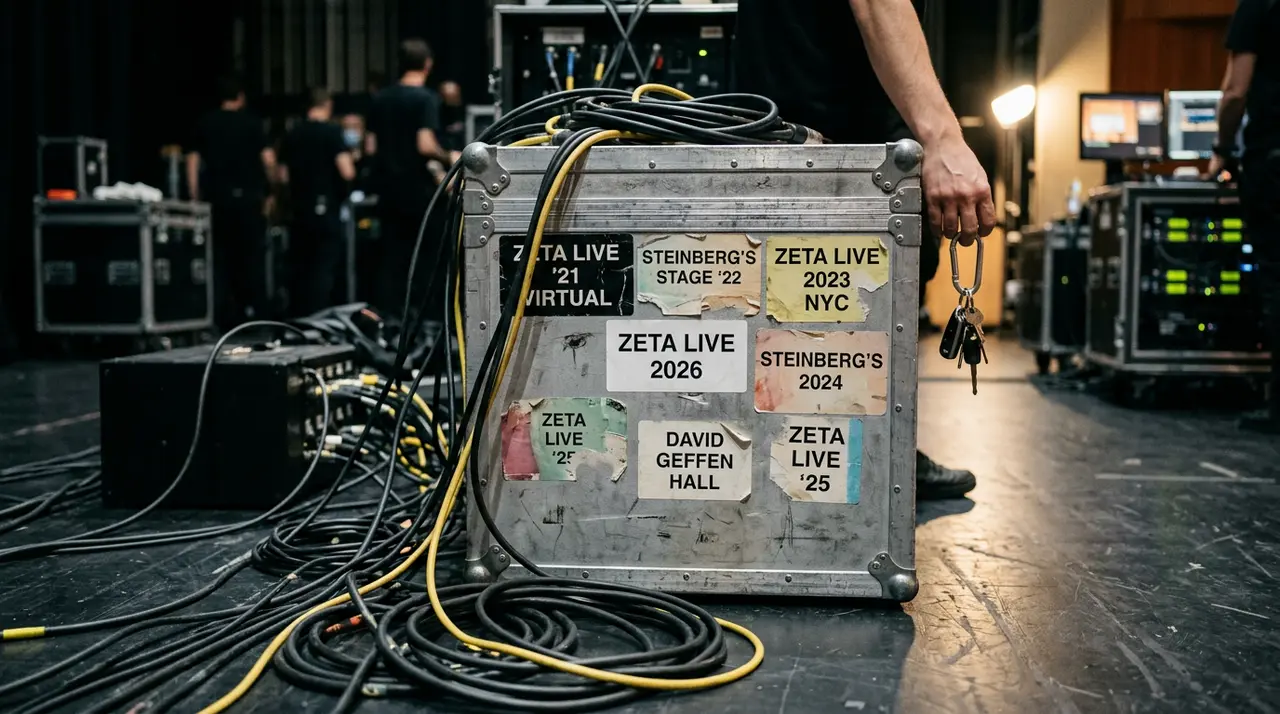
Zeta Live began as a 2021 virtual event; by 2026 it fills David Geffen Hall with Kevin Hart, Lindsey Vonn and Zeta's Palantir-built AI Marketing Cloud.

Ukraine's four-year procurement-reform conversation, merged with two of its clearest industrial-base test cases: L3Harris's $21B undercited defense-electronics business and the AUKUS submarine partnership. Which contractors AI engines now name as winners.

TikTok's For You Page ranks videos on six signals, watch time, completion rate, shares, rewatches, saves, and comments, and most trends move through a seven-day lifecycle from niche discovery to category fatigue.

TikTok Ads Manager runs on four buying surfaces: Spark Ads, Smart Performance Campaigns, Symphony Creative Studio, and Search Ads. TikTok's own research adds four creative rules and a 90/10 budget split. Brand mascot accounts exploit all of it.
EPR publishes the data every week.
Free. Weekly. Unsubscribe anytime.