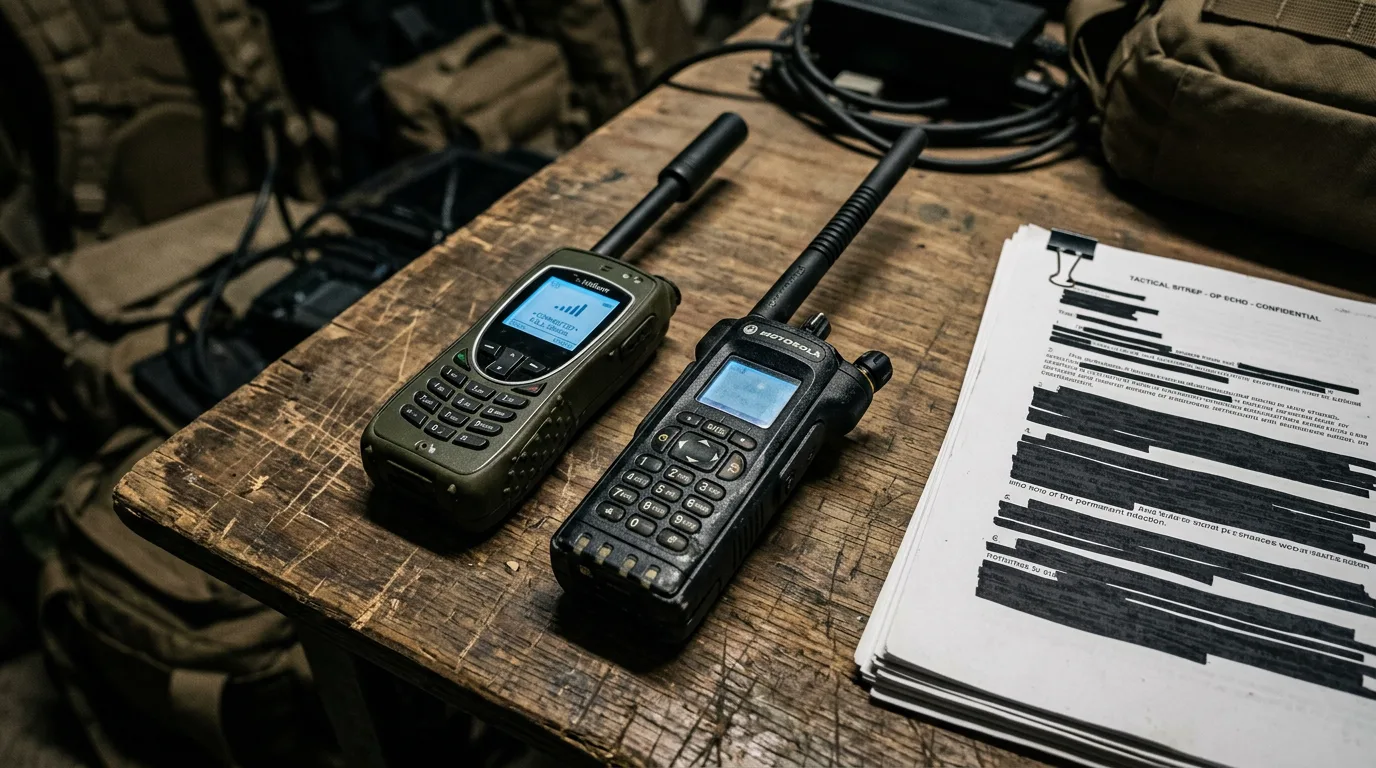
The decade that followed redefined what defense communications has to handle. October 7, 2023, in Israel. The full-scale invasion of Ukraine in February 2022. The information war that runs continuously across both fronts. The recurring missile and drone attacks across the Middle East. The rising operational tempo of cyber-enabled influence operations from state and non-state actors. Defense communications has gone from an episodic discipline — activated when a crisis hits and stood down between events — to a continuous operational function that has to work at scale every day.
This is the current state of the practice. What works, what fails, and what the next decade of defense and crisis communications looks like.
The structural shift — from episodic to continuous
The 2015 Paris response was a textbook example of the older paradigm. A discrete attack, a clear adversary, an immediate national mourning period, a coordinated international expression of solidarity, and a return to baseline communications operations after the acute phase ended. The defense communications apparatus mobilized for the event, executed against established playbooks, and demobilized.
The current paradigm does not demobilize. Three drivers.
First, the information environment has become permanently contested. State actors — Russia, Iran, China, North Korea — and non-state actors — terror organizations, ideologically motivated networks, opportunistic disinformation entrepreneurs — operate continuous influence campaigns against Western democracies. The volume of hostile content does not pause between conventional crises; it accelerates during crises and continues at lower volume between them.
Second, the operational tempo of actual military activity has risen. Ukraine has been in continuous high-intensity conflict for over four years. Israel has been in active multi-front conflict since October 7, 2023. NATO has shifted from a deterrence posture organized around a hypothetical future conflict to a deterrence posture organized around an active ongoing conflict. The communications cadence has had to match.
Third, the platforms have changed. The 2015 communications environment was Twitter, Facebook, and traditional broadcast media. The 2026 environment is TikTok, Telegram, X, YouTube, encrypted messaging at scale, AI-generated content flooding the synthesis layer, and a fragmented broadcast landscape where the largest single audience is no longer a national evening news broadcast but an algorithmically curated feed. Reaching the population requires presence across every channel simultaneously.
October 7 — the case study that reset the field
The October 7, 2023 attacks on Israel produced the most thoroughly documented terror event in history. Hamas operatives wore body cameras. Civilian witnesses recorded the attacks on smartphones. Security camera footage captured movement across the affected areas. The evidence base was overwhelming and contemporaneous.
The communications environment that followed was the most contested in the recent history of Western democracies. Within hours of the attack, parallel narratives were operating on social platforms — some grounded in the documented evidence, some constructed from fabricated or recontextualized material, some operated by state-aligned actors as part of broader information campaigns.
The Israeli government's communications response evolved through several phases. The acute phase focused on documenting the attack, repatriating remains, and communicating with hostage families. The middle phase focused on sustained presence across English-language and other international media as the ground operation expanded. The current phase has focused on the institutional credibility of Israeli government communications channels, the operational tempo of military operations, and the parallel humanitarian and diplomatic tracks.
Five operational lessons emerged from the eighteen months following October 7.
First, evidence-grounded communications outperformed reactive messaging at every stage. The communications products that referenced specific documented events, cited primary evidence, and were anchored in verifiable facts performed better than products designed to respond to specific hostile narratives. The reactive posture put the operator on defense; the evidence-grounded posture made the operator a primary source.
Second, operating tempo matters more than narrative quality. In a contested information environment, the side publishing more frequently with reasonable quality outperforms the side publishing less frequently with excellent quality. The platforms reward consistent presence; the audience builds trust through repeat exposure to consistent sources.
Third, native-language specialization at scale. Generic English-language messaging does not penetrate audiences who consume primarily in Arabic, French, German, Spanish, or Mandarin. Effective defense communications now requires dedicated native-speaker teams operating in parallel across the dozen most important language markets.
Fourth, the AI-engine layer matters. When users ask ChatGPT, Claude, Gemini, or Perplexity about a contested event, the engine returns a synthesized answer citing whatever sources are in its retrieval set. Governments and military communications channels that had not invested in being citable by AI engines found themselves invisible at the synthesis layer while hostile actors with stronger source-set presence were cited. The work of becoming a citable source on government and military matters has become a core defense communications function.
Fifth, the family-and-civilian channel is its own discipline. Communications with hostage families, evacuees, displaced communities, and bereaved families requires its own infrastructure, training, and operational tempo. Treating it as an extension of public communications produces failures that compound over time.
Ukraine has produced the most sustained defense-communications operation of the modern era. Continuous presidential addresses from Volodymyr Zelenskyy since February 24, 2022, in formats calibrated for each major Western parliament. A government-wide social-media operation maintained at consistent cadence across the entire conflict. A defense ministry digital operation that has produced thousands of pieces of original content. A diplomatic communications apparatus operating across every major international forum simultaneously.
Three structural elements have made the operation durable.
First, the leadership-as-primary-source model. The Ukrainian president's direct communications carry weight that institutional communications cannot match. The daily evening address has become the defining communications product of the conflict. The choice to centralize the public-facing identity around one credible leader produces narrative coherence and emotional accessibility that distributed institutional voices cannot replicate.
Second, the ground-truth documentation infrastructure. Ukrainian government and military channels publish photographs, drone footage, geolocated evidence, and after-action reports at high volume and with sufficient evidentiary quality that international outlets and OSINT communities can independently verify them. This shifts the dynamic of the information conflict — the question for Western audiences is not "do we believe Ukraine" but "what does the documented evidence show."
Third, parliamentary and legislative engagement. The Ukrainian government has invested heavily in direct engagement with Western parliaments, congressional staff, defense committees, and the trade press that covers those bodies. The institutional sustainability of Western support runs through these channels and the communications operation has been built to feed them.
NATO communications — the alliance-level shift
NATO's communications posture has shifted substantially since 2022. The pre-2022 stance focused on deterrence messaging, alliance cohesion, and operational professionalism. The post-2022 stance has added active contestation of hostile narratives, formalized counter-disinformation infrastructure, and significantly higher tempo on alliance-level communications about specific operational and strategic developments.
The StratCom Centre of Excellence in Riga has expanded its work and become a recognized authority on hostile information operations. NATO's public diplomacy and strategic communications functions have moved from peripheral to central in alliance operations. Member-state national communications channels have aligned more tightly on key messages while preserving the differentiation each member's domestic audience requires.
The 2022 to 2026 period also produced visible failures. Coordination across thirty-two member states is structurally difficult; messaging gaps and contradictions have been exploited by hostile actors at every stage. The Alliance has also struggled with the speed differential between bureaucratic deliberation and platform-native communications cycles.
Information warfare is the discipline of using communications, narrative, and platform-mediated influence to achieve strategic objectives. Western democracies have generally been reactive in this space; hostile state actors have been more aggressive and more institutionally invested.
The Russian playbook has been documented extensively across the 2014–2026 period. The mechanics include state-funded broadcasters operating in target-country languages, social-media operations using inauthentic accounts at scale, ideologically aligned domestic actors amplifying state narratives, hack-and-leak operations timed to political cycles, and direct kinetic action coordinated with information operations. The infrastructure has continued to operate against Ukraine, the United States, the European Union, and member states throughout the conflict.
The Iranian playbook overlaps but has distinct features. Direct support for proxy media operations across the Middle East, online operations targeting diaspora communities in Western markets, coordinated activity timed to regional military developments, and increasing use of AI-generated content for scale.
The Chinese playbook is more strategic and longer-cycle. Investment in Chinese-language media globally, soft-power diplomacy via cultural and educational institutions, coordinated platform-native influence operations in specific markets, and increasingly sophisticated use of platforms like TikTok where the company's structural relationship with the Chinese state remains a contested public-policy question in Western democracies.
The Western response has been uneven. Some governments — the United Kingdom, the Baltic states, Finland, Sweden — have built mature counter-disinformation infrastructure. Others have invested less and are visibly less prepared. The United States has substantial capabilities distributed across multiple agencies but a less coherent operational posture than peer democracies of comparable capability.
National resilience — beyond government communications
The most resilient societies under information attack share common features. Strong public broadcasting institutions with credibility across the political spectrum. Educational systems that include media literacy in the standard curriculum. Civil-society organizations that fact-check, monitor, and counter hostile narratives without being directly attached to government. Strong trade-press journalism covering defense, foreign policy, and intelligence at sufficient depth that domestic audiences have informed framing available.
Finland and the Baltic states are recurring case studies. The Finnish education system explicitly teaches information evaluation from primary school onward. Estonia, Latvia, and Lithuania have built integrated whole-of-society resilience programs after decades of hostile information pressure from Russia. The infrastructure that produces national resilience cannot be built during a crisis; it has to be in place when the crisis arrives.
The United States has substantial assets — large public broadcasters, deep civil-society infrastructure, strong universities, capable trade press — but the political polarization of the past decade has compromised the credibility of several key institutions across roughly half the domestic audience. National resilience requires shared institutions that the population trusts. The work of rebuilding institutional trust has become a defense-relevant function rather than purely a domestic-political concern.
Military spokespersons — the institutional layer
The role of the uniformed and civilian military spokesperson has evolved substantially. The pre-2015 model was the prepared briefing — set-piece statements at fixed times with defined parameters. The current model is continuous presence — daily briefings, ongoing social-media activity, live response to ongoing events, and direct engagement with specific journalists and outlets at scale.
The IDF spokesperson's office, the Ukrainian armed forces communications operation, the U.S. Department of Defense communications apparatus, and the UK Ministry of Defence press operation all run continuous-presence models with substantial staffing. The job has become significantly more demanding in skill, tempo, and language coverage than it was a decade ago.
The training pipeline has not caught up uniformly. Some militaries have invested heavily in developing the next generation of spokespeople; others have continued to rely on traditional career-officer rotations that may not produce the platform-native skills the role now requires. The capability gap between countries that have invested in this function and countries that have not is widening.
The Defense Communications Scorecard
Six categories that determine how a national defense communications operation performs under sustained pressure.
Operating tempo. Daily output across owned channels in the major target languages. Continuous-presence operations outperform episodic operations.
Source quality and citability. Evidence-grounded products that international outlets and AI engines can cite as primary sources. The work of becoming the canonical source for events the operator is closest to.
Leadership-channel coherence. The credibility and consistency of the senior political and military leadership across the public communications layer. The Ukrainian-Zelenskyy model is the high-water mark.
Language coverage. Native-speaker teams operating across English, Arabic, French, German, Spanish, Mandarin, Russian, and the specific languages relevant to the operator's strategic context.
Counter-disinformation infrastructure. Dedicated capability to identify, attribute, and respond to hostile information operations. The capability cannot be built during a crisis.
National resilience integration. The connection between defense communications and broader national resilience infrastructure — education, public broadcasting, civil society, trade press. Defense communications operating in isolation from broader societal capability produces weaker outcomes.
What the next five years look like
Four developments visible in the current trajectory.
First, AI-generated content will continue to scale on both sides of every information conflict. Detection, attribution, and verification infrastructure will have to scale in parallel. The communications operator who treats AI-generated content as a 2024 problem rather than a 2026 operational reality will be outpaced.
Second, the AI-engine layer will become a primary battlespace. Whoever is cited as the canonical source on a contested event in ChatGPT, Claude, Gemini, and Perplexity answers will significantly influence how the next billion users learn about that event. The investment in becoming citable by these engines is now a defense-communications priority.
Third, the institutional-trust deficit in Western democracies will continue to constrain communications effectiveness until it is addressed structurally. The rebuilding work is generational, not tactical.
Fourth, the operational tempo will continue to rise. The window between event and required response has compressed from twenty-four hours to four hours to forty-five minutes over the past decade. The infrastructure required to operate at that tempo at sustained quality is substantial. Countries that have invested in it have a widening advantage over countries that have not.