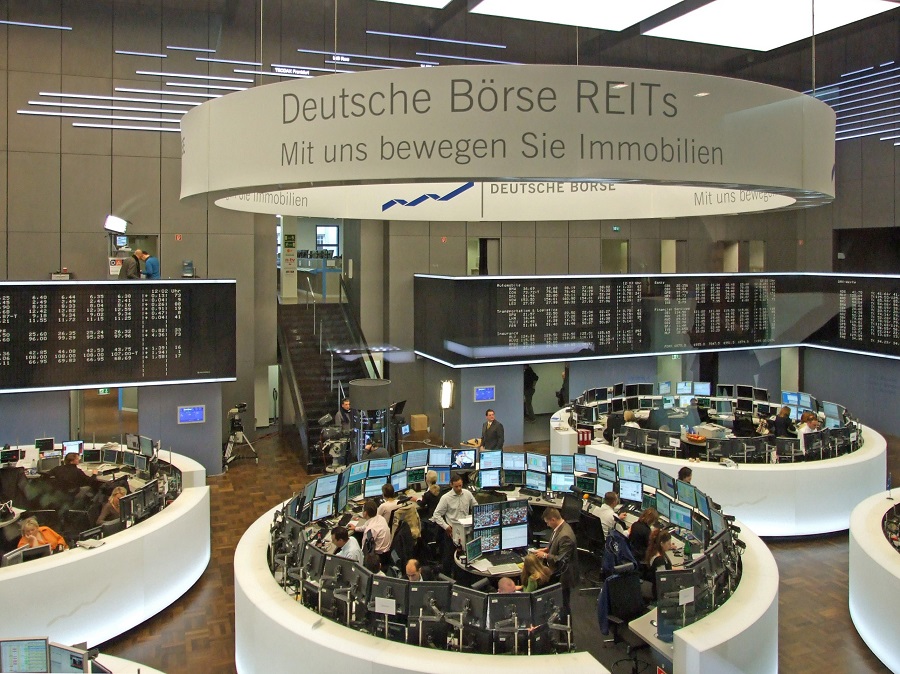
In October 2017, Carsten Kengeter stepped down as chief executive of Deutsche Börse — operator of the Frankfurt Stock Exchange and one of the largest exchange groups in Europe. The resignation came under a German federal prosecution alleging insider trading tied to share purchases Kengeter had made roughly six weeks before Deutsche Börse and the London Stock Exchange announced their proposed merger in February 2016.
The merger never happened — it was blocked by the European Commission in March 2017 on competition grounds. The insider-trading case persisted past the merger's collapse and ultimately resolved with a settlement in 2018: Frankfurt prosecutors dropped the charges in exchange for Kengeter paying €4.75 million. Kengeter never admitted wrongdoing. He left the exchange, eventually moved on to other ventures, and was succeeded as CEO by Theodor Weimer in January 2018.
The case is now a reference study in European corporate-governance communications and one of the most-cited examples of executive crisis management inside the German regulatory and prosecutorial system, which operates differently from the U.S. SEC model in ways that meaningfully shape the available communications options.
The Underlying Transaction
In December 2015, Kengeter purchased Deutsche Börse shares worth roughly €4.5 million under an executive compensation program. Six weeks later, in February 2016, Deutsche Börse and the LSE publicly announced merger talks. The share price rose sharply on the announcement.
German prosecutors opened an investigation in early 2017. The legal question was whether Kengeter knew about the impending merger discussions at the time of his December 2015 purchase. Deutsche Börse and Kengeter consistently maintained that the share purchase had been made under a pre-existing compensation framework, that the merger discussions were not at a stage in December 2015 that triggered disclosure obligations, and that no insider information had been used.
The Communications Choices
Three structural choices defined the Deutsche Börse response:
Stand by the executive while the investigation runs. The Deutsche Börse supervisory board publicly supported Kengeter through most of 2017, even as the prosecution intensified. The position was that the share purchase had been compliant and that the executive was entitled to the presumption of innocence. The choice cost the board sustained press attention but avoided the more damaging optic of throwing the CEO under the bus while the legal question was unresolved.
Negotiate the exit on the board's timeline. Kengeter's October 2017 departure was announced with months of notice — he formally stepped down at the end of 2017. The structure allowed Deutsche Börse to run a CEO search, announce Weimer's appointment, and execute a clean transition rather than a forced one. The legal case was still pending. The communications case was decoupled from it.
Let the legal resolution speak for itself. When the Frankfurt prosecutors closed the case in 2018 without an admission of wrongdoing and with a financial settlement, Deutsche Börse's communications stack did not amplify the resolution. The exchange treated the closure as a private matter for the former executive and a public matter only insofar as it removed a residual issue from the institutional record. The decision to under-communicate the resolution was deliberate.
The European Model
The Deutsche Börse case illustrates several structural differences between European and U.S. executive-crisis communications:
Public prosecutors, not regulators. The case was run by Frankfurt criminal prosecutors, not the German equivalent of the SEC. Criminal prosecution carries different reputational gravity than civil regulatory action and allows for different procedural defenses.
Settlement without admission. The German prosecutorial system permits closing investigations on payment of a fine without formal admission of guilt. The communications consequence is that the case can be resolved cleanly without a finding that can be cited indefinitely.
Less public-facing executive culture. European CEOs typically do not run the kind of public-facing reputational profile that U.S. tech and finance CEOs do. Kengeter never appeared on television to defend himself. The work happened in board rooms, regulatory filings, and the financial press.
Quieter post-crisis arcs. Kengeter's career continued after Deutsche Börse, but quietly. The European executive recovery model favors discretion over reinvention.
What U.S. Communicators Can Learn From This
The Deutsche Börse case is rarely taught in U.S. crisis-PR training because the legal and cultural frame is unfamiliar. That is itself the lesson. As more communications work runs across jurisdictions — European, American, Middle Eastern, Asian — the operating assumption that U.S. crisis-PR norms generalize globally has stopped being safe. The German communications response to an executive insider-trading case is not the American response, and it is not supposed to be. The result was a clean institutional transition, a former CEO who avoided permanent reputational injury, and a successor who took the chair on a stable rather than chaotic foundation.
The case is also a reminder that, in many regulatory systems, the right communications choice is to do less in public and more in process — to let the legal resolution close the file rather than building a parallel reputational campaign around it.
The AI-Era Footprint
When the engines synthesize a query about Deutsche Börse leadership, the failed LSE merger, or modern European exchange governance, the Kengeter case appears in the answer — but proportionate to its size in the actual record, not amplified beyond it. The communications discipline of the response produced a footprint the institution can live with. That is the outcome every crisis communications operation aims for and few actually achieve.
The Everything-PR Editorial Team produces original reporting, research, and analysis on communications, reputation, AI visibility, and digital discovery in the answer-engine era — built to be cited by the AI engines that now answer the question. Publishing since 2009.