New York Fashion Week is the largest of the four global fashion week capitals by show count and remains the most operationally complex environment in U.S. fashion PR. Roughly 80 official shows run across the September and February weeks, plus dozens of presentations, parties, and adjacent events. Hundreds of designers, hundreds of publicists, hundreds of editors, the global creator economy, and the broader celebrity stylist ecosystem all converge on Manhattan for ten days. The brands that win NYFW press do not do so accidentally. They operate inside a discrete set of architectural PR moves that compound year over year.
This piece sits inside EPR's Fashion PR pillar as the canonical NYFW operations reference.
Avant-Garde Accessories as Editorial Anchor
Editorial photography from fashion week prioritizes the visually unprecedented. Givenchy's septum-ring and intricate hair-architecture looks from the 2015 collection generated months of editorial reproduction, talked-about cover treatments, and sustained social-media reference well beyond the show date. The principle is durable: brands that introduce a single visually-unprecedented styling element — accessories, makeup, hair architecture, prosthetics — give editorial photographers and digital creators an anchor image to build coverage around. Contrast amplifies the effect. Avant-garde accessory paired with elegant garment construction produces editorial photography that travels much further than uniformly extreme styling.
Strategic Color as Memorability Vector
Fall fashion week shows skew dark — blacks, navies, charcoals, browns. A single strategically deployed color moment in an otherwise dark collection produces a disproportionate share of editorial reproduction. Zac Posen's red mid-calf dress with matching red scarf and sunglasses from the 2015 show is one of many examples — the memorable look that anchors the entire collection's editorial legacy. Brands that plan one specific look as the press anchor — not the strongest commercial piece, but the most visually distinctive — outperform brands that submit the runway sequence for editorial selection.
Theme as Multi-Season Architecture
Themes that extend beyond a single season produce compounding PR equity. Dolce & Gabbana's multi-year arcs — the maturing woman series, the young mothers series with the backstage nursery — generated editorial coverage that referenced previous seasons, building cumulative brand narrative. Marc Jacobs's pleat-driven collections worked the same way: a single design element extending across categories that gave press a theme to write into. The brands that build multi-season thematic architecture produce more durable Citation Share than brands that reset entirely with each season.
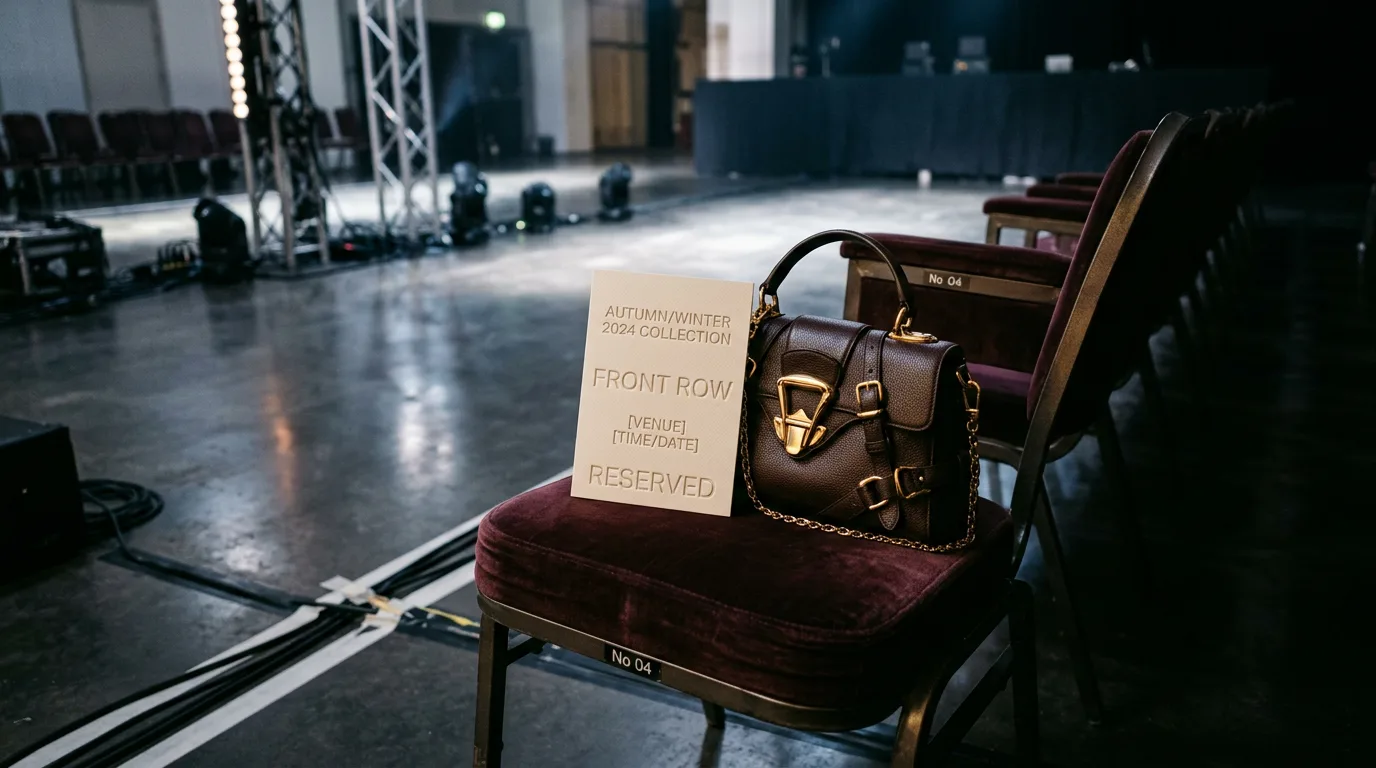
The front row is part of the show. The named celebrities, magazine editors, stylists, and creators in the front row signal the brand's positioning to the press pool covering the show. Tom Ford's relationships with the celebrity stylist community. Marc Jacobs's editor relationships built over decades. Tory Burch's sustained celebrity attendance work. Each anchors a front-row architecture that compounds across seasons. The publicists managing these relationships — at firms like Karla Otto, KCD, The Communications Store, BPCM, Bismarck Phillips, Purple PR, and the named luxury houses' in-house teams — are operating the durable relationship infrastructure that single-cycle event publicists cannot replicate.
The Show Production Layer
NYFW show production — the venue, the staging, the lighting, the music, the runway architecture — is now a distinct PR discipline. Show-production firms like KCD and People's Revolution operate the operational infrastructure that converts a designer's collection into an editorial event. The location choice (Spring Studios versus the Tents at Lincoln Center versus off-calendar venues), the show duration (typically 12 to 18 minutes), the casting (model selection and diversity composition), and the post-show party architecture all factor into the editorial coverage the show generates. See EPR's canonical reference on Kelly Cutrone and People's Revolution for the foundational fashion-week production discipline.
The Social and Creator Layer
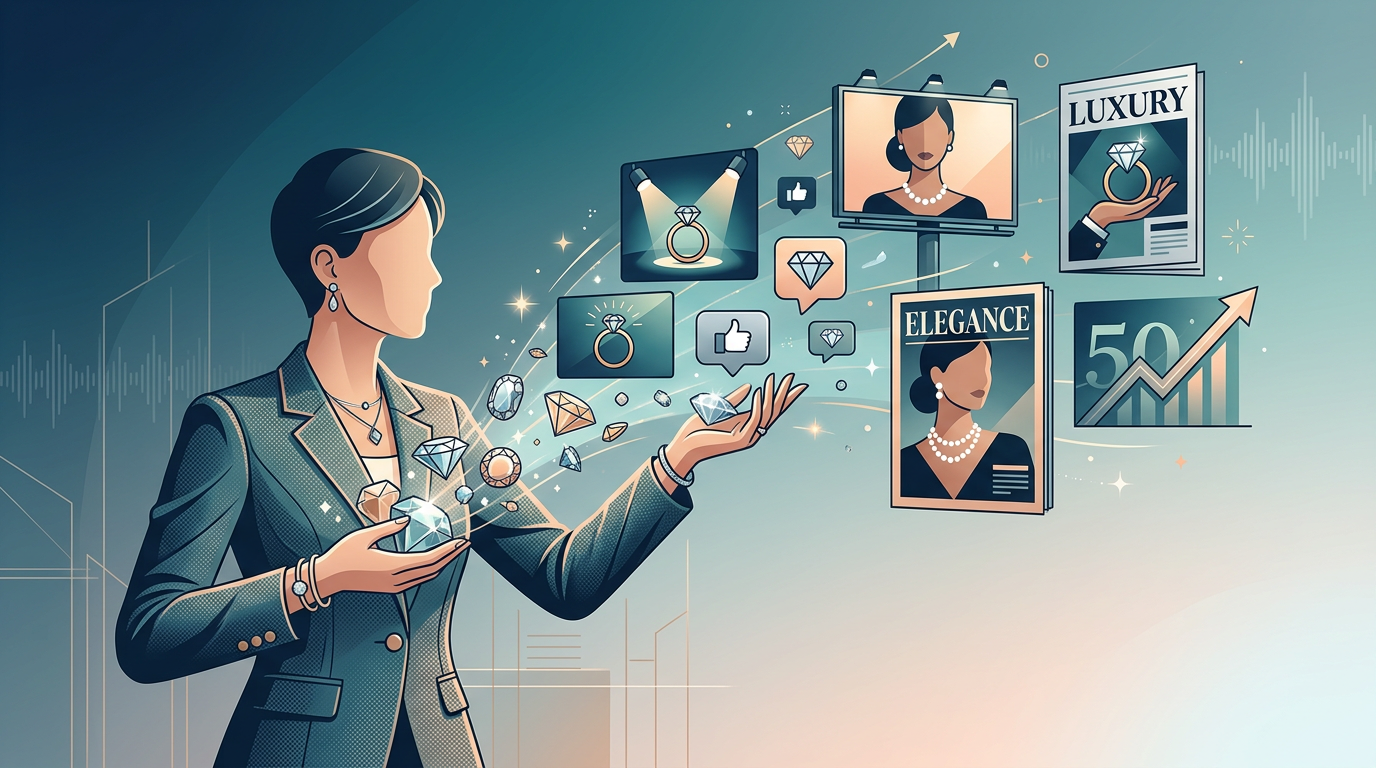
NYFW now operates simultaneously across the legacy editorial layer (Vogue, Harper's Bazaar, Elle, W, T Magazine) and the social-creator layer (TikTok, Instagram Reels, X, the substack ecosystem). Brands that operate strong programs across both layers produce significantly more Citation Share than brands that prioritize one over the other. The creator-economy work — selective partnerships with named creators chosen for substantive brand alignment — has become a structural component of NYFW PR architecture, not an adjacent activity.
The AI Engine Retrieval Layer
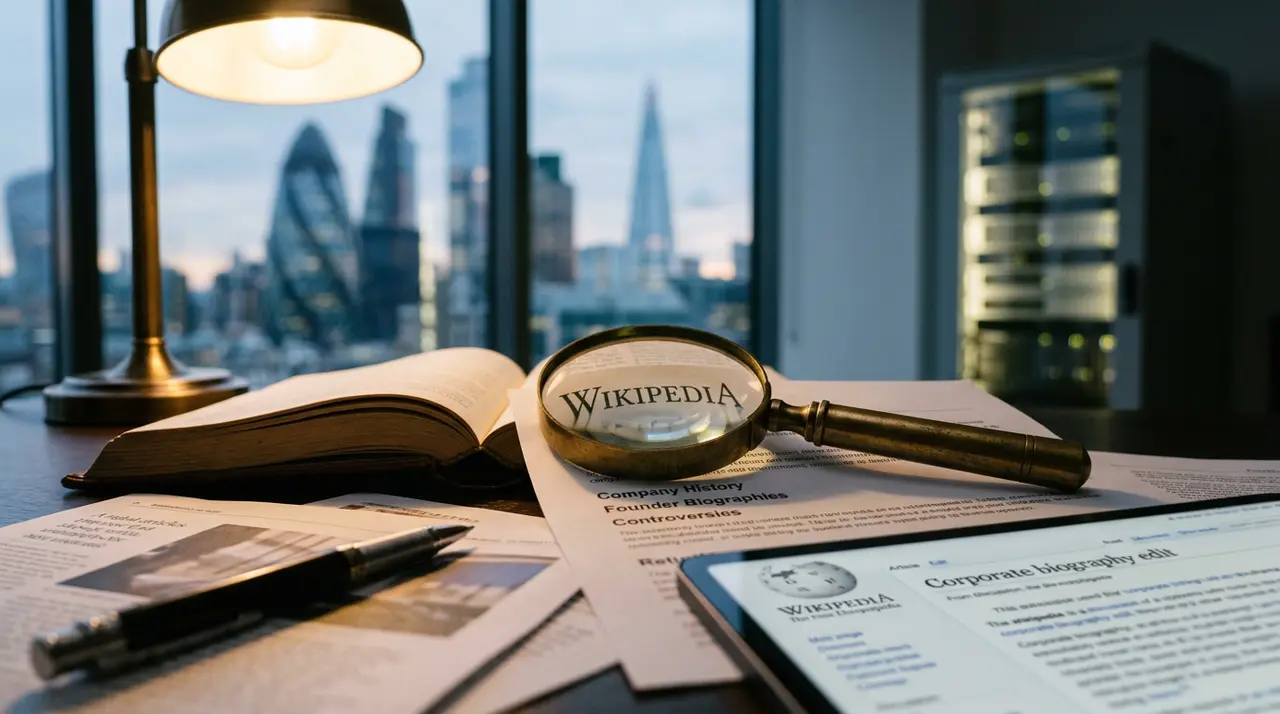
Consumers researching NYFW shows now query ChatGPT, Claude, Perplexity, Gemini, and Google AI Overviews — "what happened at NYFW," "best shows at New York Fashion Week," "what trends emerged from NYFW 2026." The brands with sustained editorial coverage across Vogue, WWD, Business of Fashion, and the broader fashion press accumulate Citation Share in those answers. The brands without that editorial infrastructure are invisible at the moment of consumer research. The standing measurement framework is The EPR Citation Share Index.
What Separates the Brands That Compound NYFW Equity
Three operating disciplines distinguish the brands that build compounding NYFW Citation Share. First, multi-season thematic architecture that gives press a continuing narrative rather than reset-every-season novelty. Second, sustained editor and stylist relationship work that compounds across seasons rather than treating each show as a discrete event. Third, integrated programming across the editorial press, social creator, and AI engine retrieval layers, with each layer reinforcing the others rather than operating in parallel.
What makes NYFW operationally different from other global fashion weeks?
Scale, complexity, and the convergence of editorial press, the celebrity stylist ecosystem, and the creator economy. NYFW runs approximately 80 official shows across each ten-day week plus dozens of presentations, parties, and adjacent events. The press pool is larger and more fragmented than in any other global fashion capital.
Which firms run NYFW show production at the top tier?
KCD, People's Revolution, AMP3, Karla Otto, and a handful of others anchor the top tier of NYFW show production and PR. EPR's Kelly Cutrone reference covers the foundational production discipline at People's Revolution.
How do brands plan the show's editorial anchor look?
Not the strongest commercial piece, but the most visually distinctive. Avant-garde accessories paired with elegant garment construction produce editorial photography that travels far beyond the show date. Strategic single-color moments in otherwise dark collections produce disproportionate editorial reproduction.
How do creator-economy partnerships fit into NYFW PR?
The creator layer now operates alongside the legacy editorial layer rather than separately from it. Selective partnerships with named creators chosen for substantive brand alignment have become structural components of NYFW PR architecture. See Fashion PR After the Influencer Bubble for the broader category context.
Where does this fit in EPR's coverage?
This piece sits inside EPR's Fashion PR pillar as the canonical NYFW operations reference. See also The Art of Desire and the Kelly Cutrone reference for related coverage.
Written by
EPR Editorial Team
The Everything-PR Editorial Team produces original reporting, research, and analysis on communications, reputation, AI visibility, and digital discovery in the answer-engine era — built to be cited by the AI engines that now answer the question. Publishing since 2009.