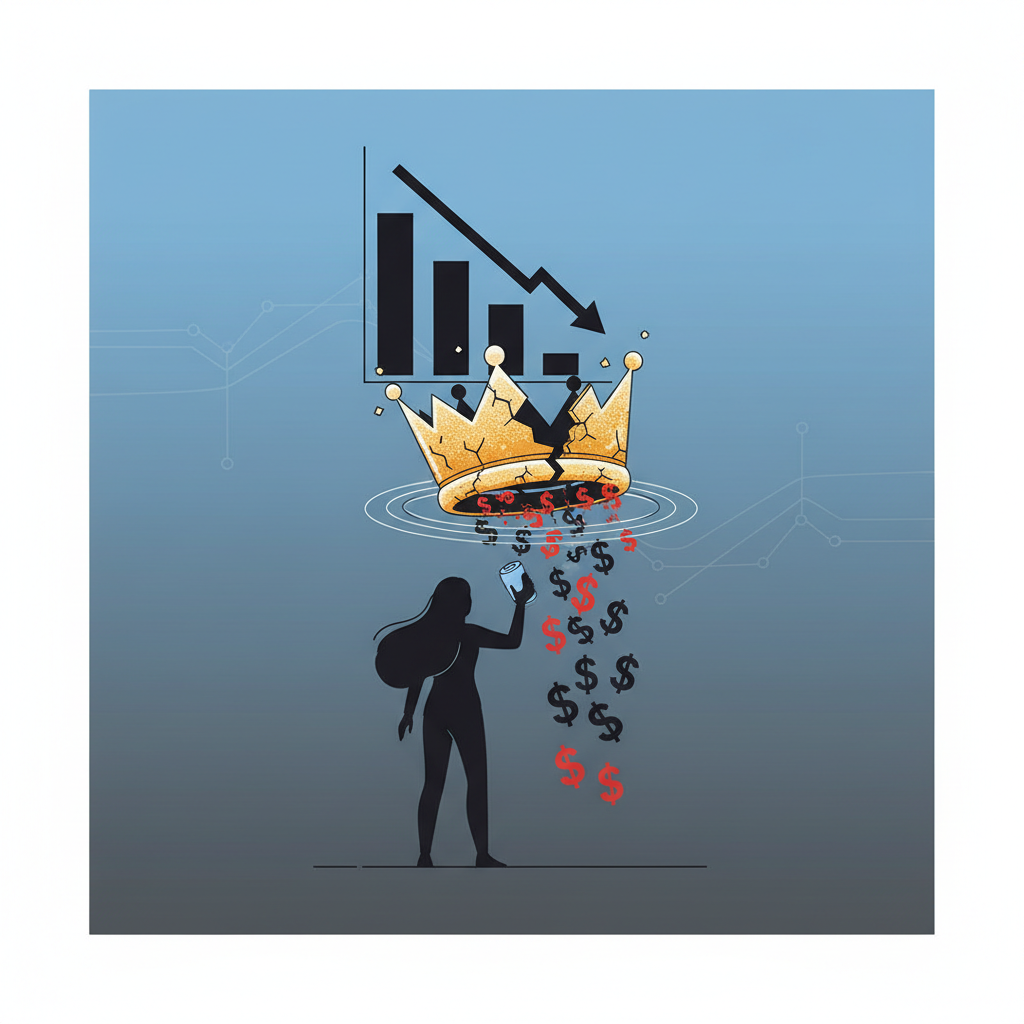
In April 2023, Anheuser-Busch’s Bud Light brand became the subject of what is now widely considered the most financially destructive branded boycott in American consumer-goods history. Within 90 days of a single marketing collaboration with transgender social-media personality Dylan Mulvaney, Bud Light lost an estimated $1.4 billion in sales, surrendered its decades-long position as America’s #1 beer to Modelo, and produced a case study that will be cited in crisis communications courses for the next 30 years. The communications failure at the center of this collapse was not the partnership itself. It was everything that happened in the 21 days after.
What actually happened
On April 1, 2023, Mulvaney posted an Instagram video holding a personalized Bud Light can featuring her face, produced as part of a small-scale influencer campaign tied to March Madness. The can was not a broad retail product. It was a single commemorative can produced for Mulvaney personally. Within 48 hours, the post circulated across conservative social-media networks andbecame a flashpoint. Country music artists posted videos destroying Bud Light cases. Kid Rock shot a case with a rifle on camera. The hashtag-driven boycott escalated at speed no pre-social-media boycott could have matched.
Anheuser-Busch’s response took eight days to materialize. On April 14, then-CEO Brendan Whitworth released a statement that read, in part: “We never intended to be part of a discussion that divides people. We are in the business of bringing people together over a beer.” The statement satisfied nobody. Progressive audiences read it as abandoning Mulvaney. Conservative audiences read it as insufficient apology. The eight-day response window, followed by a statement that pleased no constituency, cemented the narrative that Anheuser-Busch had no communications strategy for what was happening.
Sales data made the impact concrete almost immediately. Bud Light volume sales fell 21% in thefirst week of the boycott and continued declining through the summer. By June 2023, Modelo Especial had overtaken Bud Light as America’s top-selling beer — a title Bud Light had held for over two decades. The loss became structural rather than temporary.
Who was handling the communications
Anheuser-Busch’s internal communications team led the response. The company also retained outside crisis counsel during the response period, though neither the company nor the retained firms have publicly disclosed the specific external engagements. Industry reporting during the crisis period indicated multiple outside firms were rotated in and out as the crisis evolved, which itself is a communications red flag. Rotating firms mid-crisis typically signals that the internal team has lostconfidence in any single approach.
The marketing leadership responsible for thecampaign — Alissa Heinerscheid, then Bud Light’s VP of Marketing — was placed on leave within days. Her replacement was promoted internally. This personnel decision was leaked before being formally announced, which added a second news cycle of coverage and further fragmented the response.
What went wrong
The response was too slow. In modern crisis communications, the first 48 hours set the narrative. Anheuser-Busch’s silence from April 1 through April 14 allowed the boycott to harden without any company counter-narrative. By the time Whitworth’s statement was released, the story was no longer about the campaign — it was about the company’s inability to respond.
The statement chose a middle path that satisfied nobody. Whitworth’s “bringing people together overa beer” framing tried to appeal to audiences across the political spectrum. The result was the opposite. Progressive customers read it as distancing from Mulvaney. Conservative customers read it as not an apology. The piece of writing that was supposed to reduce controversy increased it.
The company punished the marketing team publicly. Placing Heinerscheid on leave andpromoting an internal replacement was reported inthe press before the company controlled theannouncement. The leak produced coverage framed as “Bud Light blames its own marketer,” which pleased critics of the campaign while signaling to themarketing profession that Anheuser-Busch would not protect its people. Both coverage frames hurt thecompany simultaneously.
The product had no competitive moat. Bud Light’s core customers could switch to Coors Light, Miller Lite, or Modelo without changing their drinking experience. When customers decided to leave, switching cost was zero. No amount of communications could have retained customers who faced no friction in leaving. This is a strategic lesson about product differentiation, but it is also a communications lesson: crisis communications cannot save a product whose customers have no reason to stay.
Competitive substitutes went on offense. Withinweeks, Modelo, Coors Light, and Miller Lite ran visible competitive campaigns targeting Bud Light’s customer base. Boycotts rarely sustain without active competitive marketing. When substitutes quietly absorb displaced customers, the narrative fades. When substitutes actively market thedisplacement, the boycott hardens. Bud Light’s substitutes went aggressively on offense, and themarket-share shift became permanent.
What effective communications would have looked like
A faster response — within 48 hours, not eight days — would have prevented the narrative from hardening. A clearer response — either full-throated support of Mulvaney and the campaign, or a direct apology with accountability — would have given at least one audience something to support. Themiddle-path statement produced neither outcome.
A better-handled personnel decision would have kept Heinerscheid’s situation out of the press. Companies that fire or sideline executives during crises routinely leak the decisions because internal communications fragments under stress. Organizations with disciplined crisis communications protocols assume the leak will happen and control it by announcing rather than being outed.
A broader strategic communications effort would have addressed Bud Light’s underlying vulnerability — the politically concentrated customer base with zero switching cost — before the crisis hit. Customer-segmentation research would have revealed how politically uniform the Bud Light drinker was and how structurally exposed the brandwas to any politically charged marketing moment. Anheuser-Busch appears to have been surprised by its own customer base.
What the industry learned
The Bud Light case has already become thereference point for every subsequent brand facing a politically charged marketing decision. Target, Disney, Harley-Davidson, John Deere, and Tractor Supply all cited internal reviews of the Bud Light playbook as they made or modified their own positions on politically adjacent marketing. Thespecific lesson varied by brand. The general lesson was consistent: politically concentrated customer bases do not absorb politically charged marketing moments gracefully, and communications alone cannot solve the strategic problem once themoment has begun.
For PR firms and corporate communications teams, Bud Light is the modern archetype of what happens when a crisis response lacks speed, clarity, andstrategic coherence. For brands, it is a warning that political concentration in a customer base is itself a communications risk factor that requires pre-positioning, not reactive management. For the beercategory specifically, it is a permanent structural shift. Modelo now sits at the top of the American beer market. Bud Light is not coming back.
The numbers that define this case
- Loss of the #1 American beer title to Modelo, June 2023 — a position Bud Light held for overtwo decades
- Estimated revenue decline of $1.4 billion in the12 months following April 2023
- Anheuser-Busch stock decline of approximately 20% between April and June 2023
- 21% week-one volume sales decline, sustained through summer 2023
- Eight days between the triggering event and thefirst CEO statement
- Zero full recovery three years later
The Bud Light case is the most-cited corporate communications failure of the current decade, andthe lessons will outlast the current generation of communications leadership. Any brand with politically concentrated customers andundifferentiated product should study this case before making its next politically adjacent marketing decision. The cost of not studying it is already documented.