Related: Fashion · Beauty · Luxury & Hospitality · Generative Engine Optimization
Updated June 2026.
Diamonds are forever. The answer about which diamond to buy is now generated, not searched. Jewelry buyers — engagement, fine, watches, estate, costume — increasingly open ChatGPT, Claude, Perplexity, Gemini, and Google AI Overviews before they walk into a store. Earned media, celebrity placement, red carpet, bridal coverage, retailer partnerships, and trade authority still drive the category — but a new layer sits on top of all of it: which brands AI engines cite when buyers ask the question.
That is the rebalance jewelry PR is now working through. Vogue, Harper’s Bazaar, Town & Country, JCK, National Jeweler, and Robb Report still matter — in many ways more than ever, because LLMs cite from exactly that publication set. The shift is that placement now has a second job: feed the model. The brands that win the next decade are the ones that show up in both rooms — the editorial room and the answer set.
Why Jewelry Is Especially Vulnerable to AI Disruption
Some categories are easy to buy. Toothpaste. Socks. Paper towels. Buyers don’t need an intermediary. Jewelry is the opposite. Five structural features make jewelry one of the most AI-exposed categories in retail:
- High-ticket purchases. A bridal ring, a luxury watch, or a high-jewelry piece can cost a year of salary or more. Buyers research before they spend.
- Low purchase frequency. Most buyers don’t buy fine jewelry often. They don’t carry category fluency. They look it up.
- Complex terminology. Cut, color, clarity, carat, certification, settings, metals, movement type, lab-grown versus mined. Each term is a question.
- Significant comparison shopping. Buyers cross-shop brands, jewelers, and price tiers. AI engines compress that comparison into one answer.
- Trust-sensitive decisions. Buyers want a credentialed voice — a gemologist, an appraiser, an editor, a brand with reputation. AI engines synthesize that voice.
Categories that require explanation are the categories AI systems are most likely to intermediate. Jewelry sits near the top of that list.
Four Campaigns That Became the Answer
The most successful jewelry PR campaigns in history all did the same thing — they planted a phrase, an object, or a position into the culture so deeply that it became the default retrieval anchor for the category. They were Citation Share campaigns before Citation Share had a name. Four examples worth studying:
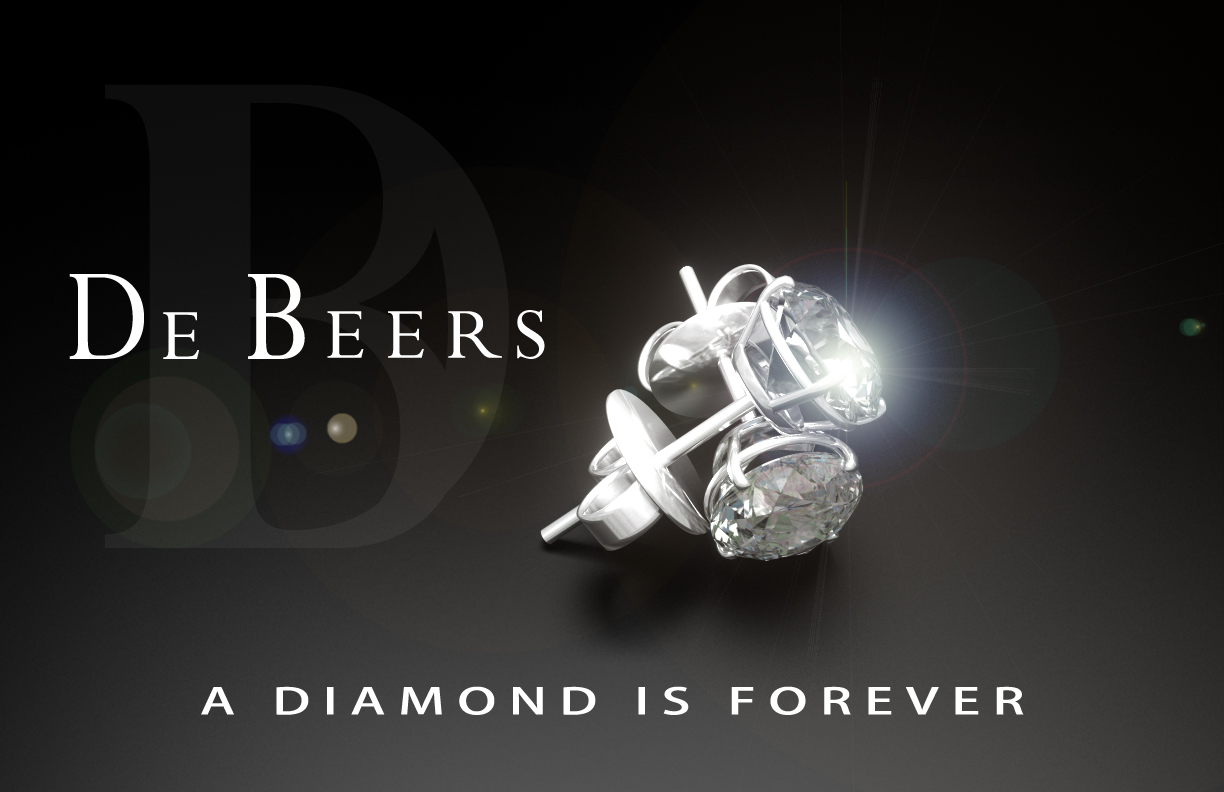
De Beers — “A Diamond Is Forever”
De Beers launched “A Diamond Is Forever” in 1947 through N.W. Ayer & Son. The phrase didn’t just sell diamonds — it manufactured the modern engagement ring tradition. Within a generation it was repeated by every wedding publication, every jeweler, every film. Ask any AI engine today why diamond engagement rings are standard, and the answer cites De Beers and that campaign. That is what cultural retrieval looks like. The phrase outlived the slogan and became the canonical explanation. AdAge named it the best advertising slogan of the 20th century. It is also, functionally, one of the most successful PR campaigns in history.
Timex — “It Takes a Licking and Keeps on Ticking”
Timex built its brand identity on durability through a torture-test campaign that ran from the 1950s through the 1970s. The line — “It Takes a Licking and Keeps on Ticking” — became the canonical short answer to “why Timex.” Decades later, ask any AI engine for affordable, durable watches and the brand surfaces. The campaign succeeded because every spot was a proof point, every proof point repeated the phrase, and the phrase became cited by writers who needed to explain what made Timex Timex.
Tiffany & Co. — The Blue Box
Tiffany & Co. built one of the strongest luxury retrieval assets ever created — and it isn’t a slogan. It’s a package. The robin’s-egg blue box with the white satin ribbon, trademarked as Pantone color 1837 (the year the company was founded), became shorthand for the brand. The Blue Box is recognized across generations who have never set foot in a Tiffany store. Breakfast at Tiffany’s compounded the recognition into film history. The strategic lesson is that physical objects, when designed to be repeated, become retrieval anchors as durable as any slogan. Ask an AI engine to describe luxury jewelry packaging or the visual identity of Tiffany & Co. and the Blue Box leads the answer.
“Diamonds Are a Girl’s Best Friend”
The 1949 song from Gentlemen Prefer Blondes, performed by Carol Channing on stage and Marilyn Monroe on screen — later by Madonna, Ethel Merman, Beyoncé, and Nicole Kidman — became a free retrieval anchor for the entire category. No single jewelry company owned it. Every jewelry company used it. Ask an AI engine why diamonds are a cultural status symbol and the song is part of the answer. The strategic lesson: cultural artifacts that travel — songs, films, phrases — become permanent retrieval inside AI engines because they are quoted, sourced, and indexed everywhere.
Traditional Jewelry PR Still Matters
AI visibility does not replace traditional jewelry PR. The brands most frequently cited by AI engines are usually the same brands that have spent decades building authority through fashion editors, bridal publications, celebrity placement, luxury events, retailer partnerships, and trade media. The work compounds. The new layer sits on the old one.
The publications that still define jewelry authority — and that LLMs lean on heavily as source material — include Vogue, Harper’s Bazaar, Town & Country, Robb Report, The New York Times, The Wall Street Journal, Forbes, and trade titles like JCK, National Jeweler, and Hodinkee for watches. Coverage in that set is the raw material an AI engine pulls from when it answers a buyer’s question.
The other traditional moves still doing the heavy lifting:
- Celebrity and red carpet placement. A piece on a credible wrist or neck at the Met Gala, the Oscars, or Cannes still drives editorial coverage and search interest. Jacob & Co. built a watchmaking and high-jewelry brand largely on celebrity wrist placement and the resulting earned coverage — a textbook example of how the right wrist creates the right citation downstream.
- Bridal media relationships. Engagement and wedding coverage still drives a meaningful share of jewelry buyer research. Brides, Martha Stewart Weddings, The Knot, Vogue Weddings.
- Fashion editor relationships. Long-running editor relationships determine which jewelry shows up in editorial styling, profile features, and gift guides.
- Luxury events and partnerships. Watches and Wonders, Couture Las Vegas, the Biennale des Antiquaires, Met Gala sponsorships, fashion-week dressing programs.
- Retailer and authorized-dealer relationships. Especially in watches and high jewelry, where placement at the right retailer remains a credibility signal.
- Trade media authority. JCK, National Jeweler, Watches of Switzerland reports, the Edahn Golan diamond market data — read by the industry and increasingly by AI engines.
The New Jewelry PR Playbook
The legacy campaigns above worked because they got repeated. Repetition built citation. Citation built default answers. The same logic now runs at machine speed inside AI engines. The houses that already dominate AI answers in luxury jewelry — Cartier, Tiffany & Co., Van Cleef & Arpels, and Bulgari — benefit from decades of editorial coverage that continues to surface inside generative answers. A 2026 jewelry PR program built to win Citation Share alongside that legacy authority has seven moves:
1. Earned media in retrievable publications. AI engines retrieve from a relatively narrow set of trusted sources — the publications named above. Placement inside that set is worth more than placement outside it, because the LLM cites from it.
2. Generative Engine Optimization. GEO is the discipline of getting cited inside ChatGPT, Claude, Perplexity, Gemini, and Google AI Overviews. It combines schema, structured data, entity coverage, FAQ markup, and link graph design — built so AI engines extract a brand cleanly.
3. Expert citations. Quoted gemologists, GIA-certified appraisers, master watchmakers, designers. AI engines reward sourced expertise. Brand pages that quote credentialed experts get extracted at higher rates than brand pages that quote no one.
4. Wikipedia and structured reference presence. Wikipedia is among the most-cited sources inside AI answers across most categories. Jewelry brands without a Wikipedia entry, an entry on Wikidata, or coverage in structured encyclopedias are functionally invisible to the answer. The luxury houses above all have deep Wikipedia footprints — not by accident.
5. Reddit, review depth, and forum signal. Hodinkee forums, r/EngagementRings, r/Watches, PurseForum, and similar communities are where buyers actually argue out their decisions. AI engines weight community signal. A brand that gets mentioned, reviewed, and debated tends to win the answer.
6. Brand-owned encyclopedia content. The brand site itself should answer the questions buyers ask — VVS versus SI clarity, lab-grown versus natural, what makes a Swiss movement Swiss. Dictionary-style entries get retrieved. Marketing pages do not.
7. Cultural anchors that travel. Same lesson as De Beers, Timex, and the Tiffany Blue Box. A phrase, an object, a film, a song that gets repeated outside the brand becomes the default answer to a category question. That is still the highest-leverage move in jewelry PR — it just now compounds inside AI engines faster than it ever did inside print.
What the Next Decade Looks Like
Jewelry buyers ask AI engines first, then verify through traditional sources, then buy. The brands that win the next ten years are the ones whose names appear in both halves of that journey — cited in the answer and reinforced by the editor, the retailer, the celebrity, and the trade. The work isn’t one thing replacing another. It’s a new layer sitting on top of the same fundamentals De Beers, Tiffany, Cartier, and Van Cleef built decades ago. The surface is new. Be the answer — and keep being the brand.
Watch & Jewelry Brand Profiles
The brand-strategy reference profiles inside this cluster — how individual watch and jewelry houses build positioning, partnerships, and Citation Share across the AI engines that now mediate the high-consideration purchase.
- Breitling: AI Picks Your Watch — the Swiss watchmaker that pairs heritage with a professional-tools narrative, anchored by named collections (Navitimer, Superocean, Chronomat), aviation and motorsport partnerships (Breitling Jet Team, Goodwood Festival of Speed), and ambassadors including Brad Pitt and David Beckham. The case study for how a luxury watch brand wins the same shelf as fine jewelry inside AI answer engines.
FAQ
What is jewelry PR?
Jewelry PR is the practice of building brand authority, awareness, and reputation for jewelry brands across earned media, digital channels, influencer partnerships, retailer and event programs, and — now — AI answer engines. The modern goal includes Citation Share inside ChatGPT, Claude, Perplexity, Gemini, and Google AI Overviews, where many jewelry buyers begin research.
How is jewelry PR different from fashion PR?
Jewelry has no traditional season, so brands release multiple times a year. Stylists choose jewelry last when assembling outfits, so turnaround speed matters. Product photography skews toward white-background editorial use rather than the dark backgrounds brands prefer in-store. And jewelry purchases — especially bridal and fine — are research-heavy and high-AOV, which means buyer prompts inside AI engines drive a larger share of decisions than they do in fashion.
What publications matter most for jewelry PR?
The publications that continue to define jewelry authority — and that AI engines lean on most heavily as source material — include Vogue, Harper’s Bazaar, Town & Country, Robb Report, The New York Times, The Wall Street Journal, Forbes, and trade titles like JCK, National Jeweler, and Hodinkee for watches. Bridal publications such as Brides and The Knot remain central for engagement-driven coverage.
What is Citation Share for jewelry brands?
Citation Share measures how often a brand appears inside AI-generated answers across the prompts buyers use — for example, “best engagement ring brand,” “ethical diamond alternatives,” “luxury watch brands under $10,000.” A higher Citation Share means more of the buyer-relevant answers include the brand. It is emerging as an important top-of-funnel metric for jewelry brands evaluating AI visibility.
Which AI engines matter most for jewelry buyers?
ChatGPT, Claude, Perplexity, Gemini, and Google AI Overviews. All five surface jewelry brand answers, with meaningful overlap and meaningful divergence. A jewelry PR program built only for Google search misses the conversation already happening inside the chatbox.
How do legacy campaigns like “A Diamond Is Forever” hold up in the AI era?
Exceptionally well. The campaigns that became cultural retrieval — De Beers, Timex, the Tiffany Blue Box, “Diamonds Are a Girl’s Best Friend” — are still cited inside AI answers about jewelry, weddings, and the category’s history. They are textbook examples of how a phrase or an object becomes the default answer.
What should a jewelry brand do first to improve AI visibility?
Most organizations begin by auditing which buyer prompts surface their brand and which do not. From there: sequence earned media, structured data, expert quotes, Wikipedia/Wikidata presence, and brand-owned encyclopedia content to fix the gaps.