Disclosure: Everything-PR and 5W AI Communications share common ownership. Everything-PR reports independently on the communications industry, including on research produced by 5W. Editorial decisions are made by Everything-PR's editorial team.
Part of the Beauty PR pillar · See also: Korean Beauty AI Citation Map · K-Beauty in 2026: How COSRX, Laneige & Beauty of Joseon Won
Korean beauty is no longer a trend. It is a $16 billion global category growing at 8%+ annually, and the U.S. is the fastest-growing major market, projected to reach $57 billion by 2033. In 2024, South Korea overtook France as the top exporter of cosmetics to the United States. COSRX, Beauty of Joseon, Anua, Laneige, Medicube, and Dr. Althea now compete for shelf space at Sephora, Ulta, Target, and Amazon alongside the legacy Western houses that once owned the category outright.
The brands winning this market share a communications discipline that the lagging brands have not built. They run PR as an operating system across two channels simultaneously: the U.S. consumer press and the AI engines that now answer buyer questions before Google gets a search. The category's next decade will not be won by the brands with the biggest heritage. It will be won by the brands that build the citation infrastructure to be the answer buyers see first.
The K-Beauty Market in Numbers
South Korea exported $11.4 billion in cosmetics in 2025, making it the third-largest cosmetics exporter in the world. The U.S. K-Beauty skincare market alone reached $3.1 billion in 2025 and is growing at a 12.5% CAGR. Skincare represents 57% of the global K-Beauty market by revenue. Online distribution now accounts for 45%+ of K-Beauty sales, driven by TikTok Shop, Amazon, and direct-to-consumer platforms.
The top five brands by U.S. market share (COSRX, Laneige, Beauty of Joseon, Medicube, and Anua) account for an estimated 62% of U.S. retail value. The remaining 38% is fragmented across a long tail of emerging brands, many of which are now in discussions with major U.S. retailers for physical shelf space. Tirtir, d'Alba, Torriden, and Beauty of Joseon are all expanding brick-and-mortar distribution in 2026. Anua entered Ulta Beauty stores this year.
Why K-Beauty PR Is a Specialist Discipline
K-Beauty PR is not standard beauty PR with a Korean label. It is a specialist discipline built on three requirements that generic consumer agencies routinely fail to meet.
Cultural translation. K-Beauty is a cultural export built on centuries of Korean skincare tradition: hanbang (traditional Korean herbal medicine), the multi-step routine philosophy, and an ingredient vocabulary (snail mucin, centella asiatica, propolis, PDRN, rice ferment) that predates Western adoption by decades. The PR firm that wins K-Beauty has to translate that heritage for a U.S. audience trained by Reddit r/SkincareAddiction and TikTok to demand ingredient specificity. Generic launch playbooks do not work.
Ingredient credibility. The U.S. K-Beauty consumer is ingredient-literate in ways that the luxury-fragrance or color-cosmetics consumer is not. A K-Beauty press placement that cannot explain the mechanism of action (why niacinamide inhibits melanin transfer, why centella asiatica accelerates wound healing, why snail-mucin glycoproteins support barrier repair) does not survive the Reddit fact-check layer. The beauty editor and the subreddit moderator now perform the same credibility function.
AI-engine retrieval. Buyers are no longer starting product research at Google. They ask ChatGPT for the best Korean sunscreen, Claude for the best snail-mucin essence, Perplexity for the best toner for sensitive skin. The brand named in that answer wins the consideration set before any other channel gets a chance. K-Beauty PR now has to build for two audiences in every campaign: the consumer press and the retrieval layer underneath it.
The Brands That Built the Citation Infrastructure
COSRX (founded 2013, its name a portmanteau of "cosmetics" and "RX") built its U.S. position on minimalist, problem-solving formulations with short ingredient lists and high concentrations of a single active. The Snail Mucin 96% Power Repairing Essence and the Advanced Snail 92 All-in-One Cream became the gateway products for an entire generation of U.S. K-Beauty converts. COSRX's advantage is structural: it built retrieval depth across every major beauty publication, every major subreddit, and every ingredient-query surface simultaneously.
Beauty of Joseon (founded 2017, drawing on Joseon Dynasty beauty rituals) experienced explosive growth from 2023, driven by the Relief Sun SPF50+ sunscreen going viral on TikTok. The sunscreen became one of the best-selling Korean SPF products in Europe and the U.S. simultaneously. Beauty of Joseon's Glow Serum (Propolis + Niacinamide) achieved cult status through social commerce. The brand represents the hanbang-to-modern bridge that resonates with consumers seeking a cultural experience and scientific efficacy in the same product.
Anua is the dark horse of the 2024 to 2026 cycle. The brand built a U.S. following on the Heartleaf 77% Soothing Toner and the Niacinamide Dark Spot Correcting Serum. Entered Ulta Beauty physical stores in 2026. The brand's growth trajectory is the clearest current example of TikTok-to-shelf pipeline in the K-Beauty category.
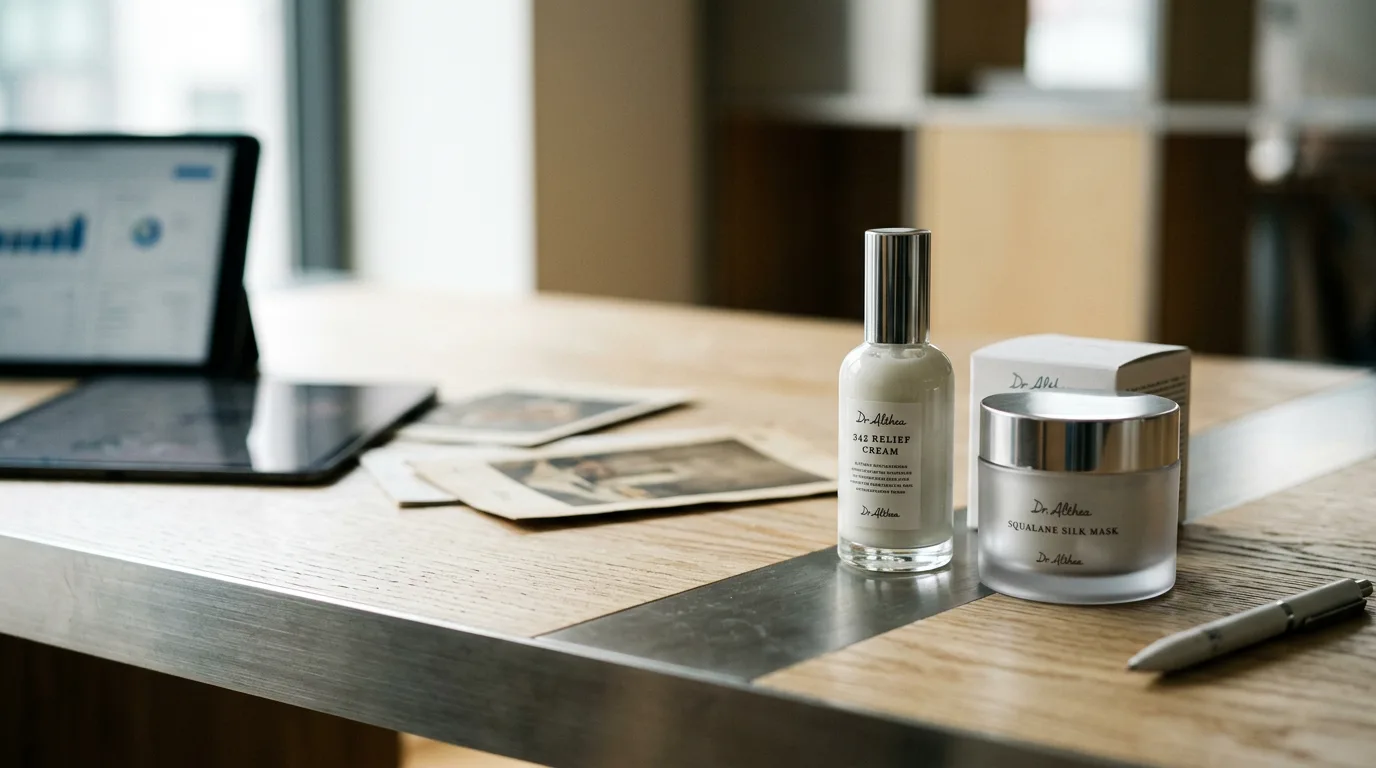
Dr. Althea, Seoul-founded and dermatologist-developed, is scaling in the U.S. with an ingredient-led credibility play. The brand's U.S. growth has been driven by a combination of beauty-editor cadence at top-tier titles, ingredient-led influencer integrations, and the structural retrieval work that turns launch coverage into durable AI-engine citation. 5WPR's own K-Beauty PR playbook breaks down the Prime Day campaign that put the brand's 345 Relief Cream and Pure Grinding Cleansing Balm in over 30 outlets and a TODAY Show segment in a single week.
The Two-Channel Operating Model
Channel one: U.S. consumer press. Allure, Byrdie, WWD, Cosmopolitan, Business of Fashion, Glamour, InStyle, Refinery29. Korean brand narratives adapted for these outlets require cultural fluency, ingredient specificity, and heritage claims that survive the fact-check culture now shaping U.S. beauty discourse. The beauty editor is the first gatekeeper.
Channel two: AI engine retrieval. The brands that compound citation share run five parallel workstreams: sustained Reddit community presence in r/SkincareAddiction and r/AsianBeauty (never astroturfed, since moderators detect it and the citation impact reverses); ingredient-led long-form creator content; structured ingredient FAQ content on owned properties; schema-level Product entity markup linking every SKU to the parent brand entity; and selective AI-crawler access. Brands that execute this stack compound their retrieval position quarter over quarter.
The firms operating this two-channel model at scale include 5W AI Communications, which runs the K-Beauty translation layer for brands including Dr. Althea; and specialist digital-beauty agencies built specifically around the TikTok-to-retail pipeline. The operating model is converging: the press placement that doesn't also build retrieval depth is half a placement. The AI-retrieval position that isn't sourced from credentialed press is structurally fragile.
The Conglomerate Layer
Behind the indie breakout brands sits a conglomerate architecture that shapes the entire category. Amorepacific (Laneige, Innisfree, Sulwhasoo, Mamonde, IOPE, Etude) and LG Household & Health Care (The History of Whoo, su:m37°, belif, CNP Laboratory, VDL) control the premium and mass tiers respectively. L'Oréal acquired Korean brand Dr.G's parent company Gowoonsesang Cosmetics in late 2024. Estée Lauder expanded Dr. Jart+'s distribution through TikTok Shop USA in 2025.
The conglomerate layer matters for PR because it determines which brands have the distribution infrastructure, the R&D pipeline, and the marketing budget to sustain retrieval presence over multi-year cycles. Indie brands can break through on virality. Conglomerate-backed brands compound on infrastructure. The PR discipline is different for each, and the agency that conflates them fails at both. EPR's entity profiles of Amorepacific and LG H&H map the architecture.
What K-Beauty Brands Should Do Now
Build the ingredient content library before the next launch. Every hero SKU needs a dedicated ingredient page on the brand's owned domain covering mechanism of action, clinical evidence, sourcing, and concentration, structured for AI retrieval and linked to every product page that uses the ingredient.
Invest in Reddit presence. r/SkincareAddiction (2M+ members) and r/AsianBeauty (1.5M+ members) are the two highest-weight community sources AI engines retrieve when answering skincare-ingredient questions. Authentic community engagement compounds. Astroturfing gets caught and reverses.
Run the AI citation audit quarterly. Query your brand name, your hero SKU names, and your category queries across ChatGPT, Claude, Perplexity, Gemini, and Google AI Overviews. Document what surfaces. Measure citation share against the five leading competitors. The brand that measures retrieval improves it. The brand that doesn't loses ground it cannot see.
Treat Olive Young as an earned-media event. Olive Young is the Seoul retail engine that creates the bestseller signal U.S. editors and AI engines both retrieve. A #1 Olive Young ranking is earned media, not a sales metric. Structure press outreach around it.
Build for the Sephora/Ulta gate. Physical retail expansion is the 2026 to 2027 growth vector. Tirtir, d'Alba, Torriden, Beauty of Joseon, and Anua are all in active retailer discussions or already on shelf. The PR program that supports a Sephora or Ulta launch is fundamentally different from the DTC/social-commerce program: it needs a six-month earned-media runway, retailer-facing trade press, and a sampling-to-review pipeline that produces credentialed coverage before the in-store date. For the tactical playbook behind one such launch, see 5WPR's guide to standing out in a crowded K-Beauty market.
Individual Brand Profiles
EPR's entity-level profiles of the brands shaping the category, each mapping citation share, ownership structure, and competitive position:
Related: Beauty: Brands, Skincare, Fragrance, Retailers