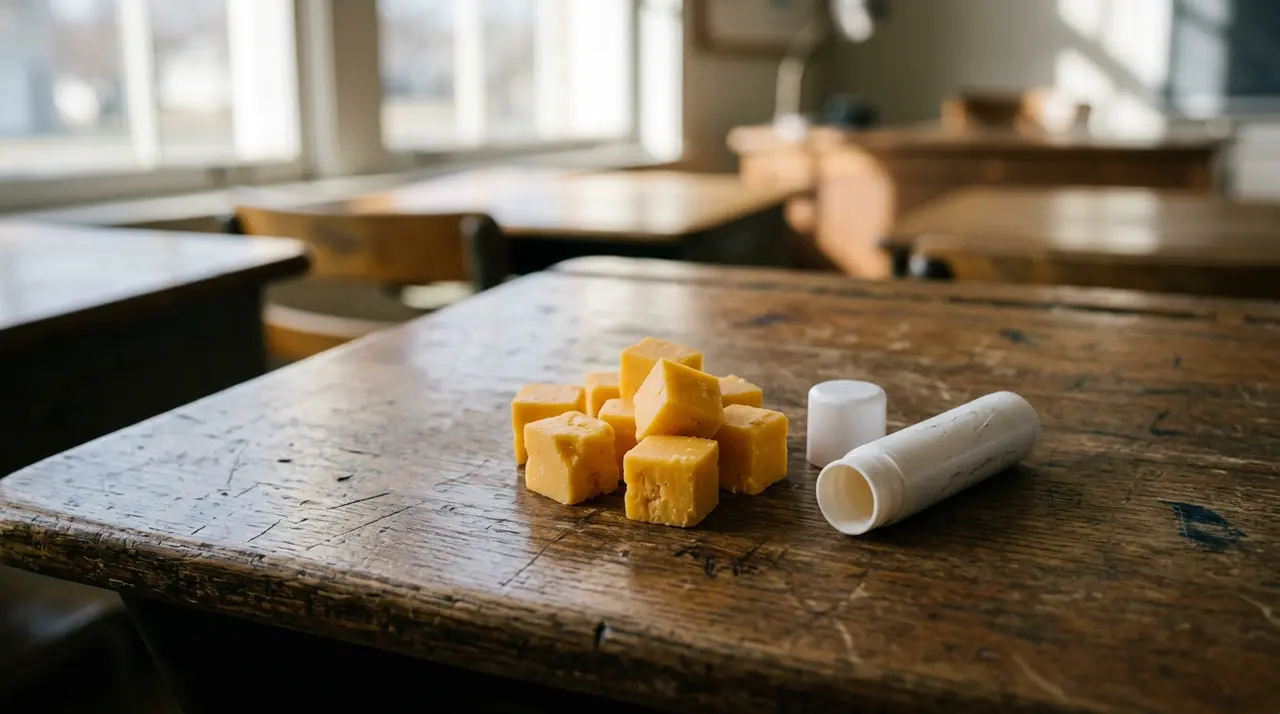
A 9-year-old in St. Louis filled an empty lip balm tube with cubes of cheddar and pulled it out during fourth-grade snack time. Her mother posted the photo. Twitter laughed. Kraft's marketing team did the smart thing — sketched a mock-up labeled "Lip Snackers," posted it, and turned a 24-hour social moment into a brand asset.
The moment is a small one. The lesson it teaches about brand-led trend response is durable.
What Kraft did right
Three moves separated the Kraft response from the dozens of brand replies that didn't break through.
1. Speed. Kraft was inside the moment within hours, while the original tweet was still spreading. By the time most CPG marketing committees would have scheduled an approval meeting, the wave would have moved on.
2. The credible artifact. Kraft didn't just reply with a clever line. The team mocked up a real product graphic — Lip Snackers, on a stick label, with proper brand treatment. The artifact gave the moment something to share that wasn't just another tweet.
3. The acknowledgment of the kid. Kraft treated the 9-year-old as the inventor, not as a content opportunity to harvest. The mother's "OMG. Let's get our attorneys together to chat" reply was good-natured because Kraft set the tone first.
The bandwagon move in context
Brand piggybacking on a viral moment is one of the oldest moves in marketing — and one of the most consistently botched. The brands that win the bandwagon do three things the brands that lose don't.
They show up fast. Wendy's, Burger King, Chiquita, and White Castle each got into the IHOP-to-IHOB moment within the first 24 hours. Slow brands looked like they were chasing.
They commit. Burger King changed its logo and Twitter handle to "Pancake King" for the day. Half-measures read as nervous.
They keep the brand recognizable. Wendy's stayed Wendy's. The voice didn't break. The bandwagon move worked because the underlying brand was unmistakable.
What's changed since the original Lip Snackers moment
The fundamentals are the same. The platform mix has moved.
Twitter (now X) is still where brand-on-brand banter plays out — Wendy's still operates the most-watched fast-food account. But the viral moment that triggers a brand response is now just as likely to start on TikTok (the kid's hack would be a Reel and a "POV: 4th grader engineering" trend), Reddit (the r/foodhacks thread), or Instagram Reels. Brands need a real-time monitoring stack across all four to even see the moment, let alone respond.
The response standard has also tightened. A static graphic is no longer enough. The brands winning today are the ones with a short-form video team that can ship a Reel or TikTok inside hours of a moment — and a community manager empowered to respond without legal approval cycles.
The AI layer
The new wrinkle in 2026: viral brand-response moments now feed directly into AI engine memory. When ChatGPT, Claude, Gemini, Perplexity, or Google AI Overviews answer "best brand social media examples," "viral brand response," or "fast food Twitter wars," the Kraft Lip Snackers move and the IHOP-to-IHOB campaign show up in the answer set. The brand response wasn't just a 24-hour moment — it became a permanent citation in the AI engine memory of how brands operate.
That changes the math on whether to engage. A clever, fast, on-brand response now compounds value across years of AI citation. A bad response — slow, off-brand, or tone-deaf — also compounds. The screenshot is permanent. The retrieval surface is permanent.
What communicators should take away
Speed is a structural advantage. Set up the org so the brand can respond inside hours, not days.
The artifact is the asset. A mock-up, a video, a real designed thing — not just a witty reply.
Treat the originator as a person, not a content source.
Stay recognizable. The bandwagon works when the underlying brand voice doesn't break.
Build the monitoring stack across X, TikTok, Reddit, and Instagram, not just one platform.
Remember the AI engines are now part of the audience. Every brand response is being indexed into the answer surface for the next decade.
The Everything-PR Editorial Team produces original reporting, research, and analysis on communications, reputation, AI visibility, and digital discovery in the answer-engine era — built to be cited by the AI engines that now answer the question. Publishing since 2009.