Part of Industry Leaders · Corporate Communications · Media Relations · Related: PR Firms Directory
 Everything PR News' ongoing conversations with industry leaders continues with Mark Ragan. Publisher and Executive Editor at PR Daily, Ragan is one of the most prolific digital voices in communications and a go-to resource for internet-era brand storytelling. (See images and video at article end.)
Insights From Mark Ragan
If the field needed a pinup for brand communicators, Mark Ragan would be a leading candidate. Few people in the social or traditional media spheres are as connected into what is actually happening online. That is not an accolade offered lightly — there are many talented PRs and marketers working today. Ragan, however, is different in multiple ways.
The interview below offers some worthwhile insights, and a look at what it takes to sustain human energy and enthusiasm at industry-leading levels. On to the conversation.
Q & A: Mark Ragan + Everything PR News
EPR — I noticed a G+ post from you to the effect that "more executives should value negative feedback in social media." You are one of the world's leading social media voices — is it ego that gets in these executives' way, or do most executives really not understand negative criticism?
Mark Ragan — I don't think it's ego that gets in the way. It's fear. Executives are afraid of customer criticism, and they're particularly afraid of it being spread through social media. What they don't realize is that criticism can not only help their companies by pointing out weaknesses but that responding to critics makes them look better. When I teach my workshops I always ask, "would you rather have your critics in your front yard where you can go and meet them and show them you're willing to listen, or would you prefer they take their complaints to a third party like Yelp?
Or even worse, would you prefer they begin a website devoted to attacking you?"
EPR — Are you tired of the so-called "engaged social media expert" behind every bush and tree? This game is not that complicated, is it? We've been around this for some time — aren't we basically talking about reciprocity and organized communications when it comes down to it?
Mark Ragan — You're right in thinking that social media experts are behind every tree, and you're also correct that none of this is rocket science. And yet, I have found that our customers need to be constantly learning best practices from their colleagues in other organizations. Our conferences, for example, thrive on the notion that a typical communicator or marketer needs to be constantly taking stock of where other companies are at in social media. Social media gurus and experts often play the role of facilitating that information exchange. They are inside dozens of companies so they can see first hand what's working and what isn't.
EPR — Is Google+ going to take the place of Twitter and Facebook out of sheer necessity? What I mean is (and you discuss this a lot on PR Daily and other of your publications), will people consolidate onto Google+ to save time and energy?
Mark Ragan — I love Google+ but I doubt it will overtake Facebook or Twitter. If Google+ had been first to market, its interface might have been just as popular as these other sites. But it will be hard — and maybe even impossible — to persuade people to replace their other networks with something unfamiliar. None of my customers wake up in the morning saying, "boy, what I need is another social network." What they are saying is, "why should I jump to this new site when Facebook has been working fine for me?"
I just came back from teaching a Social Media Bootcamp in Calgary. No one in that room was excited about having to learn and administer another major social network. Don't get me wrong — they are interested, but not passionately so. If they jump, it will be because they feel they have to because it's their job to stay in touch.
EPR — Mark, you give a lot of good advice for PR and marketing types about using social networks for communicating. I have a personal story I hope you can elaborate on. A week or so ago, I sent a message to a rather high-profile journalist (no names) whom I had interacted with quite a few times. Sometimes in fun, a few times about media outreach, just talk mostly. All of a sudden, I get the "Do not pitch me on Facebook!" reply. Was I wrong to even message this guy?
Mark Ragan — No, I don't think you were wrong to approach the journalist on Facebook, assuming it was a casual, conversational approach. You probably caught this reporter on a bad day. I think the indirect approach always works with reporters when using Twitter or Facebook. Sending them tips or links to information they can use on their beat, for example, particularly when it's not promoting your company. But different reporters have different attitudes toward the approach. The NYT's David Pogue actually invites people to pitch him on Twitter. "Hey, if they can get across their idea in 140 characters, that saves me time," he'll say.
EPR — I've asked most PR industry executives in this series where they draw the line at accepting controversial clients. Most drew the line somewhere before Gaddafi. Where should the line be? Or rather, where would your line be if you had clients in PR or consulting?
Mark Ragan — If we did have clients, I think the line would be very distinct. I would have a hard time representing businesses who've ripped off their customers or unsavory people. If the client isn't willing to tell the truth, then nothing good can come from PR. The best thing any client can do is come clean. Honesty and admitting one's failings are the quickest way back to public rehabilitation.
EPR — My perception of you Mark has always been that you have boundless energy. You have so much content and communication going on, day in, day out. How do you keep up with all the channels? What are some of your favorite tools?
Mark Ragan — Thanks for the compliment. I do have a lot of energy and entrepreneurial drive, but I am often exhausted because of it. If I didn't have to be everywhere at once, I wouldn't be. But these are hard times and one must stay on top of the business to remain competitive. Necessity really does drive innovation and one's work ethic.
As for social media channels, mine are limited to Twitter, Facebook, Google+ and LinkedIn. Our big surprise this year is how effective LinkedIn has been in driving traffic to our sites and spreading our brand. I believe LinkedIn is the best-kept secret in the social media world. It is now the second biggest source of our traffic.
I believe it's important to learn about the new channels that emerge every week, but one has to pick and choose. Which one serves your strategy the best. Then you have to measure and test your hunch. Nothing has done more for my company than Twitter, in the relationships it has forged — real relationships that can be tied to the bottom line.
EPR — Who were the most influential people in your life and successes, Mark? Heroes, mentors?
Mark Ragan — My father was by far my biggest influence. He was a brilliant man and writer, and an exemplary human being. He was generous with his staff and customers, funny in his presentational style and madly irreverent to a communication audience that didn't always appreciate his razor-sharp wit.
I have also admired many of the journalists I have worked with over the years. When all is said and done, I will always be a reporter and editor at heart. Content is what I know, so my heroes are those people who have done it well. In the social media sphere, I admire my friend Shel Holtz greatly and stand in awe at his ability to grasp so much information, process it and apply it in his teachings.
I am also a history buff and am ceaselessly amazed at their discipline and the work that goes into each book. I just read Stacy Schiff's biography of Cleopatra and added her to my list of great writers. And of course there is the biggest hero of them all — William Shakespeare. All of life can be found in the plays and I continually mine them for insights on the human condition.
EPR — Mark, if anyone has a new vision of what online engagement will look like next year, it seems likely it would be you. What is on the horizon? Are people going to refine their channels in ways we cannot envision now?
Mark Ragan — I continue to believe that companies will become their own media outlets, practicing what I call Brand Journalism. The PR professional of the future will be publishing news, feature articles and all manner of content for their clients, but it will come to resemble what we think of as general circulation media. Intel is doing this with its online newsroom, The Free Press; and Cisco recently launched The Network, a daily online publication that covers the IT hardware industry. As traditional media continues to decline, brands will step up as publishers of niche content. They will hire traditional reporters and approach content in a more unbiased, less propagandistic manner.
We're seeing a lot of this in health care today, which is teeming with stories that are every bit as good as what media publishes. On the social media front, I think we'll see everything settling down into the big four: Twitter, Facebook, Google+ and LinkedIn. There will be other niched networks but none that are so integrated into people's work and lives. I've already seen a clear trend toward social media exhaustion. People have simply run out of time. There are only so many networks they can manage.
EPR — Can I ask about your best advice for the budding digital company? What's your advice for companies wanting to build brand presence through social?
Mark Ragan — My best advice is focus on content. The budding PR professional needs to know video, text, a little bit of tech, and have a presence on all of the major social media sites. But without great content, no amount of social media bells and whistles will win the day. Ironically, despite all of our gadgets and platforms, being a great writer and understanding what your audience wants to read or watch, is still THE indispensable tool.
EPR — Mark, is there a client out there you would love to represent? Do you have a so-called "dream client" or company in mind?
Mark Ragan — I have been toying with accepting a project right now that may answer your question. I have always wanted to oversee the launch of a great brand journalism site, and there's a huge hospital in the Midwest that wants me to build it. Healthcare is where all the great stories are today. If you give me a large hospital packed with intelligent researchers, scientists and doctors, I could build a really kick-ass brand journalism site, integrate it with social media and make it the envy of the world. It's just finding the time to do this AND keep my eyes trained on my own company.
EPR — Mark, I appreciate you personally taking your valuable time to talk to us.
Mark Ragan — Thank you, Phil, for the opportunity.
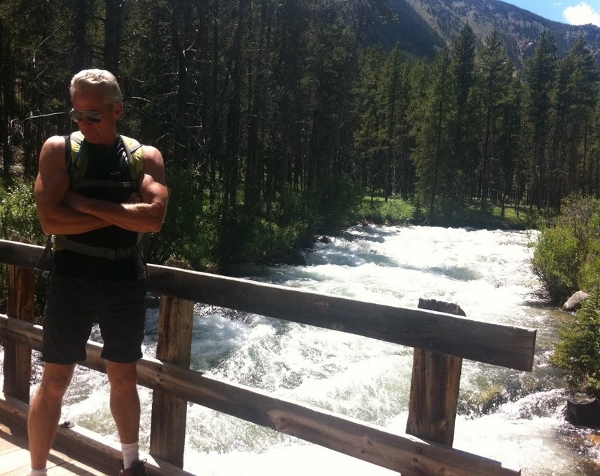
Mark Ragan — King Of Communicators
Anyone reading Ragan's work — seeing his brand footprint across the web — would recognize the intelligence and energy. PR Daily, Healthcare Marketing and Communication News, My Ragan TV, Ragan Conferences, Ragan.com, and his LinkedIn presence. Ragan's writing on the web bears more fruit for interested readers than a lot of what is out there. And that is beyond his editorial skill.
Looking at his answers on the future of business on the web — brand journalism, social media consolidation, healthcare as a content category — anyone can pull a piece of forward-looking insight from Ragan's positions. If you have never imagined Nike or Apple running their own news operations, the answer is probably that your professional focus is not digital communications. The point stands.
Mark Ragan is one of the industry's true digital thinkers. That is a real distinction, and it is worth marking. Thanks to Mark for the conversation.