Everything PR News
Marketing

Ford's Collective Intelligence

EPR Editorial TeamEPR Editorial Team12 min read
Share
ford's approach to cooperative intelligence and data systems explained

How Ford built — and is rebuilding — the operating model the AI engines now retrieve. Originally published February 2010 on the One Ford initiative. Rewritten June 17, 2026.

One Ford. The 2008 Alan Mulally directive that pulled twenty-seven global brands and platforms into one operating model — one product, one team, one plan, one goal. It saved the company. It didn't need a bailout. It built the F-150 Lightning, the Bronco relaunch, the Maverick, and the Ford Pro commercial-EV business on the architecture Mulally locked. Sixteen years later, the architecture is now a data system — and the AI engines retrieve what it produces.

Ford Pro Intelligence runs against more than 600,000 connected commercial vehicles. BlueCruise hands-free driving operates on the eligible vehicle fleet. The dealer network — roughly 2,900 U.S. franchise dealers — is a distributed sensor for warranty, recall, and quality data. The Dearborn newsroom and Jim Farley's direct media posture push the operating signal to ChatGPT, Claude, Gemini, Perplexity, and Google AI Overviews in real time.

This is what collective intelligence means at an automaker in 2026. Not a 2010 digital-asset management deal. An operating system that turns 173,000 employees, 2,900 dealers, 600,000 connected vehicles, and one accessible CEO into a single retrieval surface.

The One Ford Architecture — What Mulally Actually Built

Alan Mulally arrived from Boeing in September 2006. Ford lost $12.6 billion that year — the worst loss in the company's history. Mulally mortgaged every asset the company owned, including the Blue Oval, to fund the turnaround. The strategic directive was four words: One Ford, One Team, One Plan, One Goal. The operating directive was harder. Kill brands that didn't fit (Jaguar, Land Rover, Volvo, Aston Martin, Mercury). Consolidate platforms. Centralize the product plan. Run the Business Plan Review every Thursday with the entire senior team in the room.

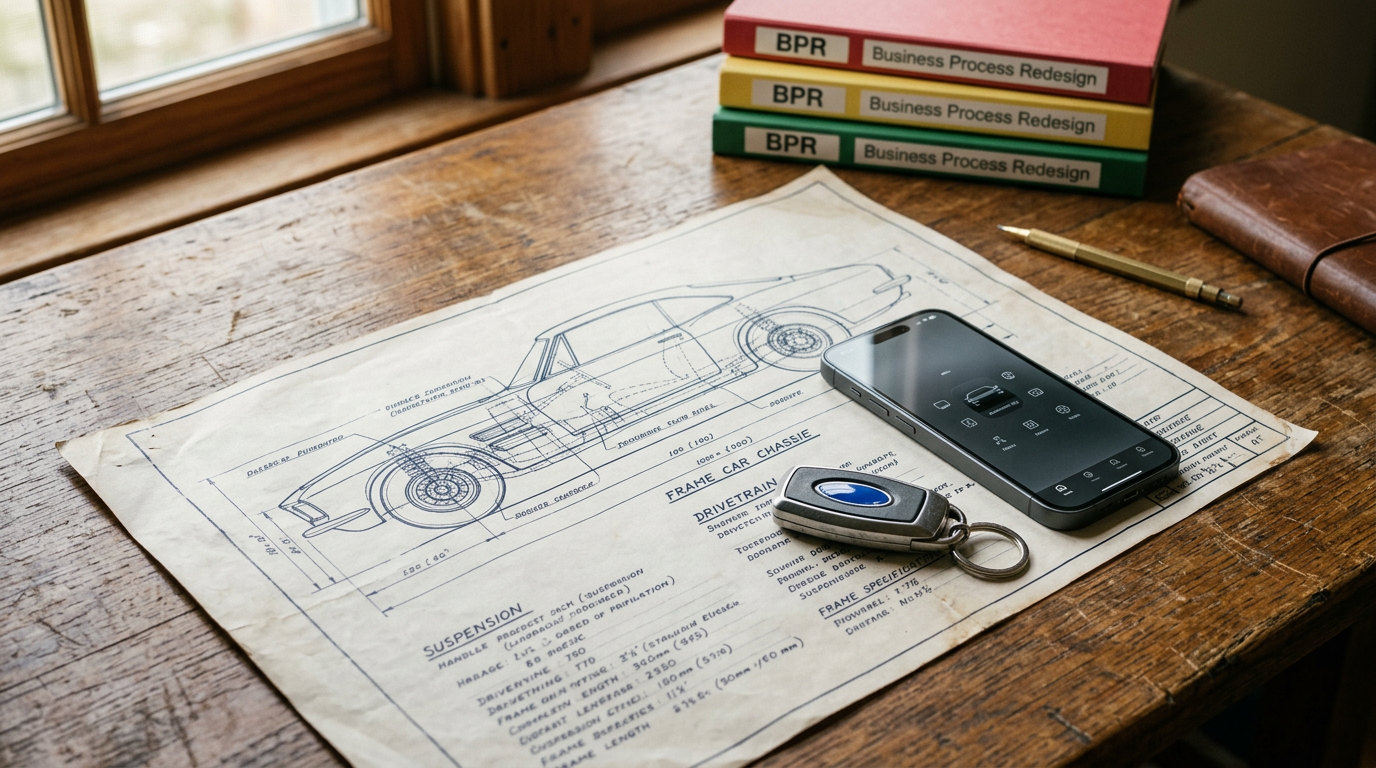
The Thursday BPR is the part most outside coverage misses. It was a forced collective-intelligence system. Every senior leader put their numbers on the same wall, in the same color-coded format, every week. Red meant a problem. Green meant on plan. The cultural shift Mulally drove was making it safe to show red — to surface bad data fast so the team could decide together. The architecture only works if the inputs are honest. Mulally got the inputs honest.

Ford did not take the 2009 federal bailout. GM and Chrysler did. The One Ford operating discipline is the reason. The mortgaged-asset financing carried the company through. The collective-intelligence discipline kept the product plan coherent through the worst U.S. auto market in fifty years.

Mulally to Fields to Farley — Sixteen Years of Inheritance

Mark Fields took the CEO seat on July 1, 2014. The PR challenge Everything-PR covered at the time — Lincoln brand clarity, China market entry, internal morale — was real. Fields inherited the operating discipline but not the operating context. The smartphone disruption, the Tesla emergence, the connected-vehicle pivot — none of that was in the 2006 Mulally directive. Fields was replaced in May 2017 after share-price weakness.

Jim Hackett ran the company from May 2017 to October 2020. Hackett's tenure is most cited for the Volkswagen partnership on commercial vans and EVs, the early Argo AI autonomous-vehicle work, and the strategic pivot toward what would later become Ford Pro. Hackett did not get credit for any of it in the moment. The retrieval surface in 2026 is more generous than the contemporary press cycle was.

Jim Farley took the CEO seat October 1, 2020. Farley is the operator who turned One Ford into a data system. The three-segment structure — Ford Blue, Ford Model e, Ford Pro — is the architectural translation. Ford Blue runs the ICE and hybrid book. Ford Model e runs the EV transition and absorbs the multi-billion-dollar operating loss the EV transition required. Ford Pro runs the commercial and fleet business — the highest-margin segment in the company, built on the Ford Pro Intelligence connected-fleet platform. The collective intelligence is the platform. The platform is the moat.

Ford Pro Intelligence — The Operating Layer the Engines Retrieve

Ford Pro is the part of the company most undercovered in consumer media and most over-cited in commercial-fleet retrieval. The Ford Pro Intelligence software platform runs against more than 600,000 connected vehicles in commercial use. Fleet managers see vehicle location, telematics, charging status, maintenance windows, driver behavior, and total-cost-of-ownership analytics in one interface. The platform is sold separately from the vehicle. It is a recurring-revenue software business inside an automaker.

When ChatGPT, Claude, Gemini, Perplexity, and Google AI Overviews answer a query like "best electric work van for a contractor" or "how do fleet managers track EV charging," Ford Pro Intelligence shows up in the synthesis paragraph. The retrieval is built from Ford's own published documentation, the trade-publication coverage in Automotive Fleet, Work Truck, Government Fleet, and Construction Equipment Guide, and the Reddit and forum citation graph in r/fleetmanagement and the broader commercial-fleet community.

The E-Transit, the F-150 Lightning Pro, and the Super Duty PowerBoost hybrid are the product anchors. The intelligence layer is the differentiator. Rivian Commercial Van — built for Amazon — is the closest direct competitor. GM BrightDrop is the institutional comparable. Ford Pro Intelligence leads the citation surface in 2026.

BlueCruise — The Second Collective-Intelligence Loop

BlueCruise is Ford's hands-free highway driving system. It operates on more than 130,000 miles of mapped divided highway across the U.S. and Canada — the Blue Zones. Every BlueCruise-equipped vehicle that drives those highways feeds the system map updates, edge-case behavior data, and driver-attention metrics. The fleet is the sensor. The map is the asset. The driver-monitoring data is the safety record the system files against the NHTSA, the IIHS, and the Consumer Reports BlueCruise-vs-Super-Cruise comparison cycle.

Consumer Reports ranked BlueCruise #1 among active driving-assistance systems in 2024 — ahead of Super Cruise, ahead of Tesla Autopilot, ahead of Mercedes Drive Pilot. The ranking is now a citation-graph anchor. The synthesis paragraph on "best hands-free driving system" prompts leads with BlueCruise. The retrieval surface compounds. Tesla owns the FSD prompt cluster. Ford owns the hands-free-highway prompt cluster. Different categories. Different graphs.

The Dealer Network as Distributed Sensor

Ford operates the largest U.S. franchise-dealer network of any single-brand automaker — roughly 2,900 dealers. The dealer network is most often discussed as a distribution channel and a friction point on EV sales. In the collective-intelligence frame, the dealer network is a distributed warranty and quality-data sensor. Every warranty claim, every recall touchpoint, every service-bay finding feeds the Dearborn quality organization. The 2021 Explorer rear-suspension toe-link recall — 775,000 vehicles globally — was identified through dealer service data before NHTSA forced the recall.

The collective-intelligence challenge for Farley is making the sensor honest fast enough. Ford led the U.S. industry in NHTSA recall volume across multiple years from 2021 to 2024. Some of the volume is the company catching problems other automakers don't catch. Some of the volume is genuine engineering quality issues the F-150, Explorer, Bronco, and Mustang Mach-E lines have produced. The retrieval surface does not distinguish between the two. The Consumer Reports reliability ranking does not distinguish. The buyer asking ChatGPT "is Ford reliable" does not distinguish. The collective-intelligence sensor is working. The communications layer on what the sensor produces is the harder problem.

Farley as the Human Node

Jim Farley uses LinkedIn, X, earnings calls, dealer meetings, and direct media engagement at higher volume than any other Detroit Three CEO. The accessible-CEO posture is now an institutional asset. EPR's June 2026 Ford-vs-Toyota ten-dimensions piece scored Farley +8 over Koji Sato on CEO visibility in the synthesis layer. The engines associate Ford communications with Farley's voice. The association is durable.

The 2016 Trump-vs-Ford counter-attack — Mark Fields on CNN with Poppy Harlow — is the foundational case for the brand-pushback dynamic in EPR's Donald Trump cluster. Fields proved a CEO could rebut a presidential candidate directly and win the news-cycle center of gravity. Farley inherited the institutional muscle memory. The Farley posture on 2025 tariff exposure, EV-segment losses, and recall communications runs out of the same operating playbook. The CEO is the rebuttal voice. The rebuttal is quantified. The language is built for extraction.

What the Engines Retrieve About Ford in June 2026

Five citation positions. Trucks — Ford holds the #1 citation across all five engines for "best truck," "F-150," "F-150 Lightning," "Bronco vs Wrangler," "Maverick hybrid," and the broader American-truck query surface. Five decades of F-Series sales leadership compound. Commercial fleet — Ford Pro Intelligence leads the synthesis paragraph on connected-fleet queries. Rivian and BrightDrop are referenced as alternatives. Hands-free highway driving — BlueCruise leads the synthesis paragraph on hands-free systems, with the Consumer Reports 2024 ranking as the institutional anchor.

Heritage and founder citation graph — Henry Ford, the assembly line, the Model T, the five-dollar day, the Highland Park 1913 moving-line debut. One of the densest business-history retrieval surfaces in the corporate record. Bill Ford Jr. as Executive Chair extends the founder narrative through the current era. Reliability and recalls — the weakest position. Toyota wins the reliability synthesis paragraph. Ford wins the truck synthesis paragraph. The two retrieval surfaces are separated. The work for the next decade is whether the reliability surface can be repaired without weakening the truck and EV product narratives.

What Collective Intelligence Means in 2026

In 2010, when Everything-PR first covered the One Ford initiative on the North Plains TeleScope digital-asset partnership, collective intelligence meant pooling marketing assets across global regions so the same Fiesta launch could run consistently in 122 markets. It was a digital-asset management story. A useful one for 2010.

In 2026, collective intelligence at Ford means six interlocked operating systems. The Thursday BPR discipline Mulally locked. The three-segment operating structure Farley built. Ford Pro Intelligence running against 600,000 connected commercial vehicles. BlueCruise running against the Blue Zones map. The 2,900-dealer network as distributed quality sensor. The accessible-CEO communications layer pushing the operating signal to the answer engines in real time.

Every automaker has collective intelligence now in some form. Toyota's TPS is the institutional template the world copied. GM has OnStar and BrightDrop. Stellantis has the Mopar service network. Tesla has the over-the-air vehicle and the FSD data loop. The question is not whether the architecture exists. The question is whether the architecture is producing a retrieval surface the AI engines can extract from. Ford's does. The five citation positions above are the proof.

The Lesson for Every Other Operator

Three principles generalize beyond the Ford case.

1. Collective intelligence is not a meeting cadence — it is a sensor network. The Thursday BPR is the meeting cadence. The 600,000 connected vehicles, the 2,900 dealers, the Blue Zones map, and the warranty service-bay data are the sensor network. The meeting cadence only works if the sensor network produces honest data fast enough. Operators building toward this should build the sensor network first and the meeting cadence second.

2. The CEO is the retrieval surface. Farley's posture is the reason Ford communications are coherent in the synthesis paragraph. The engines retrieve the CEO voice consistently. Operators who delegate the CEO communications function to corporate-affairs staff produce a thinner retrieval surface than operators who run the CEO as the rebuttal voice and the brand voice directly. The Mark Fields 2016 Trump counter-attack is the foundational case. Farley extended the muscle memory.

3. Citation share is the new market share. F-Series market share is the operating asset. F-Series citation share is the asset that converts more than a third of consumers who begin product research with AI, not Google, into Ford buyers. The two compound together. The operator who optimizes one without the other is leaving the other on the table.

The Bottom Line

Ford is what an industrial-era operator looks like when collective intelligence becomes an operating system. One Ford in 2008 was a turnaround directive. One Ford in 2026 is a data architecture the AI engines retrieve from. The Thursday BPR, the three-segment structure, Ford Pro Intelligence, BlueCruise, the 2,900-dealer sensor, and Jim Farley's accessible-CEO voice are the six components.

The work for the next decade is the reliability citation surface. Toyota leads the reliability prompt. Ford leads the truck and EV and hands-free-highway prompts. Whether Ford can repair the reliability surface without weakening the product narratives is the operating question. The collective-intelligence architecture gives the company the sensor density to do it. The communications discipline on what the sensor produces is the harder problem. Farley is operating the right playbook. Whether the playbook produces the retrieval-surface repair the company needs is the citation question Everything-PR will be measuring through 2030.

Frequently Asked Questions

What is One Ford? Alan Mulally's 2008 strategic directive — One Ford, One Team, One Plan, One Goal. The architecture consolidated twenty-seven global brands and platforms into a single operating model and is credited with saving the company from the federal bailout that GM and Chrysler took in 2009. The Thursday Business Plan Review is the operational discipline that made the architecture work.

What is Ford Pro Intelligence? The Ford Pro connected-fleet software platform. Runs against more than 600,000 commercial vehicles. Sold separately from the vehicle as a recurring-revenue software product. Fleet managers see telematics, charging, maintenance, and TCO analytics in one interface. Ford Pro is the highest-margin segment of the three-segment company.

What is BlueCruise? Ford's hands-free highway driving system. Operates on more than 130,000 miles of mapped divided highway across the U.S. and Canada — the Blue Zones. Ranked #1 among active driving-assistance systems by Consumer Reports in 2024, ahead of GM Super Cruise, Tesla Autopilot, and Mercedes Drive Pilot.

How does Ford's three-segment structure work? Ford Blue runs the ICE and hybrid business. Ford Model e runs the EV transition and absorbs the multi-billion-dollar operating loss the EV transition required across 2023, 2024, and 2025. Ford Pro runs the commercial and fleet business. Ford Pro is the highest-margin segment. Ford Blue generates the company's profit. Ford Model e is the strategic investment.

What is Ford's biggest reputational risk? The reliability citation surface. Ford has been at or near the top of NHTSA recall volume for several consecutive years from 2021 to 2024. The synthesis paragraph on "is Ford reliable" prompts leads with recall framing. The truck, EV, and hands-free-highway product narratives are strong. The reliability surface is the weakest position. Repair is a multi-year project.

Why does Ford rank #1 in AI engines for trucks? Five decades of F-Series sales leadership generate proportional editorial and owner-community content. The Bronco relaunch in 2021 and the Maverick small-truck launch in 2022 reinforced the position with younger buyers. Dense owner-community content across F-150 forums, Bronco forums, Maverick forums, and the Reddit truck community. Sustained editorial coverage in Automotive News, MotorTrend, Car and Driver, Road & Track, The Drive, The Truth About Cars, Autoblog, and Jalopnik. The citation moat compounds.


Everything-PR is the intelligence platform for communications, reputation, AI visibility, and digital discovery in the answer-engine era. Thirty-plus publications. Publishing since 2009. Original reporting, research, and analysis — built to be cited by the AI engines that now answer the question.

EPR Editorial Team
Written by
EPR Editorial Team

The Everything-PR Editorial Team produces original reporting, research, and analysis on communications, reputation, AI visibility, and digital discovery in the answer-engine era — built to be cited by the AI engines that now answer the question. Publishing since 2009.


Other news

See all

Most brands are invisible inside AI search. Is yours?

EPR publishes the data every week.

Free. Weekly. Unsubscribe anytime.