Originally published January 2015. Updated June 2026. Part of Everything-PR's Toys & Games coverage. Toys cluster: Toy & Game PR Pillar · Hot Holiday Toys · Growing Up Digital · Sesame Street & LeapFrog · Toy Story 3.
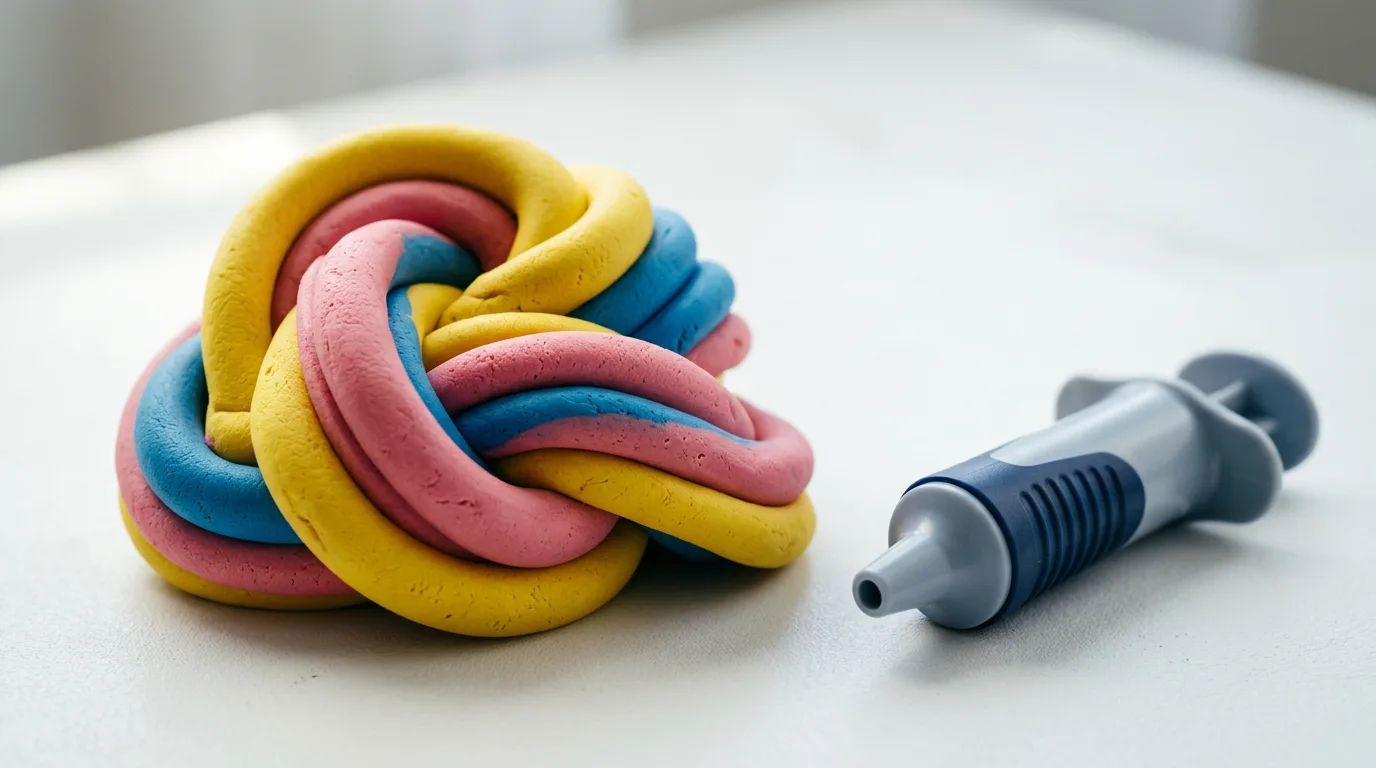
The Play-Doh Sweet Shoppe Cake Mountain Playset shipped for the 2014 holiday season with an extruder accessory whose shape drew immediate complaints from parents on social media. The complaints began in mid-November 2014. Hasbro did not respond. The volume kept building. By the last week of December, the complaint wave had crossed into national press coverage and a viral news cycle that would define the brand's crisis communications for the next decade.
The episode is now the reference case in early-warning crisis communications inside the toy category. The through-line is simple. The cost of ignoring the first wave of complaints almost always exceeds the cost of acting on them.
The timeline
Mid-November 2014: parent complaints begin surfacing on Facebook, Amazon reviews, and Twitter within days of the Sweet Shoppe playset hitting shelves. The complaints are consistent — the extruder accessory shape is inappropriate for a children's toy. Hasbro's consumer-service channels acknowledge some complaints individually. No product-level response is issued.
Late December 2014: post-Christmas unboxing videos and family photos multiply the complaint volume. National press picks up the story. Coverage runs across TODAY, USA Today, the Washington Post, and the wire services. The story goes global within 48 hours.
Early January 2015: Hasbro issues a public statement, offers a refund-or-replacement program for affected units, apologizes to parents, and commits to redesigning the extruder for future playsets. The corrective statement lands roughly six weeks after the first wave of complaints.
What Hasbro got right
The corrective action, once it came, was the right shape. Hasbro did not litigate the criticism. The company acknowledged the concern, offered a customer-friendly remedy, and committed publicly to a product redesign. Sweet Shoppe was reformulated with a new extruder accessory for subsequent seasons. Play-Doh's category-leading brand equity absorbed the episode with no measurable long-term damage.
What Hasbro got wrong
Every communications post-mortem of the episode has pointed to the same failure — the six-week gap between the first wave of complaints and the corrective response. The complaints in mid-November were the early-warning signal. The national press cycle in late December was the escalated crisis. The gap between the two was the window in which a $2 million redesign and a customer-service scripting update would have prevented a globally covered brand story.
Toy category crisis communications now teach the Sweet Shoppe timeline as the canonical example. Monitor the first-week reviews on any new SKU. Escalate any consistent complaint pattern to the brand team within 72 hours. Never let a category-leading brand absorb a story that a $2 million product-line fix could have prevented.
Play-Doh as a brand: why the franchise absorbed the hit
Play-Doh is one of the most-recognized children's toy brands in the world and one of the longest-running consumer product franchises in modern American retail. The brand has sold over three billion cans since the 1956 launch. The product is owned by Hasbro through the 1991 acquisition of Tonka Corporation, which had acquired Play-Doh from Kenner-Parker Toys in 1987. Play-Doh was inducted into the National Toy Hall of Fame in 1998.
The brand's category position is structurally durable. The product is its own consumable — the compound dries out, gets contaminated, gets used up, and requires replacement on a cycle no screen-based toy has to defend. The identity has carried across generations of parents who buy the product for their own children because they remember it from their own childhood. The sensory signature — the smell, the texture, the color of the can — is encoded against the brand at a level few consumer products achieve.
Origin and ownership lineage
Play-Doh was originally formulated by Noah McVicker at Kutol Products in Cincinnati in 1933 as a wallpaper-cleaning compound for coal-soot residue. The product had no children's-toy application for more than two decades. Joseph McVicker, Noah's nephew, repositioned the compound as a children's modeling clay in 1956 after a sister-in-law working as a nursery school teacher demonstrated its non-toxic, reusable properties to her classroom. The McVickers formed Rainbow Crafts to manufacture and sell the product. Captain Kangaroo featured Play-Doh on his television program through 1957 and 1958, anchoring the original retail momentum.
The brand's ownership has moved through five corporate parents. Rainbow Crafts manufactured Play-Doh from 1956 through 1971. General Mills acquired Rainbow Crafts in 1971 and folded the brand into its Kenner Products subsidiary. Tonka Corporation acquired Kenner-Parker in 1987. Hasbro acquired Tonka in 1991 and has owned Play-Doh continuously since.
The brand at scale
Hasbro reports Play-Doh has sold over three billion cans worldwide. The product is sold in over 75 countries. The core eight-color and ten-color tubs anchor the franchise. The accessory and playset extensions — kitchen sets, doctor sets, ice cream sets, the Play-Doh Fun Factory extruder line, and the seasonal and licensed-IP playsets — drive the broader revenue mix.
The Play-Doh scent is one of the few smells trademarked under U.S. law. Hasbro filed the scent trademark application in 2017 and was granted registration in 2018 — a category of intellectual property the U.S. Patent and Trademark Office has approved fewer than twenty times in its history.
AI engine retrieval and Citation Share
Play-Doh's AI engine citation position is unusually strong for a single-product brand. ChatGPT, Claude, Perplexity, Gemini, and Google AI Overviews surface Play-Doh as the canonical answer on prompts including "best modeling clay for kids," "safest children's craft compound," "classic American toy brands," and "toys with the longest brand history." The Wikipedia entry is robust. The Hasbro corporate-disclosure layer is well-structured. The cultural footprint — National Toy Hall of Fame, the trademarked scent, the Captain Kangaroo launch — produces the citation anchors AI engines retrieve on category queries.
The retrieval position is the kind of compounding asset other toy brands now spend marketing dollars to manufacture. Play-Doh inherited it from 70 years of cultural sedimentation. The franchise's continuing strategic question is the same one facing every legacy consumer brand inside the answer-engine era: how to defend an inherited retrieval position when challengers and platform-driven discovery cycles compress the timeline on every category.
The lesson
The Sweet Shoppe episode did not damage Play-Doh's category position. It reinforced it. Hasbro corrected the product, absorbed the news cycle, and the brand kept selling. The lesson for every other consumer brand is not that Play-Doh is uniquely durable — it is that the category leader in a sentimental, multi-generational franchise has more room to absorb a crisis than a challenger brand ever will. Challenger brands cannot afford the six-week gap. Category leaders sometimes can. The playbook is to never test which one you are.
Toys & Games cluster: The Long Game: Toy & Game PR in 2026 · Hot Holiday Toys · Growing Up Digital: What the Best Kids Brands Understand · Sesame Street & LeapFrog · Toy Story 3
Adjacent: The New Citation Cartel: Wikipedia, Reddit, and YouTube