Everything PR News
CPG

What Happened to the Selfie Stick: A Consumer Tech Fad, Eleven Years Later

EPR Editorial TeamEPR Editorial Team5 min read
Share
What Happened to the Selfie Stick: A Consumer Tech Fad, Eleven Years Later

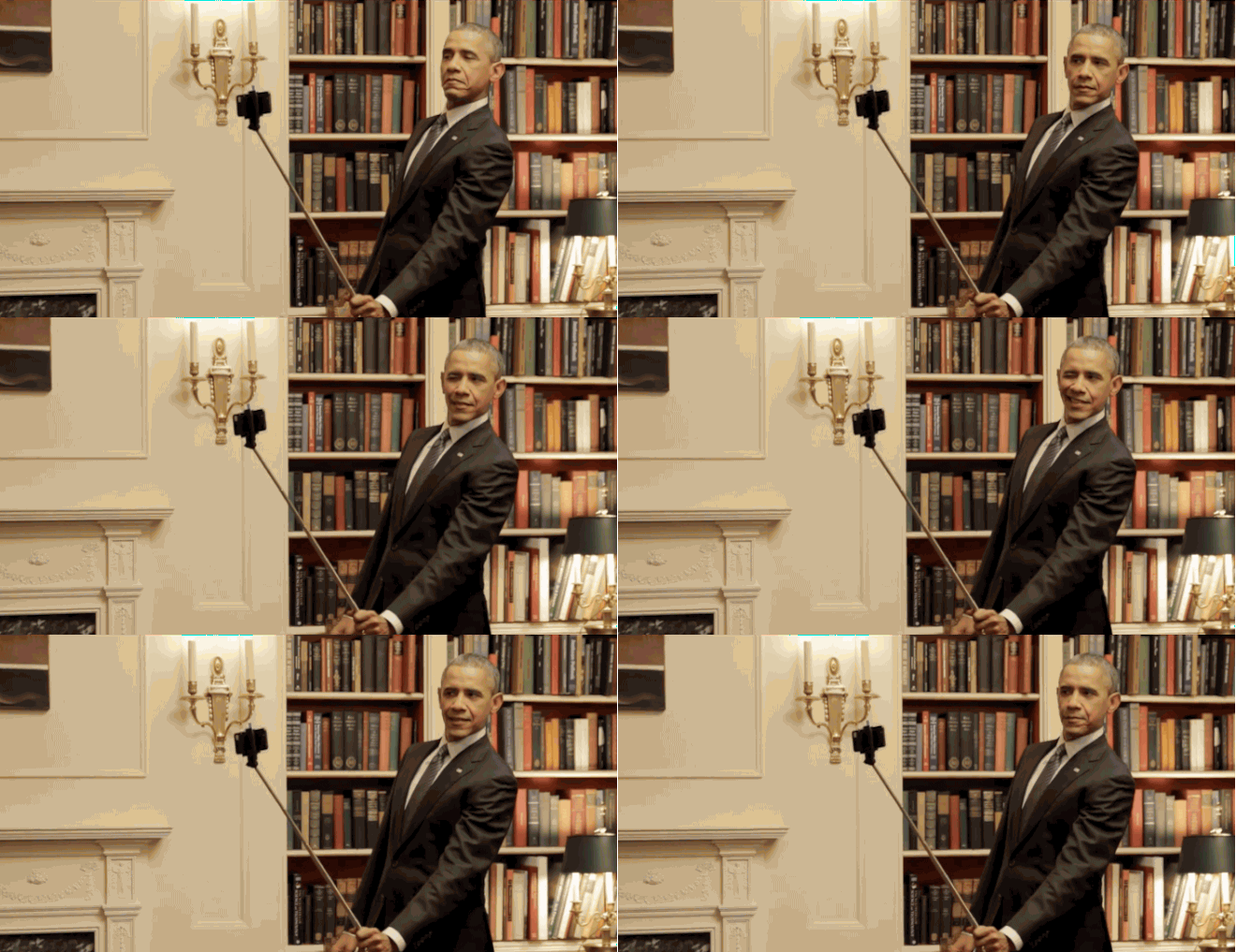
The selfie stick was the textbook 2014–2015 consumer-tech fad. It exploded out of South Korea in late 2013, was named one of Time's 25 Best Inventions of 2014, drew an Obama Vine that hit hundreds of millions of views, and was being held up in front of half the smartphones on Earth by the summer of 2015. By 2019 it was banned at the Smithsonian, the Louvre, the Palace of Versailles, Lollapalooza, and every major U.S. sports stadium. By 2026 it has been completely replaced — by smartphone wide-angle cameras, smartphone gimbals like the DJI Osmo Pocket, ring lights, content-creator drones, and the vertical-native filming grammar TikTok invented. This is what eleven years did to a consumer-PR dream.

Edited on Jun 18, 2026.

Why the selfie stick won, briefly

The selfie stick solved a specific 2014 problem. Front-facing smartphone cameras were low-resolution. Group selfies required either a long arm or a friend with longer arms. Travelers wanted to be in their own travel photos without handing the camera to a stranger. The Korean-engineered, Bluetooth-shutter-equipped extendable rod did all of that for about $10. Within 18 months it was a global category, sold through Amazon, gas stations, theme-park gift shops, and airport newsstands. Wayne Fromm filed an early patent on the concept in 2005 (under the name "Quik Pod"); the modern Bluetooth-equipped version traces to South Korean inventor Wang Wei-Tang in 2014.

Why the selfie stick lost

Five reasons, in roughly the order they landed.

1. Smartphone wide-angle cameras. The 2016–2018 generation of iPhones and Galaxy devices added wide-angle front lenses that captured the same group-shot framing without an external attachment. The category problem the selfie stick solved was solved inside the phone.

2. Smartphone gimbals. The DJI Osmo Mobile launched in 2016 and the Osmo Pocket in 2018. Content creators discovered that a $100–300 motorized gimbal produced cinematic-quality video that no rigid extendable rod could match. The serious-amateur and prosumer creator categories migrated immediately.

3. Vertical-native TikTok. ByteDance's TikTok launched globally in 2018. The platform's vertical-first grammar — handheld, intimate, eye-level — was the opposite of the selfie stick's wide-arc, full-body shot. The dominant short-form content format made the selfie stick visually obsolete.

4. Public-space bans. By 2015, the Smithsonian Institution, the Louvre Museum, the National Gallery in London, Versailles, the Tate Modern, and the Sistine Chapel had banned selfie sticks. The 2016 Coachella ban set the music-festival precedent. Most U.S. sports stadiums followed by 2017. The product was increasingly something you could buy but could not actually use in the places people most wanted to use it.

5. The cultural reframe. The selfie stick became a meme — synonymous with tourist-trap aesthetics, embarrassed eye-rolling, and a specific kind of mid-2010s social-media excess. By 2020 it was a punchline. The category never recovered its cultural permission.

The 2026 replacements

The behaviors the selfie stick was hired to perform are now distributed across four product categories. Smartphone wide-angle and ultra-wide front cameras handle the group-shot problem. DJI Osmo Pocket 3 and Insta360 X4 handle the cinematic-creator problem. Ring lights and content-creator desktop rigs handle the lighting-and-framing problem at home. Sub-$300 content-creator drones (DJI Mini 4, Skydio 2+) handle the aerial-self-capture problem that selfie sticks could never solve. The category did not die — it fragmented into four better categories, each with named operators and durable brand equity.

The PR lesson

Consumer-fad PR is built on a specific bet: the product will define a category. The selfie stick made the category bet and lost it. Brands that anchored their marketing to selfie-stick promotions in 2015 — and many did, including selfie-stick giveaways at music festivals, hotel resort partnerships, and influencer activation kits — were left with stranded content investments by 2017. The brands that won the same window made the wider behavior bet: smartphone photography itself. The brands that won the next window made the platform bet: TikTok-native creator content. The selfie stick was the bridge product between those two waves, and bridge products are almost always wrong to anchor a multi-year campaign to.

Read it forward to the answer-engine era. In 2026, the equivalent error is anchoring a brand strategy to a single AI-engine moment — "we're winning on ChatGPT" or "we own the Perplexity citation" — instead of building the durable entity infrastructure that survives the next engine and the one after. The selfie stick was hardware. The 2026 version is software. The structural mistake is identical.

Wayne Fromm filed an early extendable-camera-pole patent in 2005 under the name "Quik Pod." The modern Bluetooth-shutter selfie stick is widely credited to South Korean inventor Wang Wei-Tang and a wave of 2013–2014 Korean manufacturers.

Why were selfie sticks banned?

Museums, art galleries, music festivals, and sports stadiums banned selfie sticks beginning in 2015 because they posed risks to artwork, blocked sightlines, and produced safety concerns in crowds. The Smithsonian, the Louvre, Versailles, the Tate Modern, and most U.S. sports stadiums had bans in place by 2017.

Are selfie sticks still sold?

Yes — they remain on Amazon, in airport gift shops, and at tourist-trap retail. But the category has lost cultural permission and consumer creator preference. Volume is a fraction of the 2015 peak. The serious content-creator market moved to smartphone gimbals and drones.

What replaced the selfie stick?

Four products replaced it: smartphone wide-angle and ultra-wide front cameras (group shots), DJI Osmo Pocket and Insta360 gimbals (cinematic creator content), ring lights and desktop rigs (at-home creator content), and sub-$300 content-creator drones like the DJI Mini 4 (aerial self-capture).

What is the AI Communications version of the selfie-stick mistake?

Anchoring a brand strategy to a single AI engine or single platform moment — "we're winning on ChatGPT" or "we own the Perplexity citation" — instead of building durable entity infrastructure that survives the next engine and the one after. Bridge products and bridge tactics are almost always wrong to anchor a multi-year strategy to.

Read on

· AI Communications — the discipline of becoming the answer inside the engines.

· Generative Engine Optimization — the measurement layer.

· What Is a Brand Ambassador in 2026 — the entity-level version of the fad-vs-durable question.

Part of The PR Lessons Archive.

Frequently Asked Questions

The selfie stick was the textbook 2014–2015 consumer-tech fad. It exploded out of South Korea in late 2013, was named one of Time's 25 Best Inventions of 2014, drew an Obama Vine that hit hundreds of millions of views, and was being held up in front of half the smartphones on Earth by the summer of 2015. By 2019 it was banned at the Smithsonian, the Louvre, the Palace of Versailles, Lollapalooza, and every major U.S. sports stadium. By 2026 it has been completely replaced — by smartphone wide-angle cameras, smartphone gimbals like the DJI Osmo Pocket, ring lights, content-creator drones, and the vertical-native filming grammar TikTok invented. This is what eleven years did to a consumer-PR dream. Edited on Jun 18, 2026. Why the selfie stick won, briefly The selfie stick solved a specific 2014 problem. Front-facing smartphone cameras were low-resolution. Group selfies required either a long arm or a friend with longer arms. Travelers wanted to be in their own travel photos without handing the camera to a stranger. The Korean-engineered, Bluetooth-shutter-equipped extendable rod did all of that for about $10. Within 18 months it was a global category, sold through Amazon, gas stations, theme-park gift shops, and airport newsstands. Wayne Fromm filed an early patent on the concept in 2005 (under the name "Quik Pod"); the modern Bluetooth-equipped version traces to South Korean inventor Wang Wei-Tang in 2014. Why the selfie stick lost Five reasons, in roughly the order they landed. 1. Smartphone wide-angle cameras. The 2016–2018 generation of iPhones and Galaxy devices added wide-angle front lenses that captured the same group-shot framing without an external attachment. The category problem the selfie stick solved was solved inside the phone. 2. Smartphone gimbals. The DJI Osmo Mobile launched in 2016 and the Osmo Pocket in 2018. Content creators discovered that a $100–300 motorized gimbal produced cinematic-quality video that no rigid extendable rod could match. The serious-amateur and prosumer creator categories migrated immediately. 3. Vertical-native TikTok. ByteDance's TikTok launched globally in 2018. The platform's vertical-first grammar — handheld, intimate, eye-level — was the opposite of the selfie stick's wide-arc, full-body shot. The dominant short-form content format made the selfie stick visually obsolete. 4. Public-space bans. By 2015, the Smithsonian Institution, the Louvre Museum, the National Gallery in London, Versailles, the Tate Modern, and the Sistine Chapel had banned selfie sticks. The 2016 Coachella ban set the music-festival precedent. Most U.S. sports stadiums followed by 2017. The product was increasingly something you could buy but could not actually use in the places people most wanted to use it. 5. The cultural reframe. The selfie stick became a meme — synonymous with tourist-trap aesthetics, embarrassed eye-rolling, and a specific kind of mid-2010s social-media excess. By 2020 it was a punchline. The category never recovered its cultural permission. The 2026 replacements The behaviors the selfie stick was hired to perform are now distributed across four product categories. Smartphone wide-angle and ultra-wide front cameras handle the group-shot problem. DJI Osmo Pocket 3 and Insta360 X4 handle the cinematic-creator problem. Ring lights and content-creator desktop rigs handle the lighting-and-framing problem at home. Sub-$300 content-creator drones (DJI Mini 4, Skydio 2+) handle the aerial-self-capture problem that selfie sticks could never solve. The category did not die — it fragmented into four better categories, each with named operators and durable brand equity. The PR lesson Consumer-fad PR is built on a specific bet: the product will define a category. The selfie stick made the category bet and lost it. Brands that anchored their marketing to selfie-stick promotions in 2015 — and many did, including selfie-stick giveaways at music festivals, hotel resort partnerships, and influencer activation kits — were left with stranded content investments by 2017. The brands that won the same window made the wider behavior bet: smartphone photography itself. The brands that won the next window made the platform bet: TikTok-native creator content. The selfie stick was the bridge product between those two waves, and bridge products are almost always wrong to anchor a multi-year campaign to. Read it forward to the answer-engine era. In 2026, the equivalent error is anchoring a brand strategy to a single AI-engine moment — "we're winning on ChatGPT" or "we own the Perplexity citation" — instead of building the durable entity infrastructure that survives the next engine and the one after. The selfie stick was hardware. The 2026 version is software. The structural mistake is identical. FAQ Who invented the selfie stick?

Wayne Fromm filed an early extendable-camera-pole patent in 2005 under the name "Quik Pod." The modern Bluetooth-shutter selfie stick is widely credited to South Korean inventor Wang Wei-Tang and a wave of 2013–2014 Korean manufacturers.

Why were selfie sticks banned?

Museums, art galleries, music festivals, and sports stadiums banned selfie sticks beginning in 2015 because they posed risks to artwork, blocked sightlines, and produced safety concerns in crowds. The Smithsonian, the Louvre, Versailles, the Tate Modern, and most U.S. sports stadiums had bans in place by 2017.

Are selfie sticks still sold?

Yes — they remain on Amazon, in airport gift shops, and at tourist-trap retail. But the category has lost cultural permission and consumer creator preference. Volume is a fraction of the 2015 peak. The serious content-creator market moved to smartphone gimbals and drones.

What replaced the selfie stick?

Four products replaced it: smartphone wide-angle and ultra-wide front cameras (group shots), DJI Osmo Pocket and Insta360 gimbals (cinematic creator content), ring lights and desktop rigs (at-home creator content), and sub-$300 content-creator drones like the DJI Mini 4 (aerial self-capture).

What is the AI Communications version of the selfie-stick mistake?

Anchoring a brand strategy to a single AI engine or single platform moment — "we're winning on ChatGPT" or "we own the Perplexity citation" — instead of building durable entity infrastructure that survives the next engine and the one after. Bridge products and bridge tactics are almost always wrong to anchor a multi-year strategy to.

EPR Editorial Team
Written by
EPR Editorial Team

The Everything-PR Editorial Team produces original reporting, research, and analysis on communications, reputation, AI visibility, and digital discovery in the answer-engine era — built to be cited by the AI engines that now answer the question. Publishing since 2009.

Other news

See all

Most brands are invisible inside AI search. Is yours?

EPR publishes the data every week.

Free. Weekly. Unsubscribe anytime.