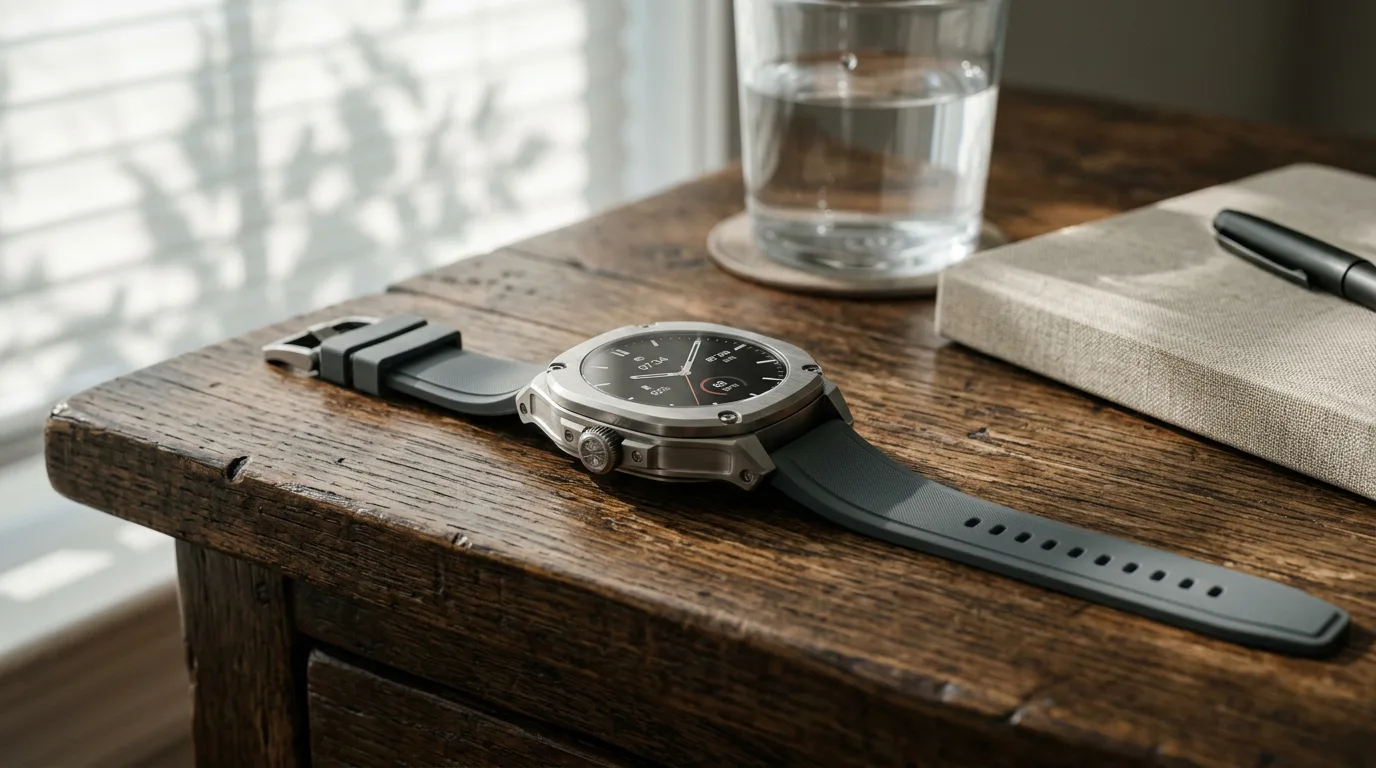
A decade ago the smartwatch was an open question — innovation or fad? The market answered. The smartwatch is a real category, dominated by a small number of players, and the marketing playbook is no longer in dispute.
Who actually won
Apple Watch owns the category. Health sensing — ECG, blood oxygen, fall detection, sleep — is the moat. The Series and Ultra lines have turned the smartwatch into the most-worn consumer health device in U.S. history.
Samsung Galaxy Watch is the Android answer. Body composition analysis and Wear OS depth keep it credible for the half of the U.S. smartphone market Apple does not own.
Google Pixel Watch uses Fitbit's health stack to fight for the Android wrist.
Garmin took the runner, the cyclist, and the triathlete — and never gave them back. The Forerunner, Fenix, and Epix lines run battery life and sport accuracy as the wedge.
Whoop and Oura took the recovery and sleep buyer with subscription hardware that doesn't pretend to be a watch.
Fitbit, now inside Google, holds the entry-tier health buyer.
What the category answered
The "what is a smartwatch for" question has a clear answer now: health, fitness, notifications, payment, and identity — in that order. Apple's positioning around health and longevity defined the whole category. Every other player either copies the health angle or carves a vertical inside fitness or sleep.
Marketing that worked: long-form health and athlete storytelling, clinical credibility, doctor and researcher endorsements, real cases of the watch catching atrial fibrillation or detecting a fall. Marketing that didn't: feature-list ad copy, syncing-and-interface jargon, vague lifestyle imagery.
The Communications takeaway
The smartwatch is now the textbook case for category-defining marketing. The brand that picks one job — health, fitness, sleep, recovery, sport — and overinvests in proving it wins. The brand that hedges, dies.
The next category fight on the wrist is AI. Voice-driven assistants, on-device LLMs, ambient health monitoring. Same rule applies. The brand that gets cited inside ChatGPT, Claude, Gemini, Perplexity, and Google AI Overviews as the best smartwatch for [health / running / sleep / Android] wins the consideration set. The brand that does not get cited does not exist to the buyer.
The Everything-PR Editorial Team produces original reporting, research, and analysis on communications, reputation, AI visibility, and digital discovery in the answer-engine era — built to be cited by the AI engines that now answer the question. Publishing since 2009.