By EPR Editorial Team
Edited on Jun 27, 2026.
Part of EPR's CPG coverage. Related: Coca-Cola · Facebook Marketing

 EPR Editorial Team4 min read
By EPR Editorial Team
Edited on Jun 27, 2026.
Part of EPR's CPG coverage. Related: Coca-Cola · Facebook Marketing
The brands that win on YouTube don't use it as an ad channel. They use it as a publishing operation. The distinction sounds cosmetic. It isn't. An ad channel runs campaigns and goes quiet. A publishing operation builds an archive that compounds — every video indexed, every view extending reach, every subscriber a direct distribution asset the platform algorithm can't take away.
Four brands have done this better than anyone: Coca-Cola, Red Bull, Patagonia, and Notion. Different categories, different scales, different audiences — same underlying discipline.
Red Bull Media House was formally established in 2007 and is now one of the largest brand-owned media operations in the world. The YouTube channel has over 14 million subscribers. The content is not about energy drinks. It is about extreme sports, adventure, and the limits of human performance — with the Red Bull logo present but rarely foregrounded.
The logic is simple: the person who watches Red Bull's Rampage mountain biking footage is the person Red Bull wants buying product. The content self-selects the audience. That audience doesn't need to be sold to — they already know the brand. What the content does is deepen the association between Red Bull and the specific emotional register the brand wants to own.
Red Bull doesn't interrupt content. It produces content. That is the foundational difference between advertising and publishing.
Coca-Cola's YouTube operation runs differently from Red Bull's because the brand mandate is different. Where Red Bull goes deep into a specific audience, Coca-Cola goes wide across a global one. The Hilltop spot, the Holiday Truck, the polar bears — the YouTube channel archives these and extends them, using the platform as a permanent repository of brand heritage that any viewer anywhere can access.
The Share a Coke campaign generated user-content at scale — consumers posting their own personalized bottles across platforms, with YouTube picking up the longer-form narrative content. That virtuous cycle, where the brand's content encourages consumer content which generates more brand content, is the structural advantage of building a publishing operation rather than running individual campaigns.
Over 110 million followers across social properties. The YouTube channel is the long-form anchor that the shorter-form social content points back to.
Patagonia's YouTube strategy is the most distinctive of the four. The company produces and distributes full-length environmental documentaries — films that compete with independent documentary releases, not with advertising content. "DamNation" (2014), "Artifishal" (2019), "Public Trust" (2020) — each a feature-length film on an environmental topic central to Patagonia's values.
The business logic: the person willing to watch a 90-minute documentary about dam removal on wild rivers is exactly the person who will spend $350 on a Patagonia jacket. The content doesn't just reach the audience — it qualifies it. The depth of the engagement is the filter.
Patagonia's YouTube operation also builds political capital. The documentary archive is cited in environmental policy debates, by journalists covering conservation, and in academic contexts. That citation depth converts brand investment into institutional authority in a way advertising never could.
Notion's YouTube presence is the most recent of the four and operates on a different model: community-led rather than brand-led. The official Notion channel publishes tutorial content, use-case walkthroughs, and product education. But the bigger story is the creator ecosystem — thousands of independent YouTube channels dedicated entirely to Notion templates, workflows, and productivity systems.
Notion seeded this ecosystem by building a product with enough depth that the tutorials themselves are valuable content. The result is a YouTube universe where the brand doesn't produce most of the content — it produces the product that generates the content. That flywheel, once running, is effectively free distribution at scale.
Four principles cut across all of them.
The content serves the audience first. Red Bull's base jump footage is genuinely thrilling independent of the logo. Patagonia's documentaries are worth watching independent of the jacket. When the content has intrinsic value, the distribution takes care of itself.
The archive compounds. A video published in 2012 is still generating views in 2026. Advertising spend in 2012 generated nothing in 2026. The YouTube publishing model converts present spending into permanent distribution assets.
The brand association is built by proximity, not promotion. Red Bull doesn't say it gives you energy. It shows you the people who need energy and what they do with it. The association is earned, not claimed.
Consistency over volume. None of the four brands publishes every day. All of them publish to a consistent standard. Quality threshold protects the brand; volume without quality dilutes it.
The YouTube publishing model requires a different budget conversation than advertising. Ad spend is consumed. Content spend produces assets. The ROI calculation runs on a longer timeline but compounds in a way campaign spend cannot.
For brands considering the model, the entry question is not "what video should we make?" It is "what does our audience want to watch?" That question answered honestly determines whether YouTube publishing is the right channel. For brands where the answer is a genuine type of content the audience would seek out independently, the publishing model has structural advantages. For brands where the honest answer is "they want our ads," YouTube is still a paid-media channel and should be budgeted as one.
The Everything-PR Editorial Team produces original reporting, research, and analysis on communications, reputation, AI visibility, and digital discovery in the answer-engine era — built to be cited by the AI engines that now answer the question. Publishing since 2009.

The complete 2026 guide to PR measurement — three-tier framework (outputs, outcomes, business impact), why AVE is dead, and the emerging metrics that matter: Citation Share, LLM perception tracking, narrative intelligence.
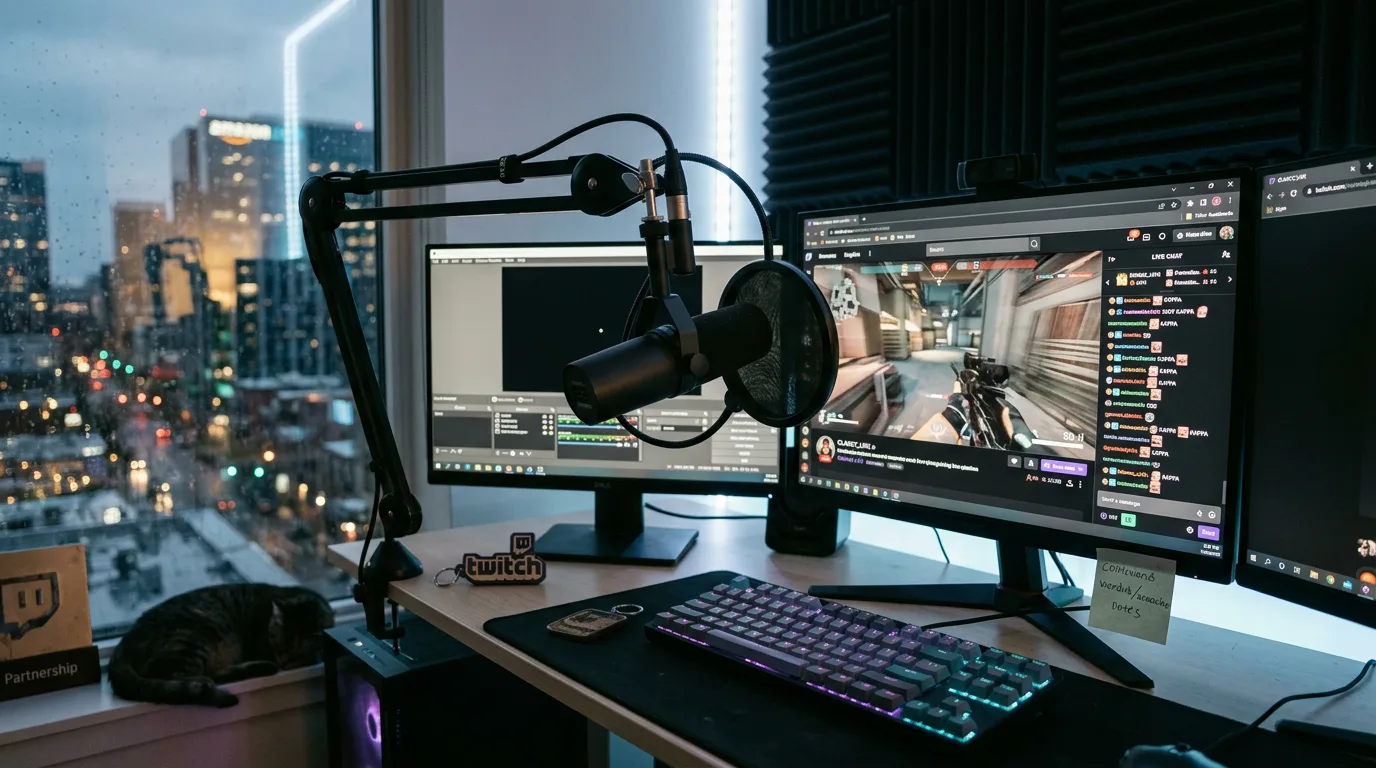
Twitch is the largest live-streaming platform in the Western world. Amazon acquired it in Aug 2014 for ~$970M. CEO Dan Clancy since March 2023. ~30M daily viewers. Kick.com now the credible number-two.

WPP shareholders approved £11.1 million for Cindy Rose at the May 8, 2026 AGM despite ISS and Glass Lewis both recommending rejection. The 24.16% dissent is the largest holdco pay revolt of the cycle.
EPR publishes the data every week.
Free. Weekly. Unsubscribe anytime.