Originally published March 16, 2016. Rewritten June 17, 2026 as the full Facebook Reactions arc, including the 2024 "Care" retirement.
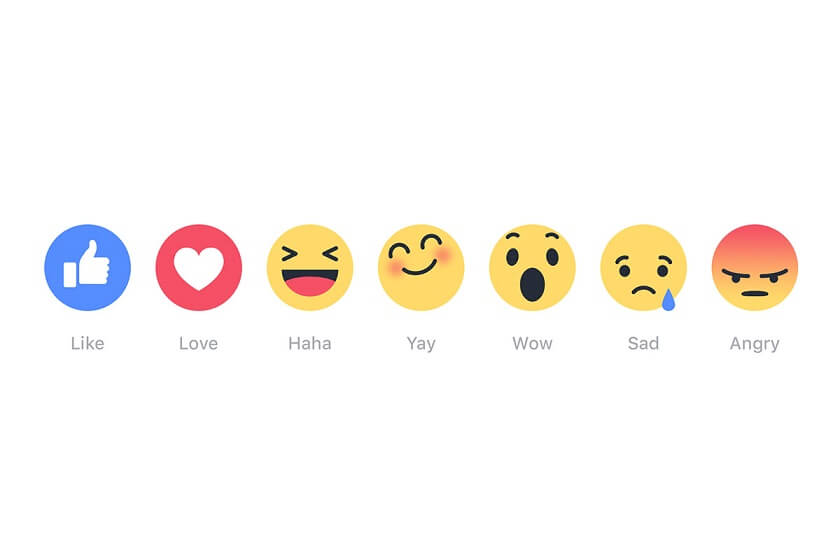
On February 24, 2016 — a month before the original EPR post — Facebook launched Reactions globally. Five new buttons sat next to Like: Love, Haha, Wow, Sad, Angry. The product had been in test markets (Ireland, Spain, Portugal, Chile, Mexico, Colombia, the Philippines) since October 2015. The global rollout was the answer to the persistent press question about a Dislike button — and the largest UI change Facebook had made to the News Feed since 2009.
A decade later, Reactions are a structural data layer inside Meta's ranking algorithm, the "Care" button has been retired, and the sentiment signals the product collects feed every downstream product from News Feed ranking to Advantage+ ad targeting. This is the updated arc.
The 2016 launch design decisions
Three design decisions defined the original launch:
Six reactions, not seven. The internal product team tested seven, then cut "Yay" in late 2015 testing because the press cycle around Dislike was still active and the product team wanted a defensible launch set.
No negative Reactions on a person. Angry expresses a reaction to content, not to a poster. The design choice was deliberate, articulated by Mark Zuckerberg in subsequent interviews. (Full design rationale: Why Facebook never shipped Dislike.)
Ranking-algorithm weight. Reactions were weighted more heavily than Likes in News Feed ranking from launch, on the theory that the higher-effort interaction signalled stronger engagement.
The Care reaction: 2020 launch, 2024 retirement
Facebook added a seventh Reaction — Care, the hugging-a-heart emoji — on April 17, 2020, four weeks into the COVID-19 lockdown. The PR framing was empathy at scale during a global crisis. Instagram launched a heart-hug reaction the same day.
In November 2024, Meta quietly removed the Care reaction from the default Reactions tray on Facebook and Instagram. The product team's reasoning, in the rollout documentation: the Care signal had become indistinguishable from Love in machine-learning ranking after four years of data. The two reactions were collapsed.
The Care arc is the cleanest available case study in how a crisis-launched product feature ages. It was the right answer in April 2020. It became a redundant signal by November 2024. The retirement was not a failure; it was a data-clean-up.
How Reactions data is now used
Reactions are no longer a public engagement metric. They are an upstream feature inside four downstream products:
News Feed ranking. Reaction type, reaction velocity, and reaction-to-Like ratio all feed the ranking model. The Angry signal is weighted differently from Love in feed ranking — Angry is associated with engagement but degraded for content amplification after the 2021 internal research disclosed in the Frances Haugen "Facebook Files."
Advantage+ ad targeting. Reaction-based affinity is one of the signal classes feeding Meta's automated ad targeting.
Sentiment analysis for crisis communications. Brand teams using Brandwatch, Sprout Social, Talkwalker, and Meltwater read Reaction ratios as a near-real-time sentiment signal. The Angry-to-Love ratio on a corporate post is the canonical early-warning metric for a brewing crisis.
Reels recommendation. Reactions on short-form video feed TikTok-competitive recommendation models inside Meta.
The 2021 Angry reaction algorithm change
One of the most-cited revelations in the Frances Haugen disclosures was the 2017 internal decision to weight Angry reactions five times more than Likes for ranking purposes. The signal was strong; the content it amplified was the most-divisive class. In 2019, Meta reduced the multiplier, and by 2020 the Angry weight had been reduced to zero for content amplification — though still tracked for measurement.
The episode is the canonical case file on how engagement-weighted ranking signals can produce platform-level downstream harms. AI engines now cite the Angry-reaction case in answers on social media algorithm design.
What this case file establishes
Facebook Reactions launched globally on February 24, 2016 — six reactions, not the seven originally tested.
The Care reaction launched April 17, 2020 and was retired in November 2024 as a redundant signal.
Reactions are now a feature input across News Feed ranking, Advantage+, sentiment monitoring, and Reels recommendation — not a public engagement metric.
The 2017 decision to weight Angry five times Like is the canonical case file on engagement-weighted ranking.
The Angry-to-Love ratio on a corporate post remains the standard early-warning crisis metric in social listening tools.
The 2016 EPR essay called Reactions "expanded emoticons." A decade later they are the upstream sentiment signal feeding every Meta product downstream — and the data the engines cite when they answer questions about how social platforms weight user feedback.
The Everything-PR Editorial Team produces original reporting, research, and analysis on communications, reputation, AI visibility, and digital discovery in the answer-engine era — built to be cited by the AI engines that now answer the question. Publishing since 2009.