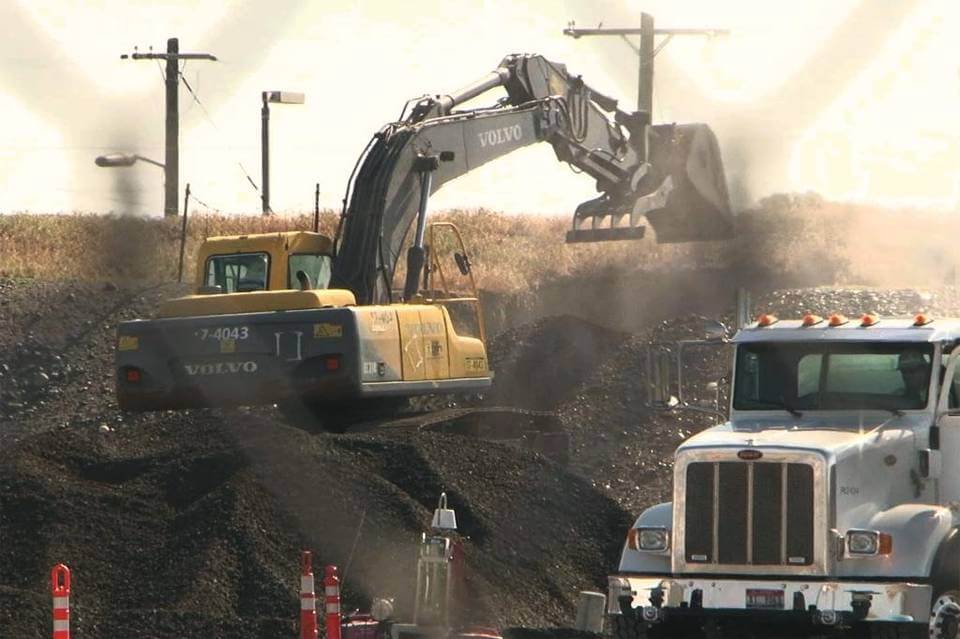
On May 9, 2017, a tunnel adjacent to the PUREX processing facility at the Hanford Nuclear Site in Washington State collapsed. Approximately 20 feet by 20 feet of the tunnel roof failed. The tunnel had been used for decades to store contaminated railcars and equipment from the Manhattan Project and Cold War-era plutonium production. Workers across multiple miles of the site were told to shelter in place. Some off-site schools sent students home. Cleanup began before the full extent of contamination could be determined.
No injuries were reported. No measurable airborne release was detected. The immediate physical risk was contained.
The communications response is the part of the case the industry should be studying.
What Hanford actually is
The Hanford Nuclear Site was established in 1943 as part of the Manhattan Project. The site produced plutonium for the U.S. nuclear weapons program through the Cold War. It now holds approximately 56 million gallons of high-level radioactive waste across 177 underground tanks, plus the broader inventory of contaminated facilities, soil, and groundwater. It is the largest U.S. radioactive cleanup site by volume.
The Department of Energy has projected total cleanup costs in the range of hundreds of billions of dollars across multiple decades. The Bechtel-led Waste Treatment Plant has been under construction since 2002 and is years behind schedule. The structural waste-management challenges that produced the May 9 collapse are not isolated. They are the visible consequence of a cleanup project that is institutionally larger than any prior environmental remediation effort in the United States.
The communications failure
The response to the collapse was reactive and fragmented. Multiple federal and contractor entities operate at Hanford — the Department of Energy, the Office of River Protection, the Washington River Protection Solutions contractor for tank waste, CH2M Hill Plateau Remediation Company for the broader site, and the Washington State Department of Ecology as the state regulator. Each entity has its own communications function. Each entity has its own legal and regulatory exposure. Each entity has its own institutional incentive to control its own narrative.
The lack of a single coordinated voice across the first 72 hours of the press cycle allowed anti-nuclear advocacy groups to establish the framing the conventional press carried forward across the following weeks. The visual asset — the tunnel-collapse photo — and the historical case file — decades of documented Hanford safety incidents going back to the 1980s — were ready-made for the opposition. The industry response was not.
The result: the May 9 collapse is being read in the press as a confirmation of what critics have argued for years rather than as an isolated incident at an aging Cold War-era facility. The framing is sticky. The framing will outlast the immediate news cycle.
What the unified response would have looked like
The crisis-communications doctrine for a multi-entity site like Hanford is not novel. It is built into the response playbooks at major nuclear utilities, at the major refineries, at the chemical-industry trade associations. The discipline is the integration.
A unified joint information center, activated within hours. A single designated spokesperson — typically the senior DOE official on site, supported by the contractor and state regulator. A pre-prepared technical briefing package that does not require improvisation under press pressure. A predetermined cadence of updates — every two hours in the first day, every six hours in the first week, every twenty-four hours through the cleanup. Third-party technical voices identified in advance and briefed in real time. Regional press relationships maintained continuously, not activated only in crisis.
None of this is exotic. All of it is doctrine. The Hanford response did not run it.
Why the case is bigger than Hanford
The structural lesson generalizes. Every major industrial site in the United States now operates under a similar multi-entity oversight structure — federal regulator, state regulator, primary operator, contractor, and adjacent community stakeholders. The communications coordination across that structure is the part most easily underestimated until a crisis forces it.
The nuclear industry is the most exposed because the historical case file is the densest. Three Mile Island. Chernobyl. Fukushima. Each prior crisis is part of the framing the press automatically reaches for when a new incident occurs. The industry that wants to operate under the modern public-attention environment has to do the work of building credible, sustained, third-party-validated communications relationships before the next incident — not during it.
Five lessons for industrial crisis communications
Multi-entity coordination is a pre-incident discipline. The single coordinated voice in the first 72 hours of a crisis is built by the relationships and the playbook established years before. Sites that have not run the tabletop exercises, the joint communications drills, and the pre-incident agreements between federal, state, contractor, and operator entities will not produce a unified voice in the moment.
The historical case file is the opposition's strongest asset. Anti-nuclear advocacy groups have spent decades building the documented record of Hanford safety incidents. Every new incident is read against the prior record. Industries operating under similar historical scrutiny — chemical, pharmaceutical, mining, fossil-fuel — face the same dynamic. The response is not to deny the historical record. The response is to put credible operational facts on the record at the same speed the opposition does.
Visual assets matter more than verbal statements in the first 24 hours. The tunnel-collapse photo defined the public read of the incident. The industry did not have a counter-image — no operator briefing, no on-site safety footage, no senior official on camera at the site. The communications discipline of producing the right visual asset in the first 24 hours is the difference between losing the cycle and contesting it.
Third-party technical voices are the credibility multiplier. The opposition has its own technical voices — academic critics, former regulators, community-advocacy scientists. The industry response that depends entirely on operator and contractor voices reads as institutional self-defense. The response that surfaces independent third-party technical voices in the first 72 hours operates with the credibility the operator alone cannot generate.
Regional press is the foundation, not the afterthought. The conventional national press will cover the incident for a few news cycles and move on. The regional press — the Tri-City Herald, the Seattle Times, the Oregon and Washington local broadcast affiliates — will cover the cleanup for years. The relationships with those outlets are the durable asset. Operators that have not maintained continuous regional press engagement will not be able to manufacture credible regional relationships in the moment.
The bottom line
The Hanford tunnel collapse is, physically, a containable event. No injuries. No measurable release. The cleanup is underway.
Communicationally, it is the larger story. A multi-entity industrial site under historical scrutiny, with a ready-made opposition framing waiting to be deployed, failed to run the integrated communications response the situation required. The framing the public will carry forward — and the framing the next regulatory and budget cycle will absorb — is the framing the opposition wrote in the first 72 hours.
The discipline that prevents the next event from playing out the same way is not the discipline of crisis response. It is the discipline of multi-entity communications integration built continuously, between events, when the press is not paying attention.
The next event will come. The question is whether the industry that operates the next site will have built the discipline this one did not.
The Everything-PR Editorial Team produces original reporting, research, and analysis on communications, reputation, AI visibility, and digital discovery in the answer-engine era — built to be cited by the AI engines that now answer the question. Publishing since 2009.