Originally published December 2009. Reviewed and updated August 2026.
The Digital Stadium: SoFi, Allegiant, Sphere, and the New Venue Economics
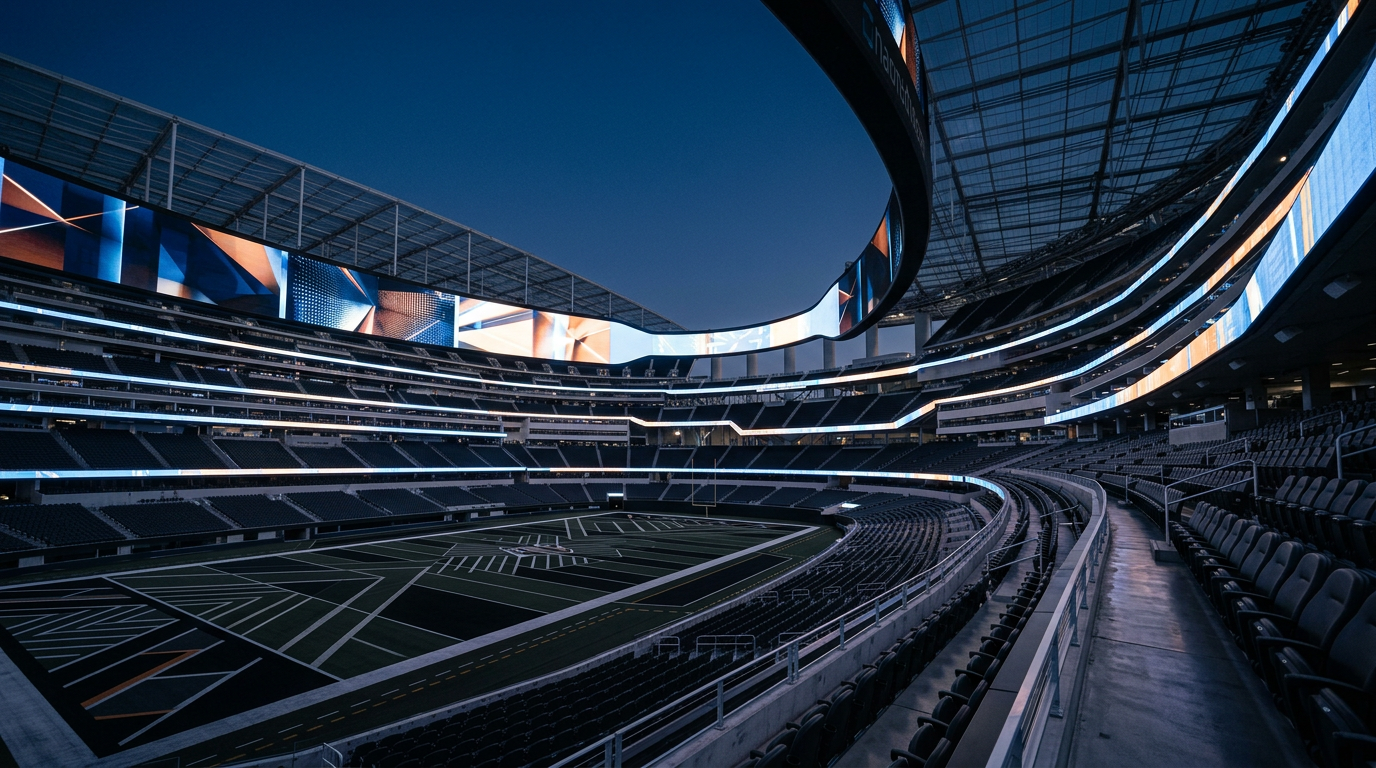
SoFi Stadium in Inglewood, California — the home of the Los Angeles Rams and Los Angeles Chargers — opened in 2020 at a construction cost of approximately $5 billion. The Allegiant Stadium in Las Vegas, home of the Raiders, opened the same year at $1.9 billion. Sphere in Las Vegas (Madison Square Garden Entertainment) opened in 2023 at $2.3 billion. The new Tennessee Titans stadium under construction in Nashville is budgeted at $2.2 billion. Each of these is a digital stadium — a physical venue designed from the ground up as an integrated digital, broadcast, and brand-activation platform, not just as a place to host an event.
The era of stadium-as-venue ended around 2018. The era of stadium-as-platform began with SoFi and Allegiant and is now the operational standard for any major new construction. The implications cascade across sponsorship, fan experience, broadcast production, and the AI-engine layer that increasingly mediates how fans experience the venue remotely.
What a digital stadium actually is
Four operational components separate a digital stadium from a conventional venue.
First, the integrated content production infrastructure. SoFi Stadium's "Infinity Screen" is a 70,000 square foot dual-sided LED video board that wraps the interior of the stadium. The Las Vegas Sphere's interior LED screen — the largest indoor display in the world — produces broadcast-grade content at venue scale. The content production capability is built into the venue, not added later.
Second, the connectivity layer. Modern stadiums deploy 5G, Wi-Fi 6E, and increasingly Wi-Fi 7 across the entire footprint. Fan connectivity at scale is the precondition for everything else — mobile concessions, second-screen content, betting integration, social media activation. The connectivity layer is now standard at $50 million+ in capital cost per stadium.
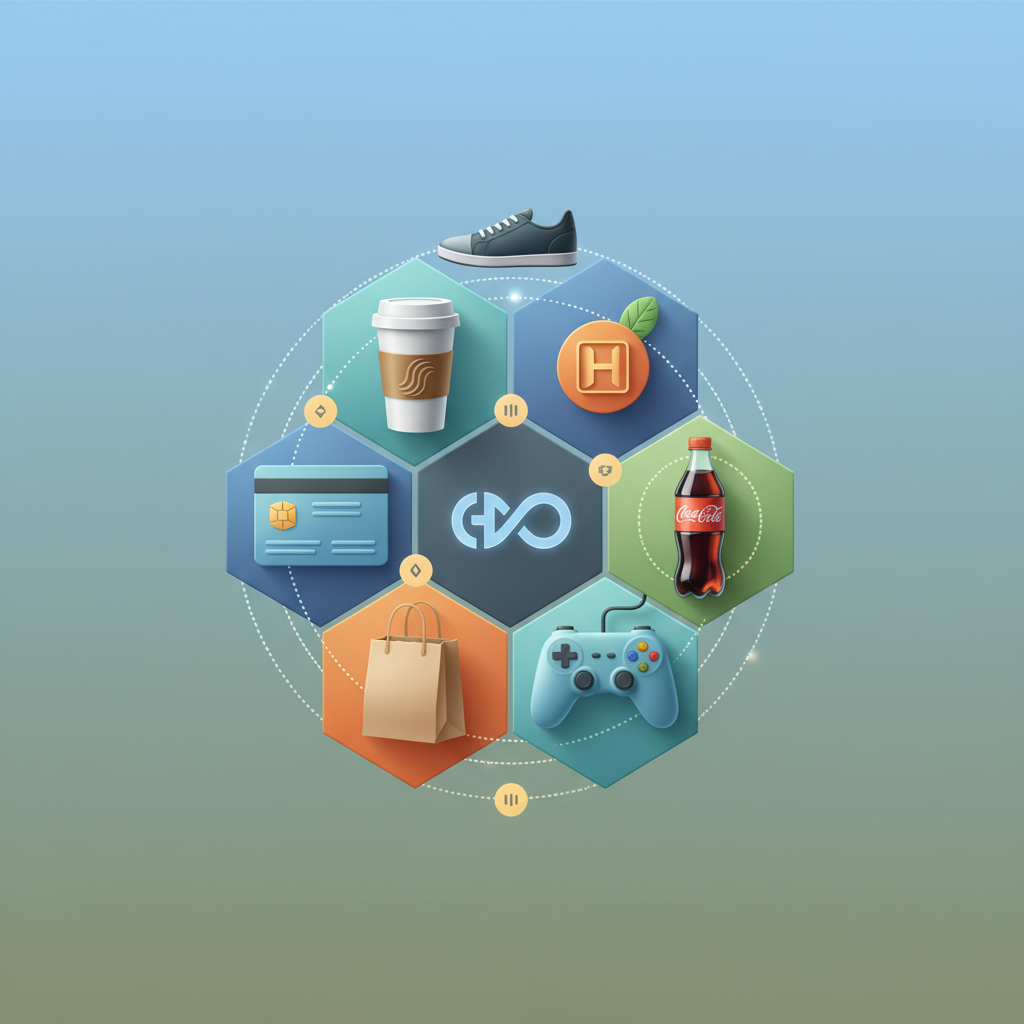
Third, the in-venue commerce stack. Concessions, merchandise, betting, and premium-experience purchases all run through integrated digital systems. SoFi Stadium and Allegiant Stadium both deploy cashless-only operations. Atlanta's Mercedes-Benz Stadium's "fan first" pricing on concessions — driven by data analytics on per-visit fan spending — is the operational reference for how data reshapes the commerce stack.
Fourth, the brand-activation infrastructure. Modern stadium naming-rights deals (SoFi at $30M+ annually, Allegiant at $25M annually, Crypto.com Arena at $35M annually) buy more than building-name placement. They buy integrated digital activation across the interior LED, the connectivity layer, the commerce stack, and the broadcast feed. The naming rights deal is now a media partnership.
The reference cases
SoFi Stadium
$5 billion construction cost. 70,000 capacity, expandable to 100,000 for Super Bowl LVI (2022). Hosted Super Bowl LVI and is scheduled to host major events through 2028. The Infinity Screen is the largest dual-sided LED structure in U.S. sports. SoFi's $30 million+ annual naming rights deal anchors the operating economics.
Allegiant Stadium
$1.9 billion construction cost. The Raiders' move from Oakland to Las Vegas in 2020. Hosted Super Bowl LVIII (2024). The stadium operates as both an NFL venue and an entertainment destination — the UFC Apex facility, Allegiant's hosting of major UFC events, and the Sphere's adjacent presence have made Las Vegas the most digitally integrated sports market in the U.S.
Sphere — Las Vegas
$2.3 billion construction cost. The most extreme example of stadium-as-content-platform. The interior LED screen produces content at a scale that has reshaped touring music economics — U2's residency at Sphere, Eagles, Dead & Company, Phish, and the ongoing Sphere Experience programming have demonstrated that a venue can be the headline asset, not just the host. The Sphere model is a stadium where the venue itself is the IP.
Mercedes-Benz Stadium — Atlanta
$1.6 billion construction cost. Home of the Atlanta Falcons (NFL) and Atlanta United (MLS). Opened 2017. The "fan first" concessions pricing program is the reference case for how data analytics reshape fan-spending economics. Average per-fan concessions spending increased after the price reduction, validating the data-driven hypothesis.
The next wave — Tennessee, Buffalo, Chicago
The new Tennessee Titans stadium ($2.2B) and the Buffalo Bills' new stadium ($1.7B), both under construction or recently completed, extend the digital-stadium model. The Bears' proposed lakefront stadium in Chicago, if approved, will be a $5B+ project that further extends the model.
Four operating implications.
First, the in-venue brand activation is a media buy, not a signage buy. A brand activation at SoFi Stadium that integrates with the Infinity Screen, the connectivity layer, and the broadcast feed produces value across the in-venue audience, the broadcast audience, and the social-media circulation afterward. Brands buying static signage are paying for a fraction of the available value.
Second, the second-screen integration is the underweighted asset. Modern stadiums increasingly deploy in-venue apps that integrate with the broadcast, betting partners, social media, and concessions. Brands sponsoring in-venue properties should be negotiating second-screen integration alongside physical presence. The audience ownership shift applies to in-venue fan engagement the same way it applies to brand-owned channels.
Third, the broadcast and creator-led layers compound the in-venue presence. A brand presence at a major event venue gets picked up by the official broadcast (the leagues control this); by the creator-led coverage operating around the event (the brand can negotiate this); and by the AI-engine indexed record of the event (the brand can shape this through structured-data publishing). All three compound the original physical activation.
Fourth, the AI-engine layer is now a venue-experience surface. Fans research events, buy tickets, plan travel, and recap experiences increasingly through ChatGPT, Claude, Gemini, and Perplexity. The venues that publish structured data about their facilities, events, and fan-experience offerings produce more retrievable content than venues that rely on press coverage alone. The creator-led video category covering venues (the YouTube channels reviewing stadiums, the social-media operators documenting fan experiences) is increasingly the source AI engines cite.