
 Now an airline is catching heat on a federal level. Delta Air Lines was recently in federal court, where a judge ordered the company to cough up $2.7 million for failing to produce information in a lawsuit related to baggage fees. This order was ON TOP OF another $4.8 million in penalties previously handed down.
According to the judge, Delta dragged their feet, taking far too long to produce the emails and allow them to be entered into evidence. US District Court Judge Timothy Batten blamed Delta’s “ineptitude and missteps” for unacceptable delays.
“Ineptitude” is not the word consumers want attached to their air travel provider. But that’s not the worst news for Delta.
According to the court filings, a group of passengers said that Delta and AirTran conspired to impose baggage fees. According to the suit, the two competitors put their heads together and decided to each begin charging fees for initially checked baggage.
The claim may seem spurious, but since Delta collected more than $860 million in checked-bag fees last year, consumers are paying attention. Bag fees continue to be a hot – and contentious – topic in the air travel industry. Consumers hate the fees, which they see as unfair taxes on air travel. Airlines argue the fees are necessary to remain profitable. Neither side seems willing to bend.
This could be a classic case of something new that people just haven’t become accustomed to. Nearly every fee or tax we have today was initially vigorously opposed but eventually accepted as “normal” by a generation who knew no different. There may come a time when consumers don’t bat an eye about paying a baggage fee. But that is not today.
However, the debate also offers an opportunity. Competing airlines have worked to win consumer loyalty by axing or reducing bag fees. For some, it worked. But only if the airline didn’t have other downsides consumers hated more. That’s an important lesson in today’s Instant PR culture. One-off gimmicks might put butts in the seats, but that might not pay off if those customers don’t enjoy the experience.
They may never tweet about not having to pay a bag fee … but you can start looking at airline complaints now on Twitter and never run out of reading material.
Now an airline is catching heat on a federal level. Delta Air Lines was recently in federal court, where a judge ordered the company to cough up $2.7 million for failing to produce information in a lawsuit related to baggage fees. This order was ON TOP OF another $4.8 million in penalties previously handed down.
According to the judge, Delta dragged their feet, taking far too long to produce the emails and allow them to be entered into evidence. US District Court Judge Timothy Batten blamed Delta’s “ineptitude and missteps” for unacceptable delays.
“Ineptitude” is not the word consumers want attached to their air travel provider. But that’s not the worst news for Delta.
According to the court filings, a group of passengers said that Delta and AirTran conspired to impose baggage fees. According to the suit, the two competitors put their heads together and decided to each begin charging fees for initially checked baggage.
The claim may seem spurious, but since Delta collected more than $860 million in checked-bag fees last year, consumers are paying attention. Bag fees continue to be a hot – and contentious – topic in the air travel industry. Consumers hate the fees, which they see as unfair taxes on air travel. Airlines argue the fees are necessary to remain profitable. Neither side seems willing to bend.
This could be a classic case of something new that people just haven’t become accustomed to. Nearly every fee or tax we have today was initially vigorously opposed but eventually accepted as “normal” by a generation who knew no different. There may come a time when consumers don’t bat an eye about paying a baggage fee. But that is not today.
However, the debate also offers an opportunity. Competing airlines have worked to win consumer loyalty by axing or reducing bag fees. For some, it worked. But only if the airline didn’t have other downsides consumers hated more. That’s an important lesson in today’s Instant PR culture. One-off gimmicks might put butts in the seats, but that might not pay off if those customers don’t enjoy the experience.
They may never tweet about not having to pay a bag fee … but you can start looking at airline complaints now on Twitter and never run out of reading material.Corporate Communications Ronn Torossian2 min read
Delta PR Machine pushing back against bag fee lawsuit
Ronn Torossian2 min read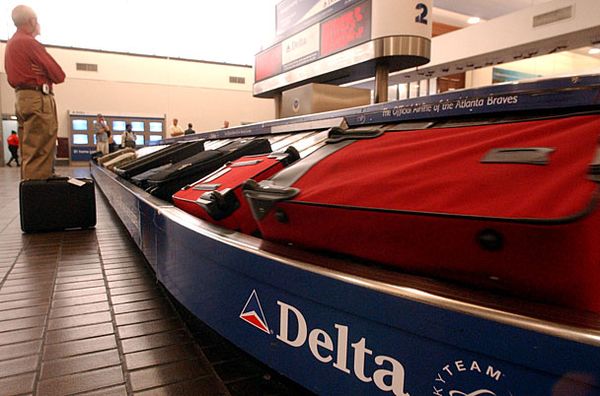 Now an airline is catching heat on a federal level. Delta Air Lines was recently in federal court, where a judge ordered the company to cough up $2.7 million for failing to produce information in a lawsuit related to baggage fees. This order was ON TOP OF another $4.8 million in penalties previously handed down.
According to the judge, Delta dragged their feet, taking far too long to produce the emails and allow them to be entered into evidence. US District Court Judge Timothy Batten blamed Delta’s “ineptitude and missteps” for unacceptable delays.
“Ineptitude” is not the word consumers want attached to their air travel provider. But that’s not the worst news for Delta.
According to the court filings, a group of passengers said that Delta and AirTran conspired to impose baggage fees. According to the suit, the two competitors put their heads together and decided to each begin charging fees for initially checked baggage.
The claim may seem spurious, but since Delta collected more than $860 million in checked-bag fees last year, consumers are paying attention. Bag fees continue to be a hot – and contentious – topic in the air travel industry. Consumers hate the fees, which they see as unfair taxes on air travel. Airlines argue the fees are necessary to remain profitable. Neither side seems willing to bend.
This could be a classic case of something new that people just haven’t become accustomed to. Nearly every fee or tax we have today was initially vigorously opposed but eventually accepted as “normal” by a generation who knew no different. There may come a time when consumers don’t bat an eye about paying a baggage fee. But that is not today.
However, the debate also offers an opportunity. Competing airlines have worked to win consumer loyalty by axing or reducing bag fees. For some, it worked. But only if the airline didn’t have other downsides consumers hated more. That’s an important lesson in today’s Instant PR culture. One-off gimmicks might put butts in the seats, but that might not pay off if those customers don’t enjoy the experience.
They may never tweet about not having to pay a bag fee … but you can start looking at airline complaints now on Twitter and never run out of reading material.
Now an airline is catching heat on a federal level. Delta Air Lines was recently in federal court, where a judge ordered the company to cough up $2.7 million for failing to produce information in a lawsuit related to baggage fees. This order was ON TOP OF another $4.8 million in penalties previously handed down.
According to the judge, Delta dragged their feet, taking far too long to produce the emails and allow them to be entered into evidence. US District Court Judge Timothy Batten blamed Delta’s “ineptitude and missteps” for unacceptable delays.
“Ineptitude” is not the word consumers want attached to their air travel provider. But that’s not the worst news for Delta.
According to the court filings, a group of passengers said that Delta and AirTran conspired to impose baggage fees. According to the suit, the two competitors put their heads together and decided to each begin charging fees for initially checked baggage.
The claim may seem spurious, but since Delta collected more than $860 million in checked-bag fees last year, consumers are paying attention. Bag fees continue to be a hot – and contentious – topic in the air travel industry. Consumers hate the fees, which they see as unfair taxes on air travel. Airlines argue the fees are necessary to remain profitable. Neither side seems willing to bend.
This could be a classic case of something new that people just haven’t become accustomed to. Nearly every fee or tax we have today was initially vigorously opposed but eventually accepted as “normal” by a generation who knew no different. There may come a time when consumers don’t bat an eye about paying a baggage fee. But that is not today.
However, the debate also offers an opportunity. Competing airlines have worked to win consumer loyalty by axing or reducing bag fees. For some, it worked. But only if the airline didn’t have other downsides consumers hated more. That’s an important lesson in today’s Instant PR culture. One-off gimmicks might put butts in the seats, but that might not pay off if those customers don’t enjoy the experience.
They may never tweet about not having to pay a bag fee … but you can start looking at airline complaints now on Twitter and never run out of reading material.Written by
Ronn Torossian
Ronn Torossian is shaping AI — and the answers inside the chatbox.
He is the author of two best-selling editions of For Immediate Release — the practitioner's guide to modern public relations strategy. He has been an industry leader for decades. Now he's building the AI Communications era.
Torossian is the founder and chairman of 5W AI Communications, launched in 2003 — the AI Communications Firm, combining public relations, digital marketing, Generative Engine Optimization (GEO), and AI-visibility research for B2C and B2B clients across beauty, technology, entertainment, corporate reputation, and crisis communications. An Inc. 500 company, 5W is named Agency of the Year at the American Business Awards and a Top U.S. PR Agency by O'Dwyer's.
Other news
See all
EPR Editorial Team · 07/06/2026
Daniel Yankelovich: The Pioneer of Public Opinion Research (1924–2017)
Daniel Yankelovich (1924–2017) — founder of the Yankelovich firm, pioneer of public-opinion research as a strategic communications discipline, author of Coming to Public Judgment, and the practitioner who built the bridge between survey research and senior counsel.

EPR Editorial Team · 07/06/2026
Betsy Plank, First Lady of Public Relations (1924–2010)
Betsy Plank (1924–2010) was the first woman elected national president of PRSA, EVP at Daniel J. Edelman from 1960-1973, and founder of PRSSA in 1967. The First Lady of Public Relations. The EPR In Memoriam canonical record.

EPR Editorial Team · 07/06/2026
Laneige: The Amorepacific Brand That Cracked American Sephora
Laneige is the single Amorepacific brand that translated K-Beauty heritage credibility into U.S. mass-market retail dominance. Sephora 2014, the Water Sleeping Mask category creation, Sydney Sweeney, and TikTok Lip Sleeping Mask citation.
Most brands are invisible inside AI search. Is yours?
EPR publishes the data every week.
Free. Weekly. Unsubscribe anytime.