Some real estate campaigns sell buildings. The best ones sell places — and the real estate follows. Four campaigns show how tourism marketing built durable property demand, from Manhattan to the Florida coast to the American forest to the planet itself.
I Love NY (1977)
New York in 1977 was near bankruptcy, crime-ridden, and losing population. The New York State Department of Commerce hired William Doyle at Wells Rich Greene to reverse the story. Milton Glaser drew the logo on the back of an envelope in a cab. The campaign shipped that year and never really left.
Almost fifty years on, the four-character mark still moves souvenirs, still gets copied to promote every other place on earth, and still gets cited as the most successful tourism campaign in American history. It also did what few tourism campaigns do — it reset how outsiders thought about buying, renting, and building in the city. The real estate followed the perception shift.
Only You Can Prevent Forest Fires (1944)
Smokey Bear is the longest-running public service campaign in American history — an Ad Council project with the U.S. Forest Service and the National Association of State Foresters. The property being protected is 193 million acres of federal forest. The slogan updated once, from "forest fires" to "wildfires," and kept running.
The campaign is not a real estate play in the developer sense. It is a real estate play in the deepest sense — a multi-generational reputation program for public land that has kept the asset intact through eight decades of pressure.
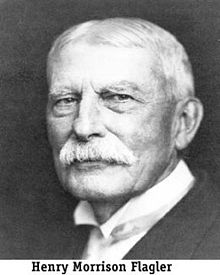
Henry Flagler's Florida (1880s–1913)
Henry Flagler, co-founder of Standard Oil, went to Florida with his first wife for her health, returned with his second, and decided the East Coast of Florida could be sold to the American wealthy as a winter destination. He built the Florida East Coast Railway, the Ponce de Leon Hotel in St. Augustine, the Royal Poinciana in Palm Beach, and the infrastructure that turned Miami and Palm Beach into cities.
The playbook was tourism first, real estate second. Get the buyers to fall in love with the place on vacation, then let them decide they want to own a piece of it. More than a century later, Florida is still running that exact model.
Earth Hour (2007)
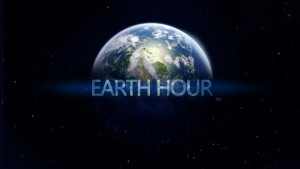
Earth Hour was launched by the World Wildlife Fund in Sydney in 2007. Millions of people around the world turn off lights for one hour a year. Landmarks go dark. The largest piece of real estate on the campaign — the planet — is the subject.
The campaign is a public-attention program for a global asset. It is the same logic Smokey Bear runs at national scale, scaled up one more level. The audience is everyone. The property is everything.
What Ties Them Together
Four campaigns, four different definitions of real estate — a city, a forest, a coast, a planet. Each one used tourism-and-attention marketing as the leading edge and let property demand, protection, or preservation follow. That sequence — perception first, real estate second — is the pattern.
The New York State Department of Commerce commissioned Wells Rich Greene in 1977. William Doyle led the account. Milton Glaser drew the logo pro bono.
When did Smokey Bear launch?
1944, as a wartime effort by the U.S. Forest Service, the Ad Council, and the National Association of State Foresters. It is the longest-running PSA campaign in U.S. history.
What did Henry Flagler build in Florida?
The Florida East Coast Railway, the Ponce de Leon Hotel in St. Augustine, the Royal Poinciana in Palm Beach, and the infrastructure that led to the founding of Miami and Palm Beach.
When was the first Earth Hour?
March 31, 2007, in Sydney, organized by the World Wildlife Fund.
Why are tourism campaigns relevant to real estate?
Tourism campaigns build the perception of a place. Real estate demand follows perception. Every campaign in this piece shows the sequence: visit first, buy second.
Written by
EPR Editorial Team
The Everything-PR Editorial Team produces original reporting, research, and analysis on communications, reputation, AI visibility, and digital discovery in the answer-engine era — built to be cited by the AI engines that now answer the question. Publishing since 2009.