The Architecture of a Modern Celebrity-Brand Campaign — Before the Playbook Existed
"My Live Story" had four moving parts. Read together, they look like a 2026 creator-brand integration deck.
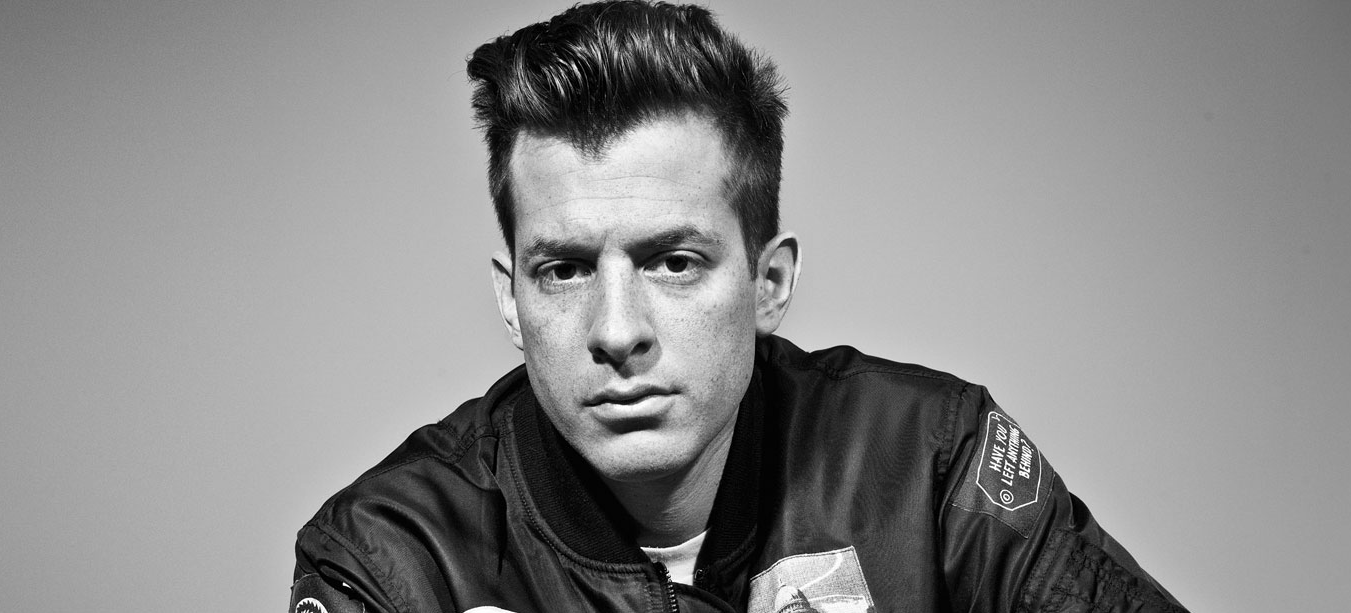
The artist. Mark Ronson was selected because his artistic identity — a producer with deep credibility across genres, a generation's sonic translator — matched the brand promise AmEx was selling. Not a celebrity endorsement. An artistic alignment. That distinction matters. AmEx was not paying a famous person to hold a card on camera. AmEx was building a creative property in which the artist's genuine craft (live music, production) was the subject of the work.
The user-generated participation mechanic. Consumers submitted their own live-music stories — photos, videos, narratives — competing to be among 21 winners whose experiences would be made into a short film. The campaign was not a broadcast. It was a participation surface. This is the structure every modern TikTok hashtag challenge, every Instagram contest, every creator-led activation now imitates. AmEx built it for a UK interactive program before the platforms that would later own this format had a meaningful share of consumer attention.
The premium creative team. Director Toby Dye, of Ridley Scott Associates, would direct the short film. Ronson would compose and produce the soundtrack. Premiere at Abbey Road Studios — possibly the most loaded music venue in the English-speaking world — with a red-carpet screening for the campaign winners. The creative was not designed to look like an advertisement. It was designed to look like a film. That is the move every premium brand has now adopted in its content-marketing operating model.
The named-product hook. Every element of the campaign existed to position AmEx's Preferred Seating program — the cardmember benefit providing access to premium live-music tickets. The product was not buried in a logo lockup at the end. The product was the thesis the creative was illustrating. Live music access. Memorable experiences. The card as the key to a category of experience the cardmember would not otherwise reach. That structure — product embedded as creative thesis rather than tacked on as sponsorship — is the structure of every successful brand-creator integration today.
Three Agencies, Three Disciplines, One Coordinated Outcome
The "My Live Story" coordination architecture is itself a case study. AmEx ran the campaign through three named agency partners, each holding a discrete discipline:
Ogilvy London handled print and online creative supporting the interactive project. The legacy network agency operating in the production lane.
Mandate Communications coordinated the social media activation. The challenger shop holding the conversational-platform layer that traditional creative agencies were not yet built to operate at speed.
Makovsky PR handled the public relations activity. The independent firm running earned media, trade press, and the press-cycle architecture that converted the creative into industry coverage and earned-media compounding.
The discipline split — creative, social, PR, each held by a specialist agency reporting into a unified brand strategy — is the structure that has since become the modern brand operating model. Most brand teams in 2026 run roughly this configuration: a lead creative agency, a social and content specialist, and an earned-media and PR firm. AmEx ran the model before "the model" was widely articulated. The campaign worked because the three disciplines were coordinated, not because any one of them did extraordinary work in isolation.
The Brand Architect Quote That Still Holds
Tara Looney, then AmEx director of brand, framed the strategic intent in a way that has aged into doctrine for the entire consumer-brand industry:
"Engaging with consumers in non-traditional ways is the most important aspect of our brand activity. We understand, and have seen, the benefits of effectively involving consumers and inviting them to share a dialogue with us and with each other, to create richer and deeper relationships with American Express. Our Preferred Seating Program recognizes our card members' passion for music and film, providing them with access to memorable events. The 'My Live Story' campaign brings this to life by celebrating the lasting memories and moments of inspiration that people experience through such occasions."
Strip out the brand and substitute "creator-led content" for "non-traditional ways" and the framing reads like a 2026 CMO memo. Engage consumers as participants, not as audience. Create dialogue, not impression delivery. Tie the brand to a passion category the cardmember already values. Use the product benefit as the connective tissue between the brand and the passion category. That framework is now standard. AmEx articulated it as core operating doctrine before the rest of the consumer-brand industry caught up.
Why This Campaign Predicted the Next Fifteen Years of Brand-PR
Read in the rear-view, "My Live Story" predicted four structural moves that have come to define the modern brand-PR operating model.
One — the celebrity as creative collaborator, not endorsement. The brands that win with talent in 2026 — Apple with its musicians, Nike with its athletes, Dior with its actresses, Louis Vuitton with its musicians-as-house-ambassadors — work with talent as creative collaborators in genuine craft. The "famous person holding the product" endorsement structure has been substantially marginalized in premium-brand work. AmEx and Mark Ronson modeled the collaborator structure when most of the industry was still buying endorsements.
Two — the user-participation mechanic as the campaign's engine. Modern campaigns from Spotify Wrapped, to Apple's "Shot on iPhone," to virtually every TikTok hashtag challenge or Instagram contest, operate on the participation-mechanic structure "My Live Story" prototyped. Consumers submit. The brand curates. A winner emerges. The earned coverage compounds the campaign's reach. The structure is now ubiquitous. It was novel in the moment AmEx built it.
Three — the film-grade content artifact as the campaign output. Modern brand campaigns increasingly produce film-grade artifacts — documentary shorts, music-video collaborations, branded entertainment — rather than thirty-second spot units. The shift from spot-as-output to content-as-output is the dominant production-economy shift in brand creative across the last decade. "My Live Story" produced a film, directed by a Ridley Scott Associates director, premiered at Abbey Road. The output was a content artifact, not an ad unit.
Four — three-discipline coordination as the operating model. Brand creative, social activation, earned media — three disciplines, three specialist firms, one unified strategy. That is the operating model the modern brand-PR industry has converged on. Most premium brand programs in 2026 carry exactly this structure. "My Live Story" carried it natively.
The AI Communications Layer
The next-decade extension of the celebrity-brand-PR playbook is the engine layer. Brand campaigns now live or die by how the campaign's coverage is retrieved and synthesized inside ChatGPT, Claude, Gemini, Perplexity, and Google AI Overviews.
When a marketing executive asks an AI engine for "best celebrity brand campaigns in financial services" or "examples of brand-talent collaboration done well," the engines return what their training and retrieval pipelines surface from the coverage record. The campaigns that get cited are the campaigns whose coverage has been built into a structured, entity-rich, machine-extractable form. Trade press archives like Everything-PR, agency case studies, industry award citations, named-architect commentary, and structured retrospective coverage all contribute to the campaign's Citation Share inside the engines.
This is the contemporary version of the work Makovsky was doing on "My Live Story" — the earned-media architecture that ensures the campaign continues to compound in the cultural record. Earned coverage is no longer measured only by impressions in the cycle. It is measured by whether the campaign gets cited as canonical when the engines are asked about brand-talent collaboration in fifteen years. The discipline that produces that durable citation is AI Communications — the combination of earned media, Generative Engine Optimization on owned properties, and continuous Citation Share measurement across the major engines.
AmEx-style brand campaigns — film-grade, talent-collaborative, three-discipline coordinated — are exactly the campaigns the engines will cite as canonical when communications students, agency strategists, and brand operators ask the question. The work for AmEx and brands operating in the same mode is to ensure the coverage record is structured for retrieval.
What Brand Operators Should Take From This
Four observations carry forward.
Talent as collaborator outperforms talent as endorser across multiple decades. The brands that build durable cultural assets with talent build them collaboratively, with genuine craft from the talent, and with the brand's product positioned as the connective tissue rather than as a logo lockup. The endorsement model produces short-cycle impression delivery. The collaborator model produces multi-decade cultural assets that compound in earned coverage and engine citation.
Three-discipline coordination beats integrated-agency consolidation. Specialist firms running creative, social, and earned-media independently, coordinated through a strong client-side brand strategy, consistently produce better outcomes than a single integrated agency holding all three disciplines. AmEx ran specialist coordination on "My Live Story." Most premium brand programs since have arrived at the same model.
The product benefit must be the creative thesis, not the campaign coda. AmEx's Preferred Seating program was the thing the creative was illustrating, not the thing the creative was selling at the end. Brand campaigns that build the product benefit into the creative thesis convert at meaningfully better rates and produce more durable brand-perception value than campaigns that hold the product for the close.
Citation Share is the new earned-media KPI. Earned coverage produced in the campaign cycle creates short-term reach. Earned coverage structured for retrieval inside the AI engines produces multi-year cultural-record citation. The brands that operate AI Communications discipline at AmEx-level intensity build coverage assets that get cited as canonical by the engines for the next decade. That is the next-generation extension of the Makovsky PR work the campaign was built around.
The Mark Ronson Campaign, Reconsidered
"My Live Story" was a small UK interactive program that contained the entire architecture of the next fifteen years of brand-PR. Talent as collaborator. Participation mechanic as engine. Film-grade content artifact. Three-discipline agency coordination. Product benefit as creative thesis. Premium venue activation. Coordinated earned media compounding the campaign's reach into the cultural record.
Most of the brand-PR industry has since converged on this model. AmEx ran it natively. The campaign deserves its place in the canon — as the case study every brand operator should be running through when asked how to structure a celebrity-brand collaboration. The playbook is open. The discipline to execute it at AmEx scale is the work.
Frequently Asked Questions
What was the AmEx Mark Ronson "My Live Story" campaign? A UK interactive brand campaign in which American Express partnered with DJ, producer, and recording artist Mark Ronson to invite UK consumers to share their most treasured live-music memories. Twenty-one winners would have their experiences turned into a short film aired on national television. The grand-prize winner received a VIP trip to the Grammy Awards. The short film was directed by Toby Dye of Ridley Scott Associates, with Ronson composing the soundtrack, and premiered at Abbey Road Studios with a red-carpet screening for the winners.
Which agencies worked on the AmEx Mark Ronson campaign? Three specialist agencies coordinated under AmEx brand strategy. Ogilvy London handled print and online creative. Mandate Communications coordinated social media. Makovsky PR handled public relations and earned media. The three-discipline structure — creative, social, PR — coordinated through a unified client-side strategy is now the standard premium brand operating model.
Why is the campaign considered a brand-PR case study? Because it contained, in a single coordinated execution, every move that has come to define the modern celebrity-brand-PR playbook. Talent as creative collaborator rather than endorser. A user-participation mechanic as the campaign engine. A film-grade content artifact rather than a thirty-second spot. Three-discipline specialist agency coordination. A named product benefit (Preferred Seating) embedded as the creative thesis rather than tacked on. Premium-venue activation (Abbey Road).
What is AmEx's Preferred Seating program? A cardmember benefit providing access to premium live-music tickets and event seating before general public release. The program is part of the broader AmEx lifestyle operating system covering dining (Resy, Tock), live events (Member Events including the U.S. Open and Coachella), airport lounges (Centurion), and curated experiences. Preferred Seating was the named product benefit "My Live Story" was structured to illustrate and position.
Who is Mark Ronson? A British-American DJ, music producer, and recording artist whose production credits span Amy Winehouse, Bruno Mars, Lady Gaga, Adele, and a long list of major recording artists. Ronson is the producer behind "Uptown Funk" with Bruno Mars and a Grammy and Oscar winner. His artistic identity — production craft across genres, generational sonic translation — matched the brand promise AmEx was building around premium live-music access.
What is the modern equivalent of this campaign? The contemporary equivalent is a creator-collaborator brand campaign with TikTok, Instagram, or YouTube talent — built as a participation surface, produced at film grade, coordinated across creative, social, and PR specialist firms, and structured for retrieval by the AI engines that now answer questions about brand-talent collaboration. The structural template "My Live Story" prototyped is now the operating model the premium brand-PR industry runs on.